
Day 1: Stockholm – Old Town & Royal History
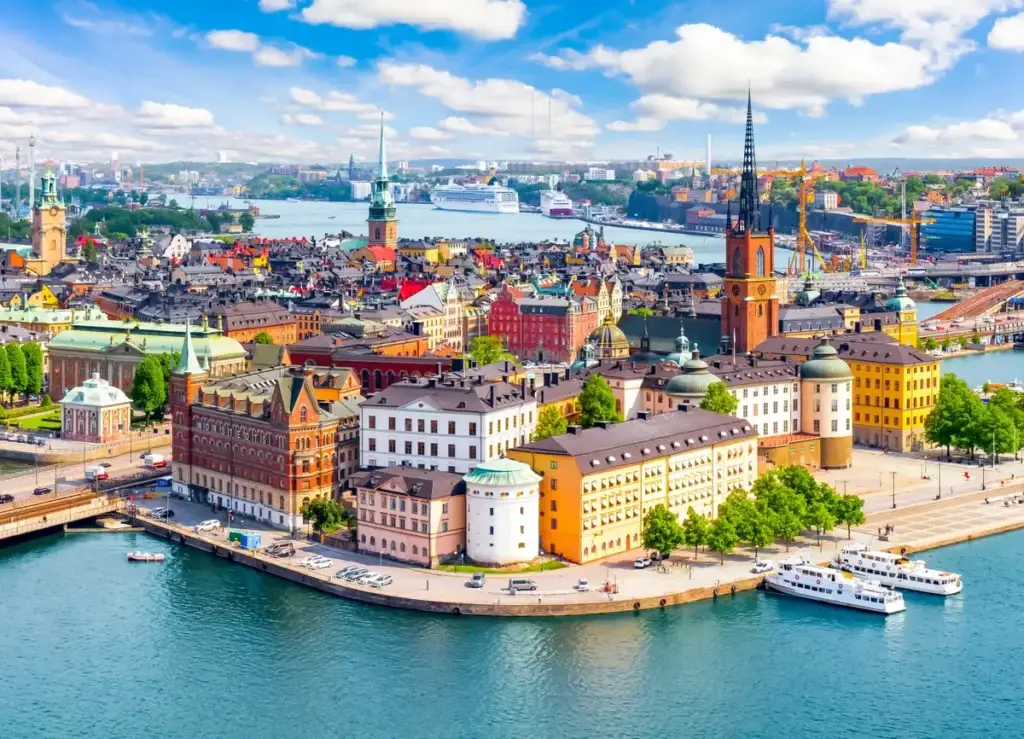
Your private driver-guide collects you from Stockholm Airport or your hotel and introduces you to the city. You begin in the historic center, where many of the capital’s key landmarks sit within easy walking distance.
Gamla Stan
You walk into Gamla Stan, Stockholm’s Old Town, where narrow cobbled lanes wind between tall ochre and terracotta buildings. As you move through the streets, you see how the medieval street plan still shapes the area today. Small squares open unexpectedly, and former merchant houses sit close together, reflecting Stockholm’s early trading importance. Walking here gives you a strong first impression of the city’s scale and atmosphere.
Royal Palace
After exploring the medieval old town, your next stop is a guided tour of the magnificent Royal Palace. Inside, you walk through a sequence of reception rooms that are still used when Sweden hosts visiting heads of state and official events. The spaces are large and orderly, with polished floors, painted ceilings, and long rows of portraits that trace different periods of Swedish history. It doesn’t feel overdone or theatrical, more formal than flashy. As you move from room to room, the role of the monarchy becomes clearer, not as something distant, but as part of how Sweden presents itself today.
Stockholm Waterfront Walk
To finish the day, you walk along the waterfront between the Old Town and the newer city districts. From the quays, you see ferries, working boats, and islands stretching into the Baltic. The proximity of water to government buildings and residential areas makes it clear how closely Stockholm is tied to the sea. The walk also helps you understand how the city spreads across multiple islands rather than one central core.
Overnight in Stockholm
Day 2: Stockholm – Museums & Archipelago
Today, you continue exploring Stockholm, focusing on its maritime history and island setting. The day moves between museum visits and time out on the water to understand how the Baltic shapes the city.
Vasa Museum
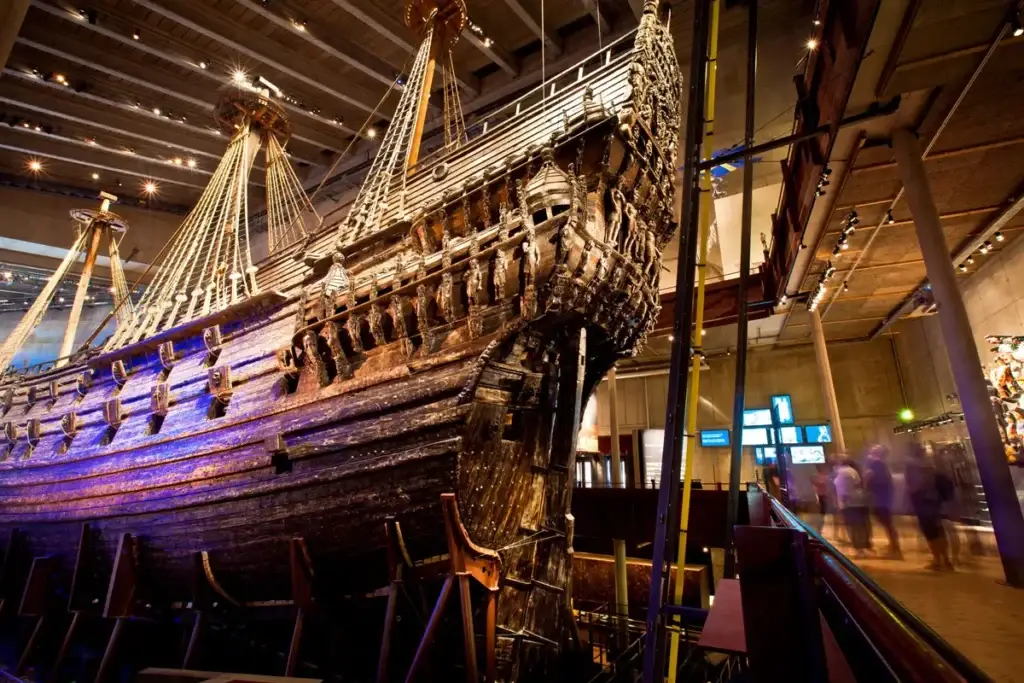
You begin at the Vasa Museum, home to a 17th-century warship that sank on its maiden voyage and was recovered centuries later. Walking around the preserved hull, you see intricate carvings and the sheer scale of the ship. Exhibits explain the engineering mistakes that led to its sinking and how it was raised from the seabed. The museum connects Sweden’s period as a Baltic power with tangible physical evidence.
Djurgården Island
After the museum, you stay on Djurgården and walk through the island at ground level rather than heading straight back into the city. The paths are simple and easy to follow, with trees on either side and water never far away. People jog, cycle, or sit along the shoreline, and it’s easy to see how close nature is to everyday life here. Being on Djurgården helps you understand that Stockholm isn’t just built on water; it’s built around accessible green space.
Stockholm Archipelago Boat Trip
Later, you head out by boat into the Stockholm Archipelago, which is one of the real highlights of your time in the capital. As the city skyline fades behind you, clusters of small islands begin to appear, smooth rock, pine trees, and simple wooden houses painted deep red or mustard yellow. Some islands have just a handful of homes and a jetty; others are completely untouched. Traveling through this maze of water and land makes it clear that Stockholm doesn’t simply sit beside the sea, it stretches into it. The archipelago gives you scale, space, and a completely different perspective from street level, and it’s often the part of Stockholm people remember most.
Overnight in Stockholm
Day 3: Stockholm to Örebro – Castle & Lake
This morning, you leave Stockholm and travel west through forests and farmland toward Örebro. The scenery becomes more open as you move inland, with lakes and wide horizons replacing the island landscape of the capital.
Örebro Castle
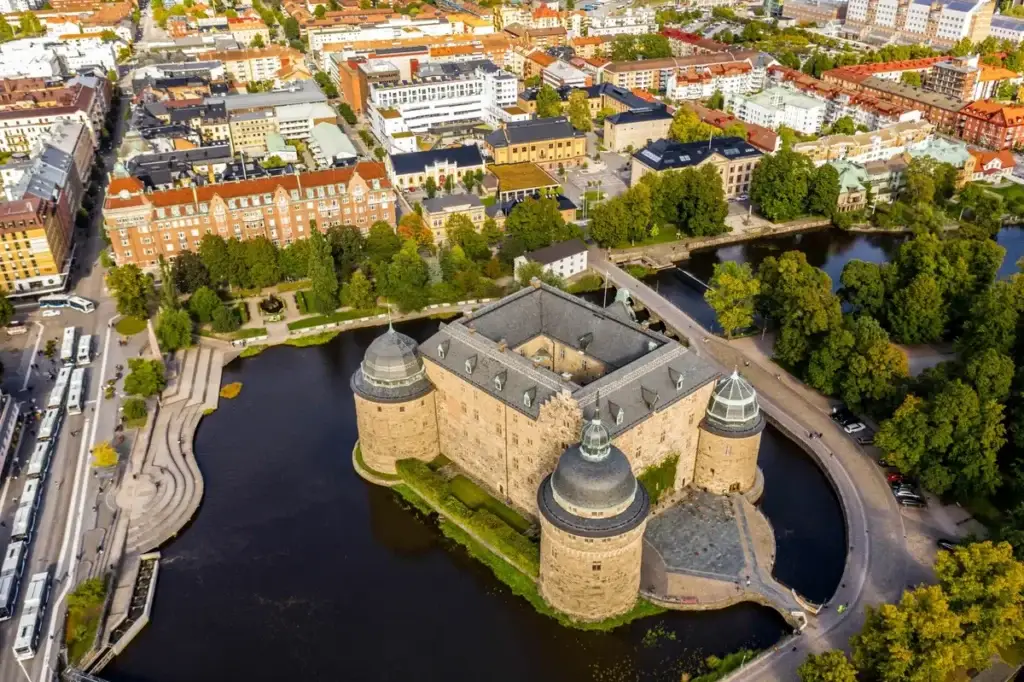
You begin at Örebro Castle, which sits low and solid in the middle of the river. It doesn’t rise dramatically on a hill; instead, it feels built into the town itself, which makes it easy to see how it once controlled movement through the region. Inside, you walk through thick-walled rooms and corridors that show how the structure evolved over time, from a defensive stronghold to a more comfortable residence. Some spaces are simple and heavy, others more refined, reflecting different periods of Swedish rule. Standing in the courtyard, it’s clear this was once about control and protection rather than display.
Stadsparken & River Walk
After the castle, you walk along the river and through Stadsparken, where the town opens into green space. The water moves steadily beneath small bridges, and the castle remains visible from different angles, giving context to its position. This part of Örebro feels local and everyday, with people cycling past, families walking, and cafés near the water. It gives a clearer sense of how Swedish towns function outside the capital, where nature and daily life tend to sit close together rather than being separated into distinct zones.
You arrive at your accommodation in Örebro in the late afternoon, with time to settle in before dinner.
Overnight in Örebro
Day 4: Örebro to Gothenburg – Vänern & West Coast Arrival
You continue southwest toward Sweden’s west coast, passing stretches of countryside and large inland lakes. By afternoon, the landscape shifts again as you approach Gothenburg and the sea.
Lake Vänern
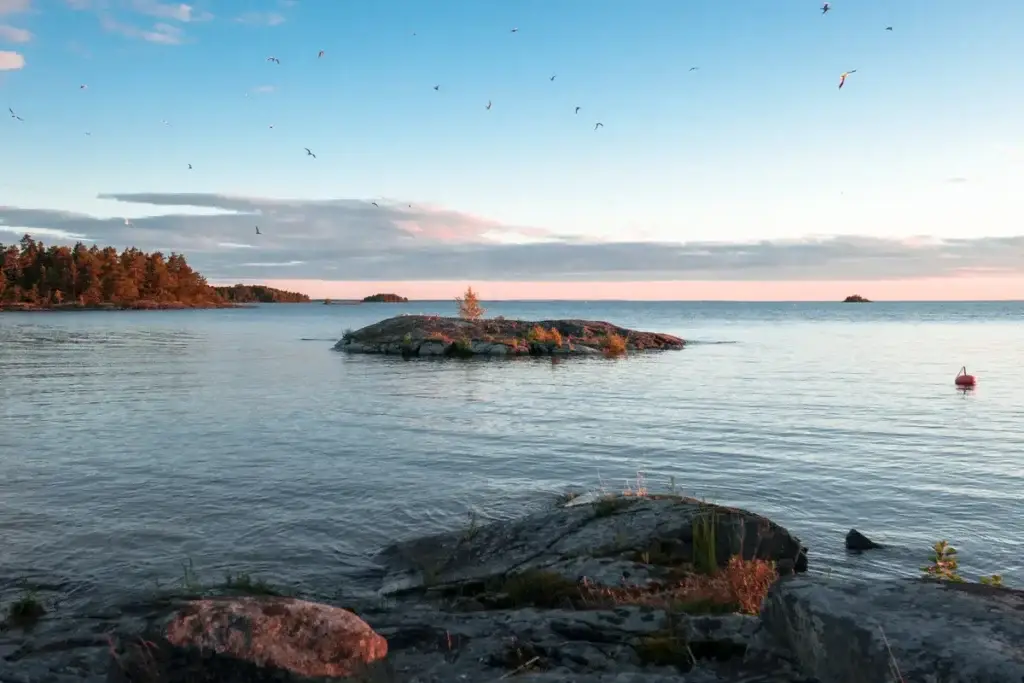
You stop near Lake Vänern for a walk along the largest lake in Sweden. The water stretches out wide in front of you, and on most days it’s quiet apart from the sound of wind and small waves against the rocks. There are simple wooden docks, a few boats tied up, and long views across the lake with no buildings blocking the horizon. It’s an easy stop, just time to walk, look out over the water, and take in the space before continuing toward the coast.
Gothenburg Harbor District
By afternoon, you arrive in Gothenburg and begin exploring near the harbor. The canals cut through the center in straight lines, and walking beside them gives you a clear sense of direction and scale. You move between bridges, open squares, and historic brick buildings that once supported the city’s trading economy. Spending time here makes it clear that Gothenburg grew as a working port, and that connection to trade and the North Sea still shapes the atmosphere today.
You arrive at your hotel in Gothenburg in the early evening, with time to settle in before dinner.
Overnight in Gothenburg
Day 5: Gothenburg & Bohuslän Coast
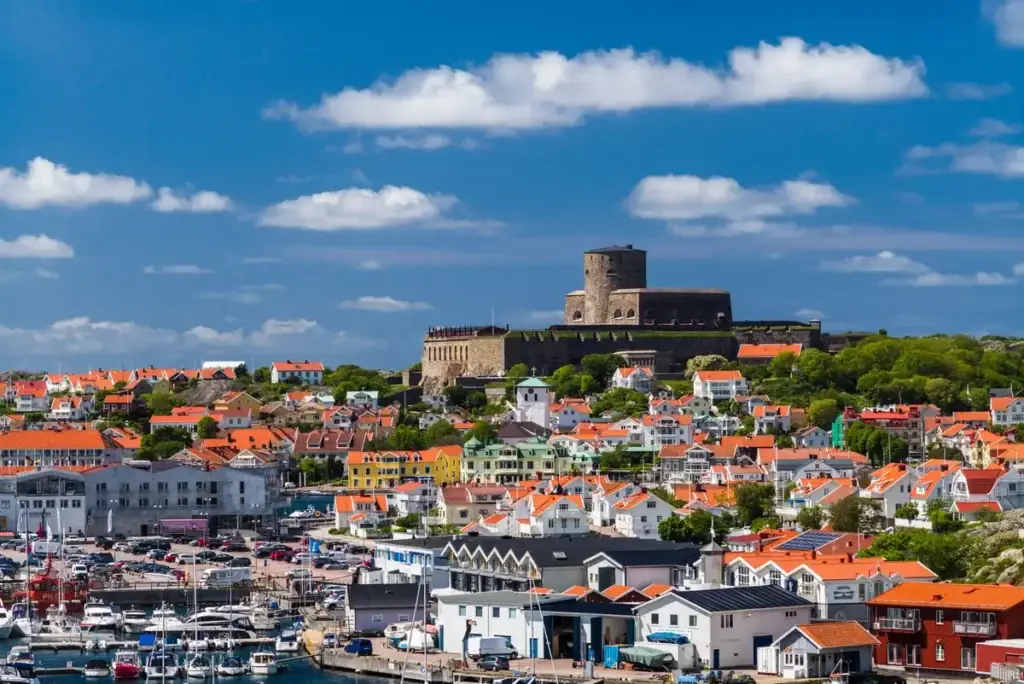
Today is focused on Gothenburg and the rocky Bohuslän coastline north of the city. The mix of harbor districts and exposed coastal villages shows a different side of Sweden from the Baltic east.
Gothenburg Old Town (Haga)
You begin in Haga, one of Gothenburg’s most established historic neighborhoods. The preserved wooden houses date back to the 19th century, originally built for workers in the growing port city. Today, the area has evolved into a district known for independent Scandinavian design stores, specialist food shops, and some of the city’s best cafés. Walking through Haga gives you context for Gothenburg’s social history, how it expanded during industrial growth, while also showing how older districts have been carefully restored rather than replaced.
Bohuslän Coastal Drive
Leaving the city behind, you drive north along the Bohuslän coast and stop in one of the smaller fishing communities. The landscape changes quickly with smooth granite rock slopes down toward the sea, and wooden boathouses sit close to the water’s edge. You walk along the shoreline and out over the rocks, with open sea stretching westward. Stopping at selected viewpoints, you see how fishing communities developed in sheltered coves protected from the North Sea winds.
Marstrand Fortress
You visit Marstrand, where Carlstens Fortress stands above the harbor. Climbing toward the fortress gives views across the surrounding islands. The site once guarded important sea routes, and walking through the stone corridors helps you understand its defensive purpose. The contrast between peaceful harbor life below and the heavy stone fortifications above is striking.
Overnight in Gothenburg
Day 6: Gothenburg to Linköping – Canal & University City
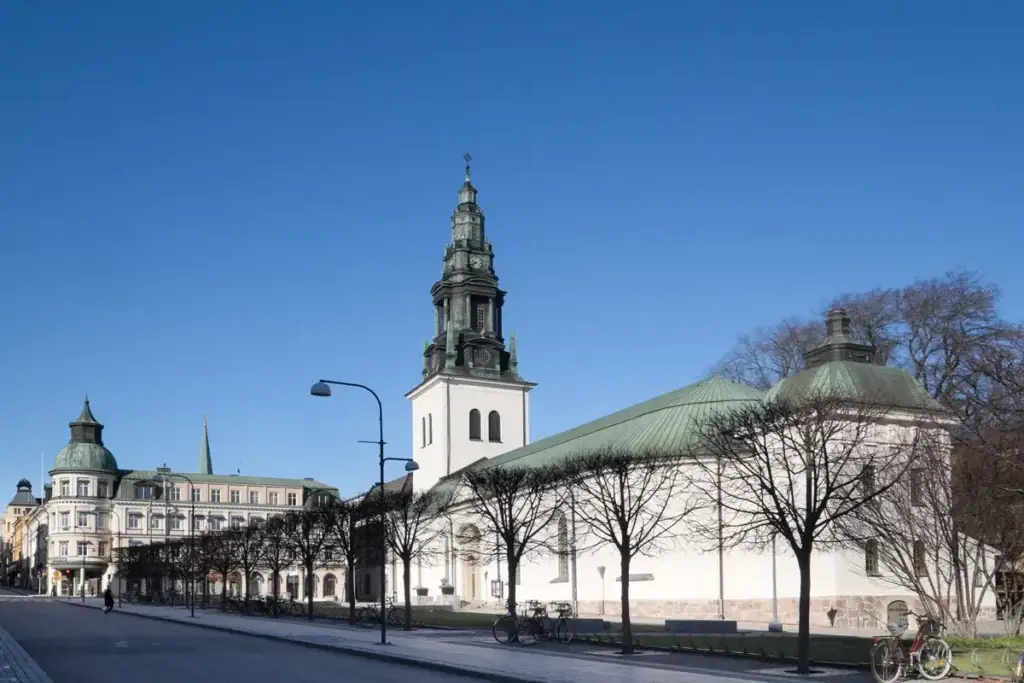
You leave the west coast behind and travel east across southern Sweden. The route brings you to canal towns and historic cities that developed away from the open sea.
Göta Canal
Traveling east, you stop at a section of the Göta Canal. Walking along the canal path, you watch boats slowly rise or lower in the lock system, guided by simple mechanical gates that are still operated much as they were when first built. The canal was designed to link Sweden’s major lakes and create a transport route across the country. Standing beside the water, it’s easy to understand how important this connection once was before railways took over long-distance trade.
Linköping Cathedral
In Linköping, you visit Gamla Linköping, an open-air historic district made up of preserved wooden buildings relocated from around the region. Your guide will lead you through the district, where you’ll see small houses, workshops, and shops that reflect everyday life in earlier centuries. Unlike a reconstructed theme setting, the area feels grounded and practical, showing how towns in southern Sweden once functioned.
Overnight in Linköping
Day 7: Linköping to Stockholm
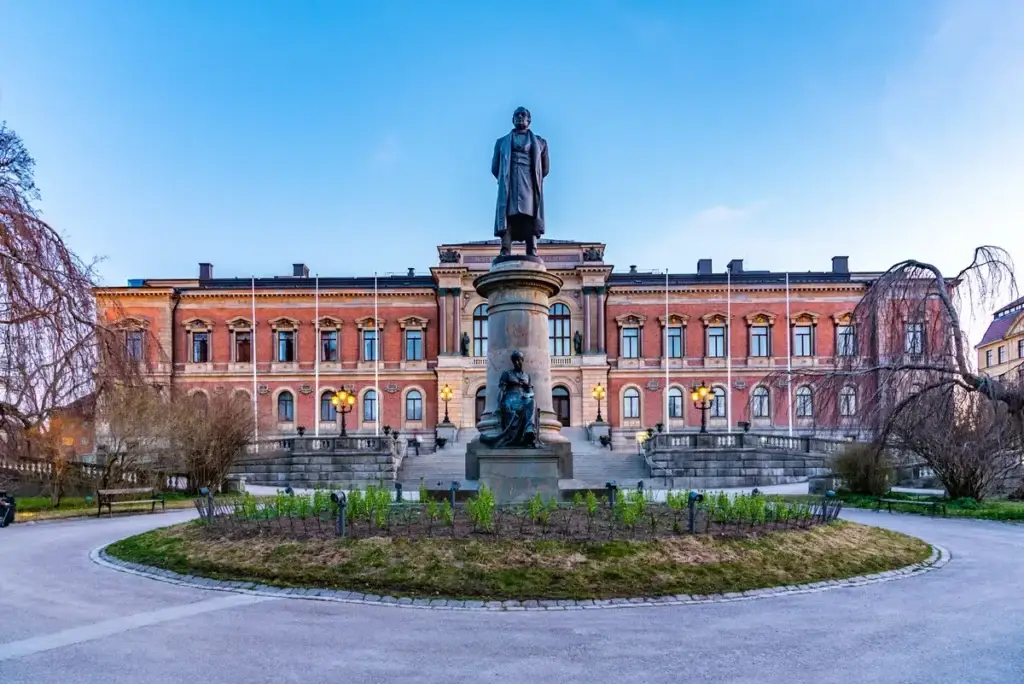
On your final day, you make your way back toward Stockholm with a stop in Uppsala. The return journey ties together Sweden’s royal, religious, and academic history before concluding in the capital.
Uppsala Cathedral
On your return toward Stockholm, you stop at Uppsala Cathedral, the tallest church in Scandinavia. The two brick towers stand well above the rooftops around them, so you see the cathedral before you reach it. Once inside, you walk the length of the nave and into the side chapels, where several Swedish monarchs and historical figures are buried. The space is tall and uncluttered, with light coming in through high windows and long views from one end to the other. Spending time here helps you understand how closely religion and royal authority were once connected in Sweden, and why Uppsala held national importance long before Stockholm became the political center.
Uppsala University District
A short walk brings you into the university district, where academic buildings sit alongside cafés and student spaces. Uppsala University has been at the center of Swedish education since the 15th century, and its presence is still evident today. You pass lecture halls, libraries, and older institutional buildings that reflect different periods of expansion.
Once you have finished exploring the university, you return to Stockholm in the afternoon, where your private tour concludes with a drop-off at your hotel or the airport.