
Day 1 – Arrival in Berlin
Upon arrival in Berlin, your private driver-guide meets you at the airport and transfers you into the city. During the drive, you begin to understand how Berlin is laid out – the former East and West, the wide avenues of the government quarter, and the areas that still show signs of post-war rebuilding.
Orientation Walk: Brandenburg Gate to Museum Island
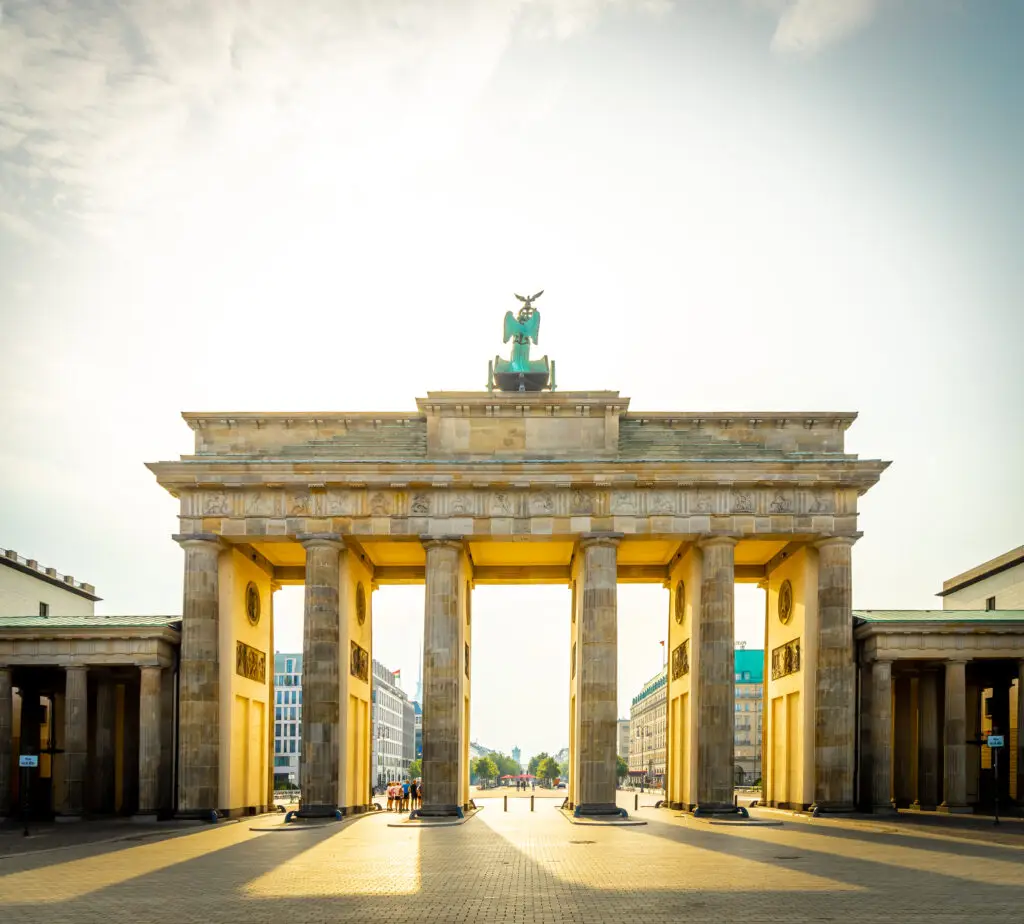
After settling in, you head out with your guide for a first walk through central Berlin. You start at Brandenburg Gate, spending a few minutes there before walking toward the Reichstag through open spaces that were once part of the divided city.
From there, you follow Unter den Linden at an easy pace, passing university buildings, embassies, and busy pavements. The walk finishes around Museum Island and the Berlin Palace, where restored façades sit alongside newer structures.
Your evening is then free for a quiet dinner before a busy day two in Berlin.
Return to your Berlin accommodation.
Day 2 – Berlin Wall & Government Quarter
The Berlin Wall & Checkpoint Charlie
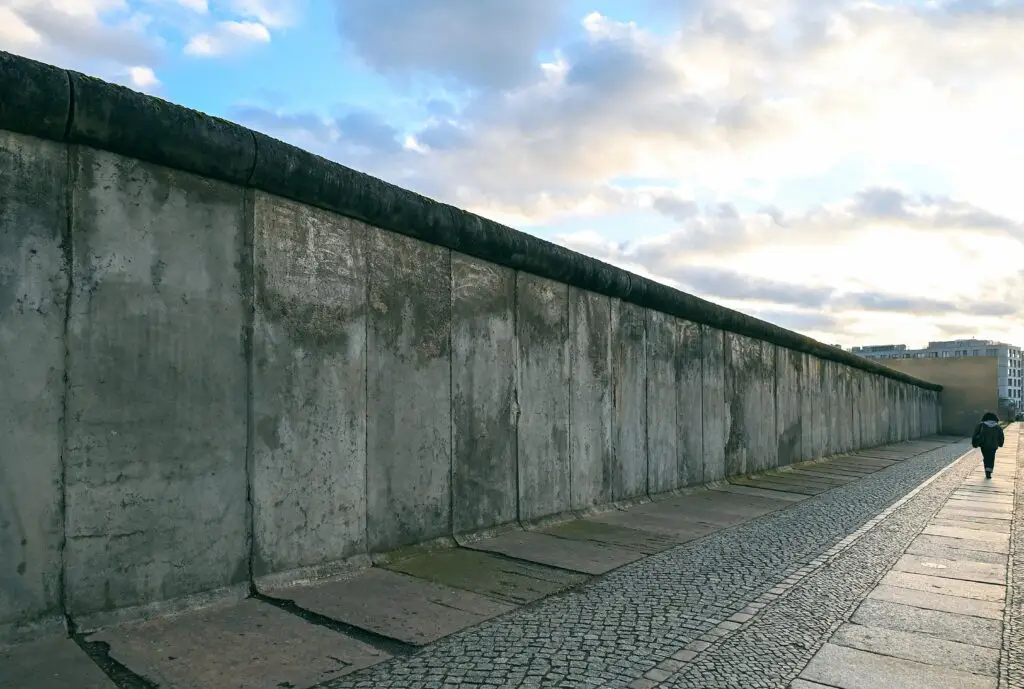
Today focuses on Berlin’s 20th-century history. You visit preserved sections of the Berlin Wall and walk along part of the former “death strip,” where guard towers and barriers once divided the city.
At Checkpoint Charlie, your guide explains how the crossing functioned and what daily life looked like on both sides. The scale of division becomes easier to imagine when you stand in the actual spaces where it unfolded.
Reichstag Dome
You then visit the Reichstag and ascend to the glass dome. Walking up the spiral ramp, you look down into the parliamentary chamber below. From the top, Berlin stretches outward in every direction, broad, green, and less dense than many European capitals.
Neighbourhood Perspective
In the afternoon, you explore a neighborhood such as Prenzlauer Berg or Kreuzberg. Cafés spill onto sidewalks, murals cover building walls, and small markets reflect the city’s multicultural side. It provides a contrast to the formal government quarter and memorials.
Return to your Berlin accommodation.
Day 3 – Potsdam Day Tour
Sanssouci Palace & Gardens
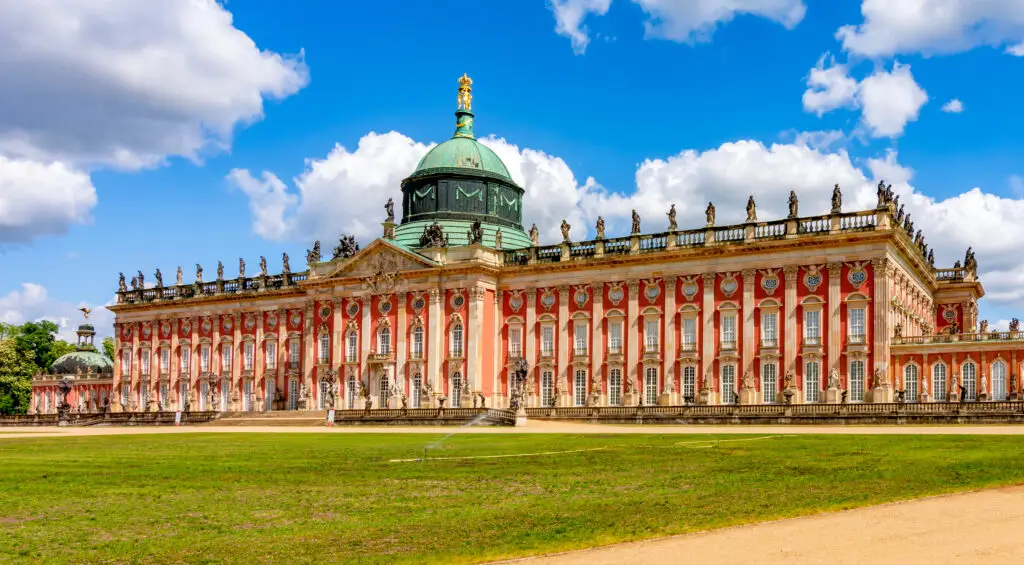
Today you travel to Potsdam, once home to Prussian kings. At the Sanssouci Palace, you walk through elegant but restrained royal rooms, designed more as a personal retreat than a grand display.
Outside, you stroll through the terraced vineyards and landscaped gardens. Fountains, pathways, and tree-lined avenues stretch across the estate, giving you time to explore at a relaxed pace.
Cecilienhof Palace
You then visit Cecilienhof, where the Potsdam Conference took place in 1945. Inside the rooms where Churchill, Truman, and Stalin met, your guide outlines how post-war Europe was divided and reshaped.
You’ll then return to Berlin in the early evening for a final night in the German capital.
Return to your Berlin accommodation.
Day 4 – Berlin to Dresden
Scenic Transfer into Saxony
On day four, your private guide meets you at your accommodation as you depart Berlin. You’ll travel south through farmland and small towns before reaching Dresden along the Elbe River.
Dresden Old Town Walk
In Dresden, you explore the compact old town on foot. The Frauenkirche stands at its center, rebuilt after wartime destruction, and you step inside to see the restored dome and light-filled interior.
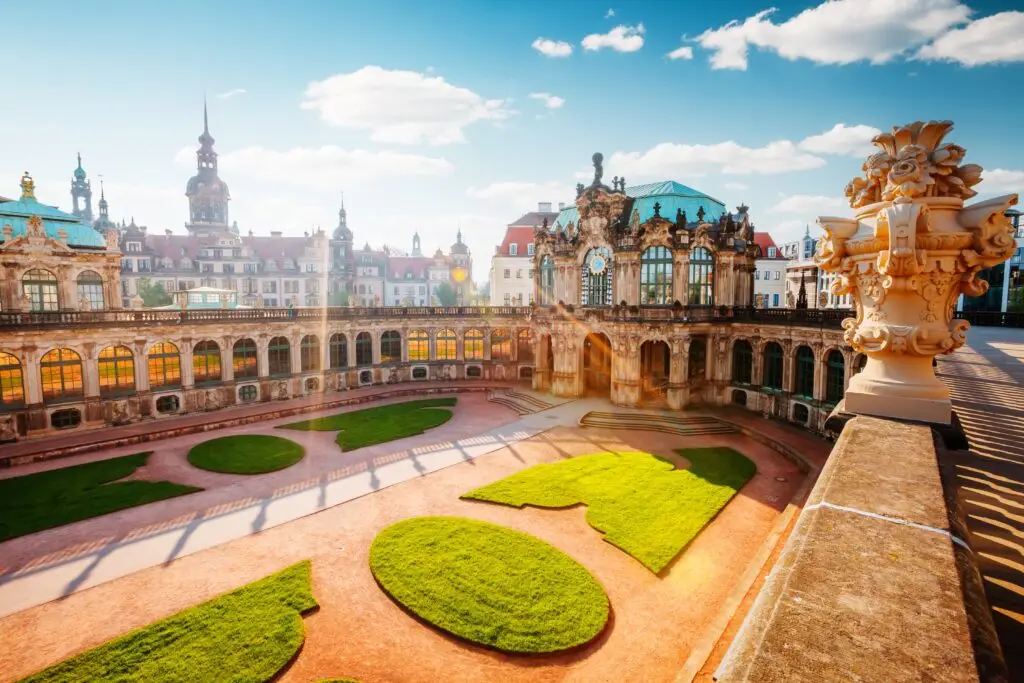
You continue past the Semper Opera House and into the Zwinger Palace courtyard, where baroque architecture surrounds open squares and galleries. The scale and symmetry here feel different from Berlin, more ornamental, more formal.
Overnight in Dresden.
Day 5 – Saxon Switzerland National Park
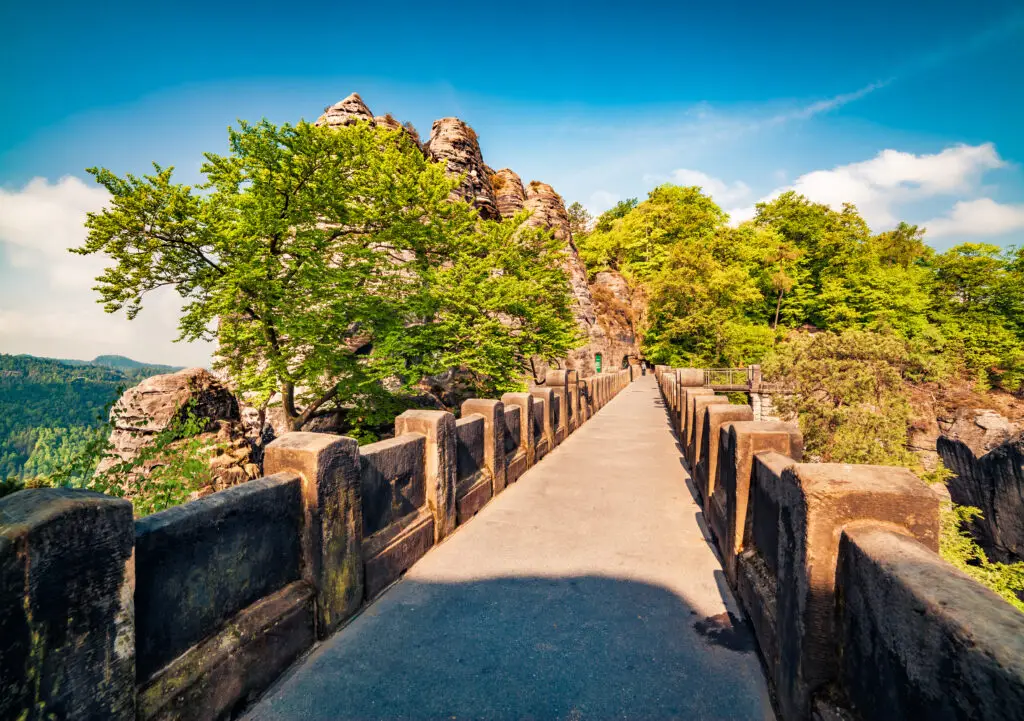
Bastei Bridge
Today, you head on an exciting day trip to the breathtaking Saxon Switzerland National Park. At Bastei Bridge, you walk across the stone arches set high above the Elbe, with sheer sandstone cliffs dropping away below. From here, the scale of the landscape is clear with rock formations rising straight out of the forested valley.
You follow short paths through the surrounding area, stopping at viewpoints along the way. Your guide points out how the rock formations were shaped over time and helps you get a sense of how this landscape fits together, rather than treating it as a single photo stop.
River Valley & Scenic Stops
Later, you descend toward the river, where the atmosphere feels calmer. Small villages sit along the water, and the cliffs appear less dramatic but still imposing.
You head back toward Dresden in the late afternoon, the sandstone cliffs gradually giving way to open river views and farmland before the city’s church domes come back into view.
Overnight in Dresden.
Day 6 – Dresden to Rothenburg ob der Tauber
Today, you journey into Franconia, where vineyards and half-timbered houses begin to appear more frequently.
Rothenburg ob der Tauber
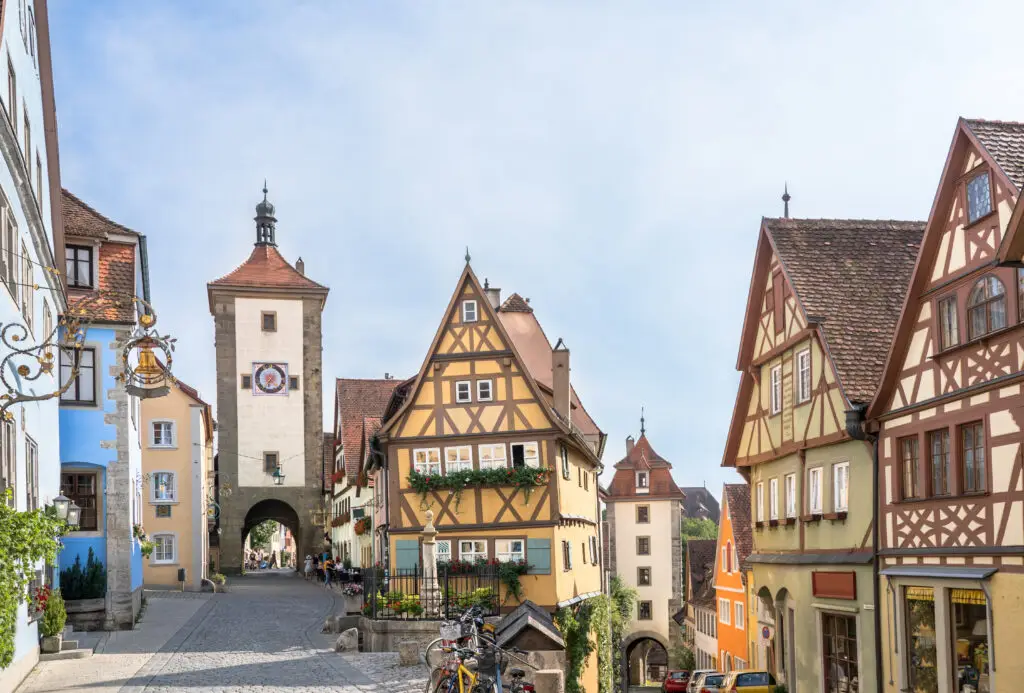
In the afternoon, you arrive in the picturesque town of Rothenburg ob der Tauber, one of Germany’s best-preserved medieval towns, where city walls, timber-framed houses, and narrow streets remain largely unchanged. Begin by walking along a section of the medieval town walls, looking out over rooftops and the surrounding countryside. Back inside the walls, narrow streets run between timber-framed houses and open onto small squares that still feel lived-in rather than staged.
In Market Square, you pause by the Town Hall before stepping into St. Jakob’s Church. Inside, the scale changes with higher ceilings, a quieter space, and you spend time looking at the carved wooden altar, one of the town’s most distinctive features.
As you walk, you see why Rothenburg became one of Germany’s best-preserved medieval towns.
Overnight in Rothenburg or nearby.
Day 7 – Romantic Road to Füssen
Leaving Franconia & Following the Romantic Road
Today, you leave Franconia behind and follow part of Germany’s Romantic Road, a historic route that once linked important trading towns across southern Germany. The day’s pace is relaxed, with the drive broken up by stops that give the route its character.
Dinkelsbühl: A Walled Medieval Town
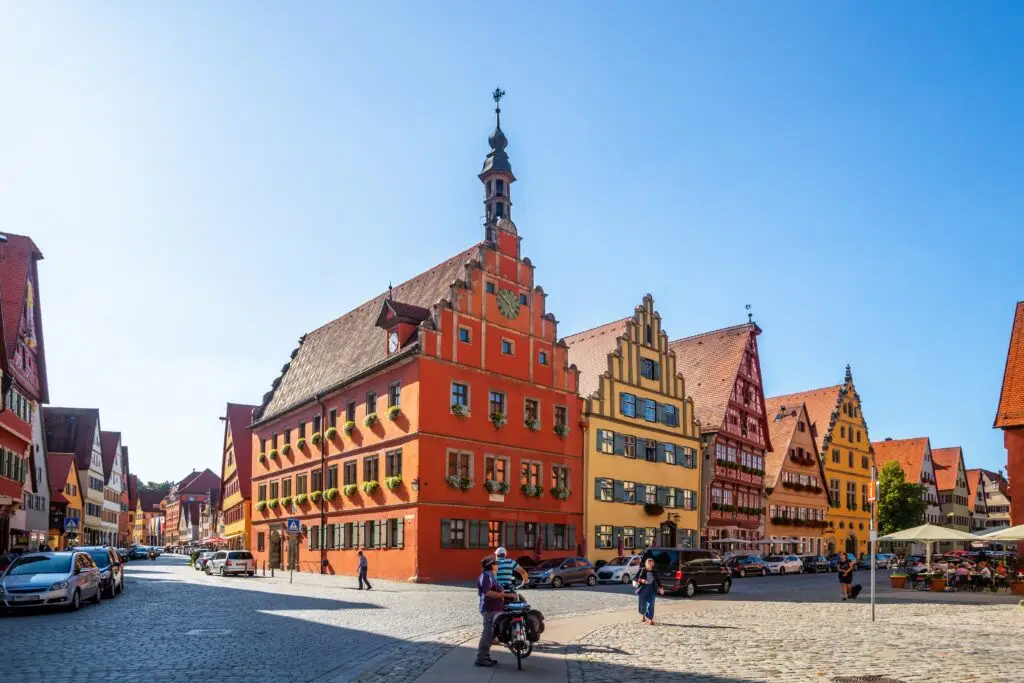
Your first stop is Dinkelsbühl, one of the best-preserved walled towns along the route. Entering through the city gate, you walk along streets lined with timber-framed houses painted in muted reds, yellows, and greens. The town still follows its medieval layout of narrow streets, small squares, and a clear center marked by the church tower.
Walking a short section of the town walls, you can see how compact and self-contained the town once was, with open countryside immediately beyond the fortifications.
Bavarian Countryside & Optional Stop in Augsburg
Continuing south, the landscape opens up into farmland dotted with small villages and onion-domed churches. Depending on timing and interest, you may stop in Augsburg, one of Germany’s oldest cities, where broad streets, Renaissance fountains, and former merchant houses hint at its long trading history.
Arrival in the Alpine Foothills
As the afternoon progresses, the Alps begin to appear ahead of you, first as a low outline on the horizon, then gradually rising into sharper ridges. Lakes begin to appear beside the road, and the scenery shifts from open plains to mountain foothills.
You arrive in the Füssen area with the mountains forming a constant backdrop.
Overnight in the Füssen area.
Day 8 – Neuschwanstein Castle & Alpine Surroundings
Morning in Hohenschwangau
Today is centered around Neuschwanstein Castle, but the experience begins well before you reach the entrance. Starting in Hohenschwangau, you’re surrounded by steep forested hills and alpine air, with the sound of cowbells and distant traffic far below.
Walk Up to Neuschwanstein & Marienbrücke
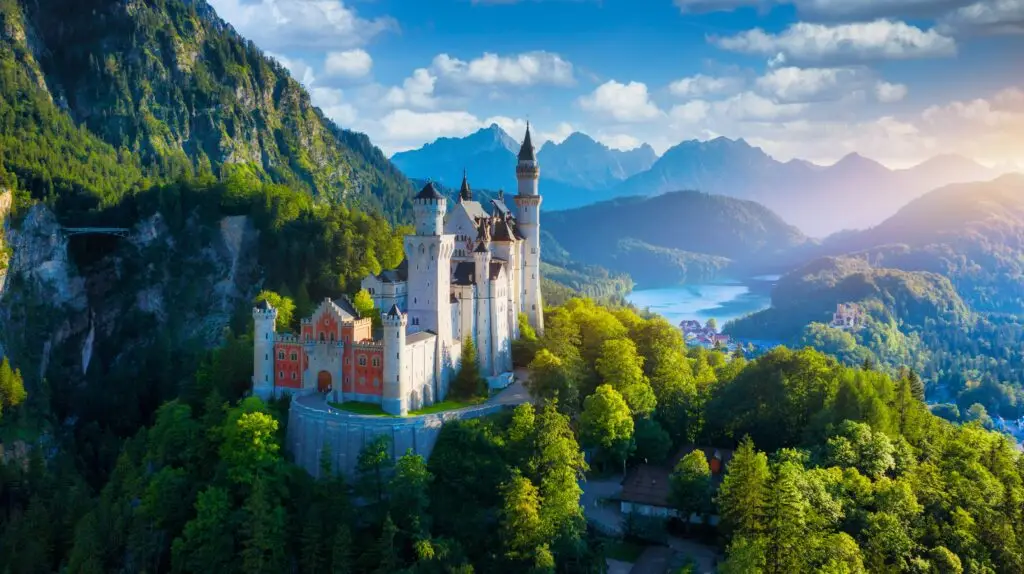
You make your way uphill toward the castle along forest paths, gaining height steadily. Before entering, you stop at Marienbrücke, a narrow bridge suspended above a gorge. From here, Neuschwanstein appears in full, towers rising from the forest, Alpsee Lake visible below, and mountains framing the scene on all sides.
Inside Neuschwanstein Castle
Inside the castle, you move through a series of highly decorative rooms. Murals depict scenes from German legends, ceilings are painted in deep blues and golds, and the scale of the Singer’s Hall feels theatrical rather than practical. The visit gives a clear sense that this was a fantasy retreat rather than a functioning royal residence.
Alpsee Lake or Füssen Old Town
In the afternoon, the pace slows. You may walk beside Alpsee Lake, where still water reflects the surrounding peaks, or spend time in Füssen’s old town. The town is compact and relaxed, with painted façades, small cafés, and mountain views at the end of nearly every street.
Overnight in the Füssen area.
Day 9 – Bavarian Countryside to Munich
Leaving the Alps Behind
This morning, you leave the alpine foothills and travel north toward Munich. The scenery gradually softens, steep slopes give way to rolling meadows, farms sit between villages, and church domes begin to appear more frequently along the route.
Arrival in Munich & Old Town Exploration
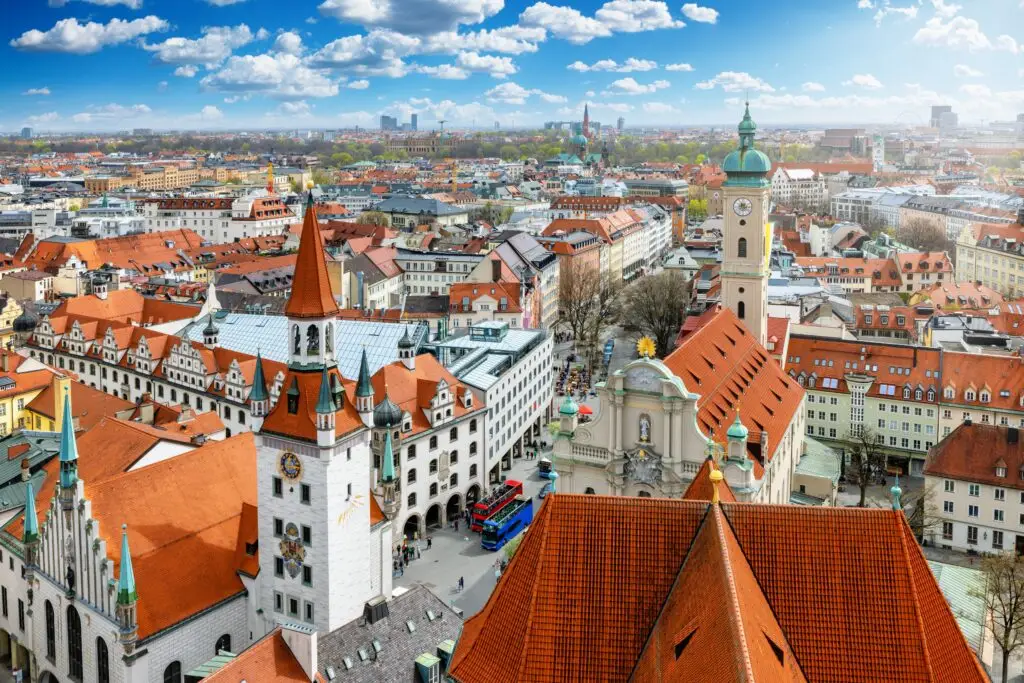
Arriving in Munich around midday, you head straight into the historic center. At Marienplatz, you stand beneath the New Town Hall, its ornate stone façade rising above the square. Nearby streets lead you toward Frauenkirche, where the vast interior feels calm and understated compared to the busy streets outside.
Viktualienmarkt & Local Atmosphere
From there, you walk through Viktualienmarkt, Munich’s central food market. Stalls display bread, cheeses, sausages, and seasonal produce, while locals stop for lunch or a quick drink in the surrounding beer gardens. This part of the day is about atmosphere rather than sightseeing, watching the city move at its own pace.
Bavarian Social Life
Later, you visit the Residenz courtyard or pause inside a traditional beer hall. Long wooden tables, vaulted ceilings, and constant conversation create a lively contrast to the quiet lakes and mountain villages of the previous days.
The evening is free to enjoy Munich at your own pace.
Overnight in Munich.
Day 10 – Departure
After breakfast, your private driver-guide transfers you to Munich Airport for your onward journey.