
Day 1 – Venice
(Approx. 0.5 hours driving total, broken up)
You’ll be met on arrival and transferred to your accommodation. After time to check in and reset, the day focuses on walking at a steady pace through Venice. Your driver-guide helps orient you early, explaining how the districts connect and how to navigate the city comfortably over the next two days.
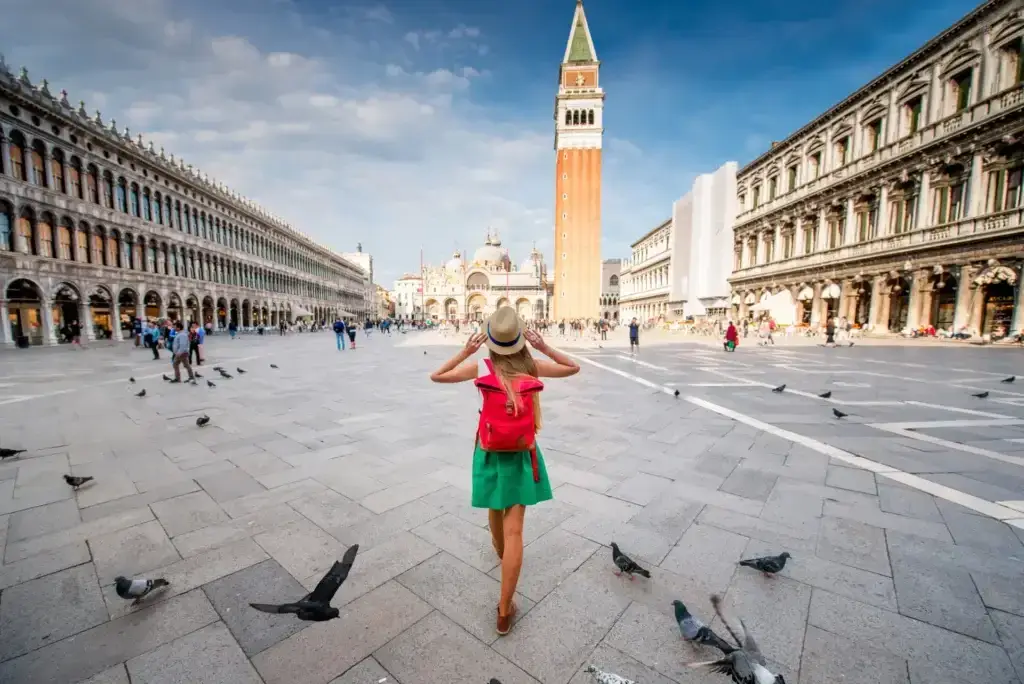
St Mark’s Square & Basilica Exterior
Begin in Piazza San Marco, the ceremonial heart of Venice. You’ll walk the square slowly, taking in the scale of the Basilica’s domes and mosaics from the outside, along with the Gothic façade of the Doge’s Palace. Rather than treating this as a quick photo stop, you’ll spend time understanding how this space functioned politically and socially during the Republic. The open piazza, the arcades, and the waterfront edge all combine to frame Venice at its most recognizable.
Doge’s Palace & Political Venice
Step inside the Doge’s Palace to explore the chambers where Venice was governed for centuries. Inside, you’ll step into the Great Council Hall, its walls lined with enormous canvases that once overlooked political decisions of the Republic. You’ll cross the Bridge of Sighs from within the palace itself and move through chambers where Venice’s trade routes and foreign alliances were negotiated. Seeing these rooms in sequence makes it easier to understand how the city operated at the height of its power.
Rialto & Grand Canal Walk
Continue toward the Rialto district through narrow lanes and smaller bridges. The gradual build-up toward the Rialto Bridge is part of the rhythm, with small canals, shopfronts, and glimpses of water before the Grand Canal opens wide beneath you. You’ll spend time on and around the bridge before following stretches of the canal at walking pace, watching boats move between the palazzi. Later, you’ll return to your accommodation, where you can unwind and enjoy your first Venetian evening.
Overnight in Venice
Day 2 – Venice to Ljubljana
(Approx. 3.5–4 hours driving total, broken up)
After breakfast, you’ll be collected from your accommodation and travel northeast toward Slovenia. The route leaves behind the Venetian lagoon and crosses open plains before the landscape begins to rise gently toward forested hills near the border. As you drive, your driver-guide will outline how this region shifted repeatedly between the empires of Venetian, Habsburg, and Yugoslav. By the time you arrive in Ljubljana, you will understand why the architecture and atmosphere feel subtly different from Italy. Arrival is timed to allow for an unhurried afternoon walk through the compact capital.
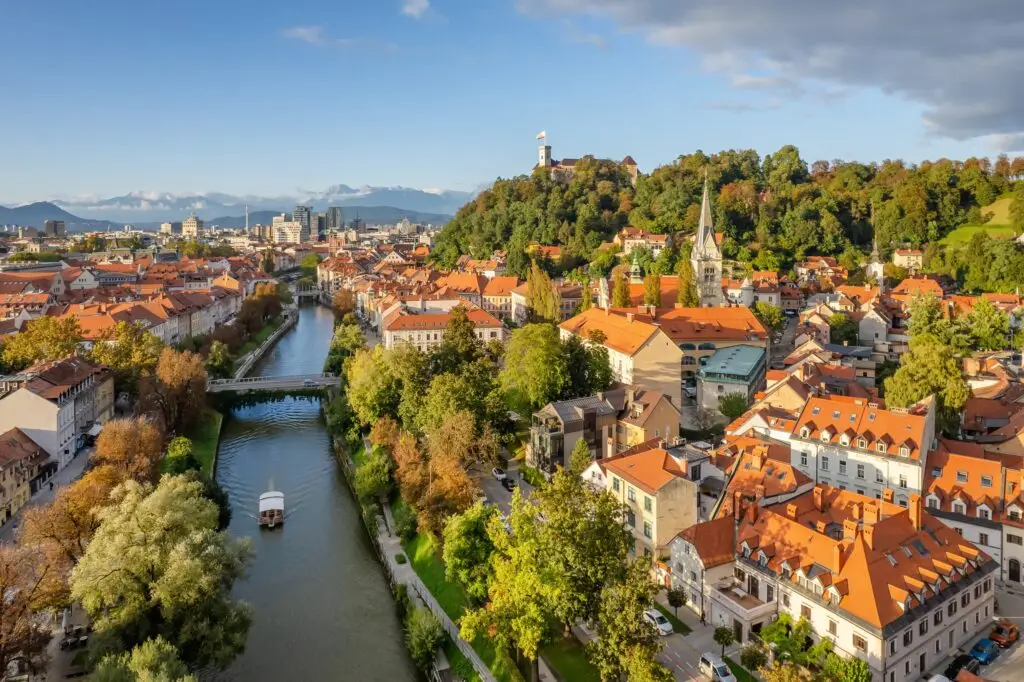
Ljubljanica River & Triple Bridge
Start by walking along the Ljubljanica River, where the center of Ljubljana is easy to explore on foot. You’ll cross the Triple Bridge and move between older streets and the more structured spaces added in the early 20th century. Along the riverbanks, cafés line the edges, and the buildings sit close to the water, giving the area a compact, lived-in feel. Your driver-guide will explain how architect Jože Plečnik reshaped the city after the First World War, giving Ljubljana its distinctive civic identity.
Old Town & Cathedral Quarter
Continue into the old town streets, where Baroque buildings and small squares create a gentle rhythm. You’ll spend time around the Cathedral and continue through the nearby market lanes, where locals still come for produce and everyday shopping. The center never feels oversized or overwhelming, even though it’s the capital. Along the way, you’ll notice small architectural differences between buildings from various periods, and get a clearer sense of how Slovenia’s more recent independence influenced the city’s identity. There’s time for a relaxed coffee stop before continuing uphill.
Ljubljana Castle
Take the funicular or walk up to Ljubljana Castle for a clear view over the city basin and distant Alps. From the ramparts, you can see the spread of red rooftops below and the green hills that surround the city, which helps you understand how compact Ljubljana really is. The castle itself has served different purposes over time, including a defensive stronghold and later a prison, before becoming the cultural space it is today. In the late afternoon, you’ll return to your accommodation and have the evening free to enjoy the riverside at your own pace.
Overnight in Ljubljana
Day 3 – Ljubljana to Lake Bled
(Approx. 1–1.5 hours driving total, broken up)
After breakfast, you’ll be collected from your accommodation for the short journey to Lake Bled. The road winds gently through forested countryside and small villages before the lake appears beneath the Julian Alps. During the drive, your driver-guide will share how Bled became a symbol of Slovenian identity, from royal summer retreat to postcard icon, so you arrive understanding why it matters beyond its scenery.
Lakeside Circuit Walk
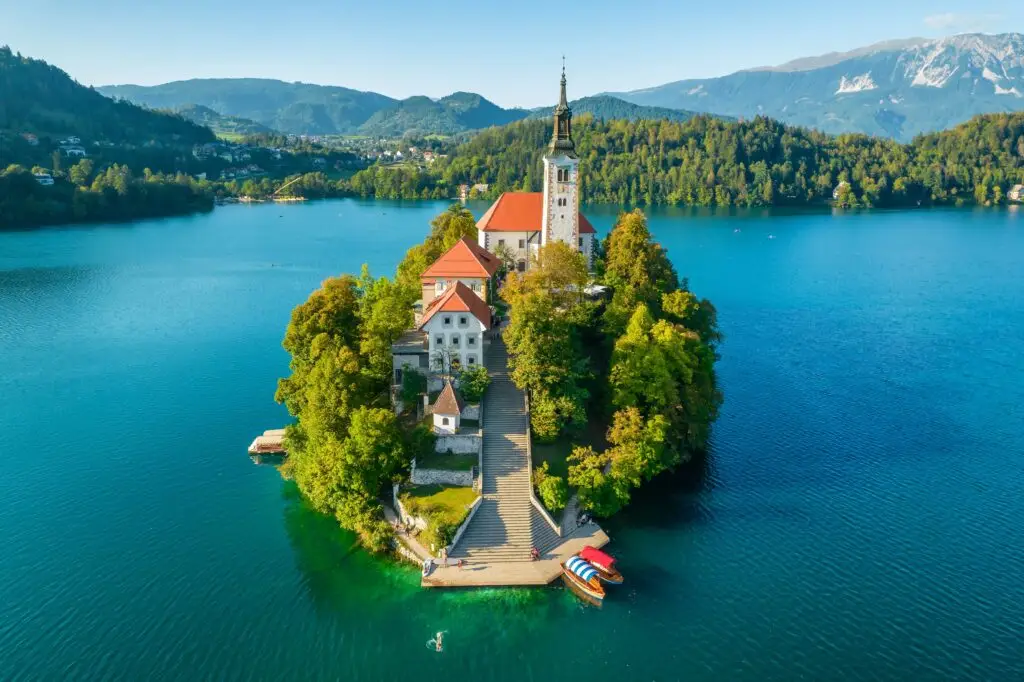
Begin with a steady walk along the lakeshore path, which circles the water and offers changing perspectives of the island church and cliffside castle. The path is mostly flat and easy, with frequent points to pause for photos or simply take in the water’s color. Your guide will point out how glacial formation shaped the lake basin and why the island became a focal point of local folklore. Walking rather than viewing from one fixed angle gives you a fuller sense of the setting.
Bled Island & Church
Board a traditional wooden boat to reach Bled Island. The short crossing provides a different vantage back toward the shoreline and mountains. On the island, you’ll climb the stone steps to the Church of the Assumption and have time to explore its interior. Your driver-guide will explain the island’s wedding traditions and bell-ringing customs, adding cultural depth to what might otherwise feel like a simple scenic stop.
Bled Castle Viewpoint
In the afternoon, ascend to Bled Castle, perched high above the lake. From the terrace, you’ll see the full layout, with the island centered, mountains rising behind, forested slopes framing the water. Inside the castle grounds, you can explore exhibition spaces or simply focus on the panoramic views. Later, you’ll be driven back to your accommodation, where you can unwind, enjoy dinner overlooking the lake, and take in the quiet Alpine atmosphere.
Overnight in Lake Bled
Day 4 – Lake Bled to Rovinj (Istria)
(Approx. 2.5–3 hours driving total, broken up)
After breakfast, you’ll depart Lake Bled and travel south toward Croatia’s Istrian Peninsula. The drive transitions from Alpine scenery into rolling countryside before opening toward the Adriatic coast. Along the way, your driver-guide will explain how Istria’s identity blends Italian and Croatian influences, helping you notice language, cuisine, and architectural details once you arrive in Rovinj.
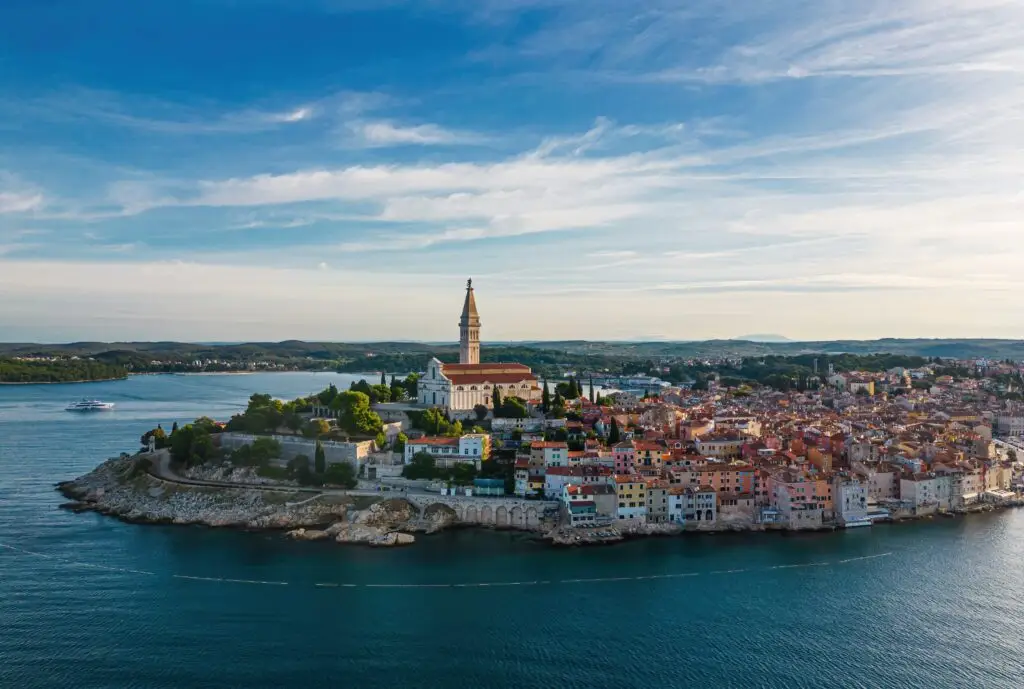
Rovinj Old Town Climb
Begin exploring Rovinj by walking uphill through its narrow, cobbled lanes. The walk up toward St. Euphemia’s Church is steady rather than steep, passing stone houses and small galleries along the way. As you reach the open space around the church, the bell tower becomes the clear focal point above the town. From the edge, you can look out over the harbor and the low islands offshore. Your driver-guide can point out how Venetian rule influenced the layout and building style, which becomes easier to spot once it’s explained.
Harbor & Waterfront Promenade
Descend toward the harbor where fishing boats and waterfront cafés define the atmosphere. The curve of the old town rising above the sea creates one of the Adriatic’s most photographed silhouettes. You’ll have time to walk the promenade, pause for seafood lunch, and watch daily life unfold. Your driver-guide may share insights into Istrian culinary traditions, olive oil, truffles, and wine, so the region’s food culture connects to the landscape around you.
Coastal Evening Walk
Later in the afternoon, enjoy a quieter coastal walk just beyond the old town’s busiest streets. The rocky shoreline and pine-scented air contrast with the compact medieval center. You’ll then be driven to your accommodation, where you can relax before dinner and enjoy Rovinj as it softens into evening light.
Overnight in Rovinj
Day 5 – Rovinj to Plitvice Lakes
(Approx. 3.5–4 hours driving total, broken up)
After breakfast, you’ll be collected from your accommodation and head inland toward Plitvice Lakes National Park. The drive leaves the Adriatic behind and gradually climbs into more forested, rural landscapes. As you travel, your driver-guide will explain how this region differs from the coast culturally and geographically, with fewer Venetian influences and a more continental character. The roads narrow slightly as you approach the park, reinforcing the sense that you’re heading into nature rather than another coastal town.
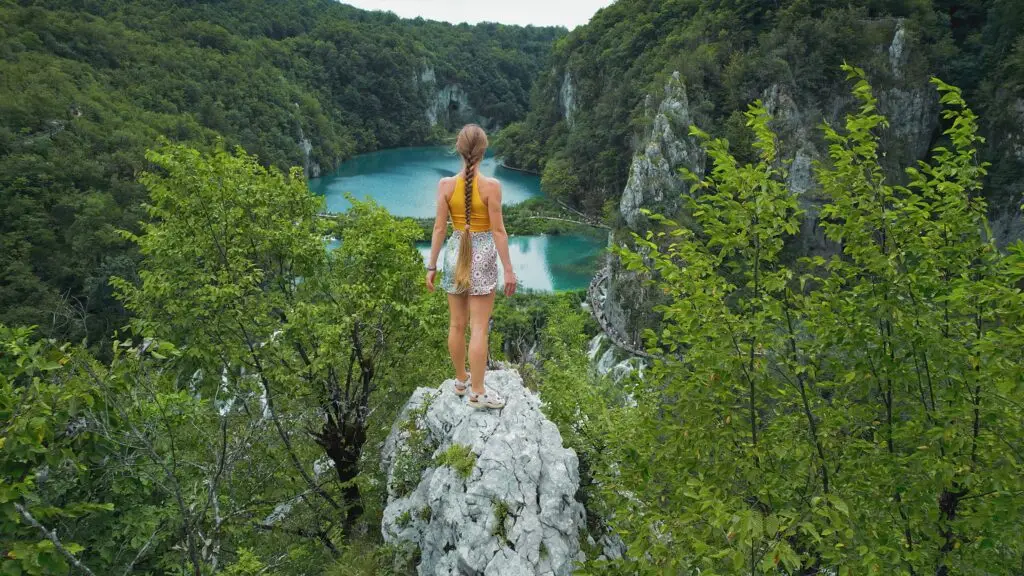
Plitvice Lower Lakes Boardwalk
Start in the Lower Lakes area, following wooden paths that run close to the water. The boardwalks take you over small streams and along the edge of the lakes, sometimes just above the surface. You’re close enough to hear the water constantly as you move through the section. The experience is immersive, as waterfalls appear unexpectedly around bends, and the constant sound of water shapes the atmosphere. The boardwalk design allows you to get close without disturbing the fragile ecosystem, and the layered pools create a sense of depth that changes with every viewpoint.
Veliki Slap & Upper Lake Section
Continue to Veliki Slap, the tallest waterfall in the park. From the main viewing area, you can see the full drop against the rock face. After spending time there, head into the Upper Lakes section, where the paths are more spread out, and the walking feels less enclosed than in the Lower Lakes. Your driver-guide will help choose the most logical walking loop based on weather and energy levels, ensuring the day feels rewarding rather than overly strenuous.
Lakeside Pause & Departure
Midway through the visit, you’ll have time for a relaxed pause near one of the larger lakes, either for a light refreshment or simply to sit and absorb the setting. The shifting water color and quiet forest backdrop make this a natural reset point. In the late afternoon, you’ll be driven to your accommodation near the park, where you can rest after a full walking day.
Overnight near Plitvice
Day 6 – Plitvice to Split
(Approx. 3–3.5 hours driving total, broken up)
After breakfast, you’ll depart the lakes region and head south toward the Adriatic coast. The drive transitions from inland forests to open coastal scenery, and as you approach Split, the sea begins to reappear between hills. During the journey, your driver-guide will outline how Split evolved from a Roman imperial retreat into a living coastal city, so when you step into the old town, the layout makes immediate sense.
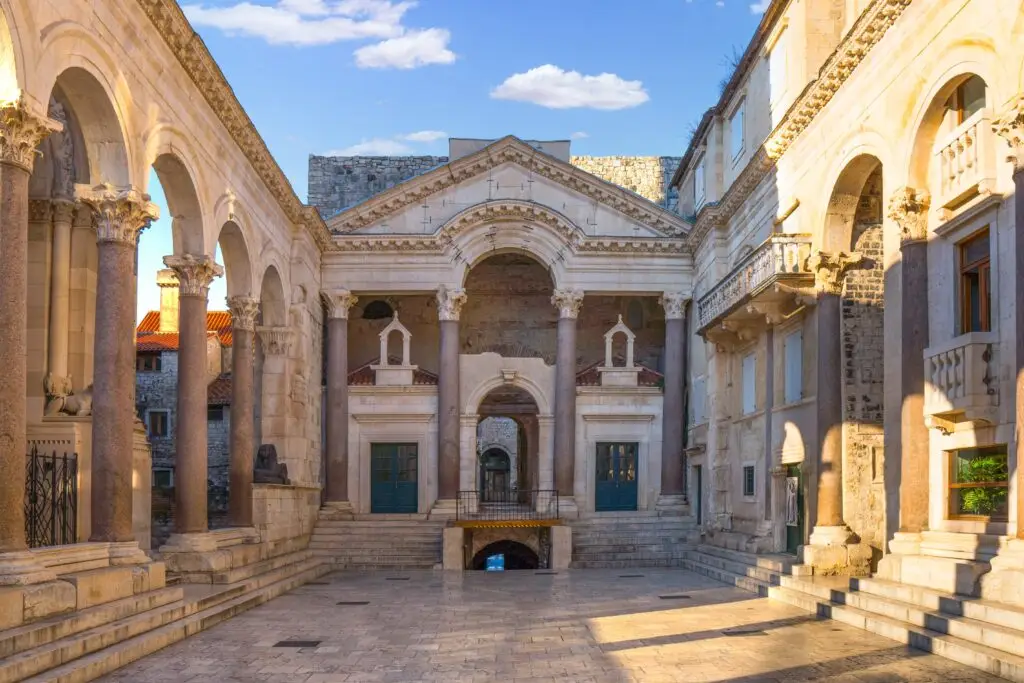
Diocletian’s Palace
Split’s historic center is built inside the walls of Diocletian’s Palace. Rather than approaching it as a single monument, you’ll walk through its gates and move naturally between Roman foundations, medieval additions, and modern cafés woven into the structure. You’ll visit the Peristyle courtyard and see how the Cathedral occupies what was once the emperor’s mausoleum. The experience feels less like touring ruins and more like walking through an inhabited archaeological site.
Split Waterfront (Riva)
From the palace, continue to the Riva promenade, where the city opens toward the harbor. Palm trees line the waterfront, and ferries move steadily in and out of port. This is a good place for a relaxed lunch or coffee while watching daily life. The contrast between ancient stone walls and modern coastal energy defines Split’s personality.
Marjan Hill Viewpoint
Later, make your way up toward Marjan Hill for a higher look over Split and the islands beyond. The climb is manageable and doesn’t require a long hike, just enough to rise above the rooftops. From this viewpoint, you can see how the old town sits right against the sea and how the harbor shapes the city’s layout. In the late afternoon, you’ll return to your accommodation to relax before the evening.
Overnight in Split
Day 7 – Split to Hvar
(Approx. 0.5 hours driving total, broken up – plus ferry crossing)
After breakfast, you’ll be transferred to the port for your ferry to Hvar. Once on the water, the pace shifts. The coastline falls away, and smaller islands begin to appear as you cross the channel. Your driver-guide handles the practical side before departure, so you can board without rushing or second-guessing anything.
Hvar Town Walk
On arrival, start with a walk through Hvar Town’s center. The streets are stone underfoot and mostly lead toward the main square near the harbor, where the cathedral sits just behind the waterfront. From there, you can turn into narrower lanes that climb gently uphill. It becomes quieter quickly once you step away from the promenade. Hvar isn’t large, so you can cover it comfortably without rushing.
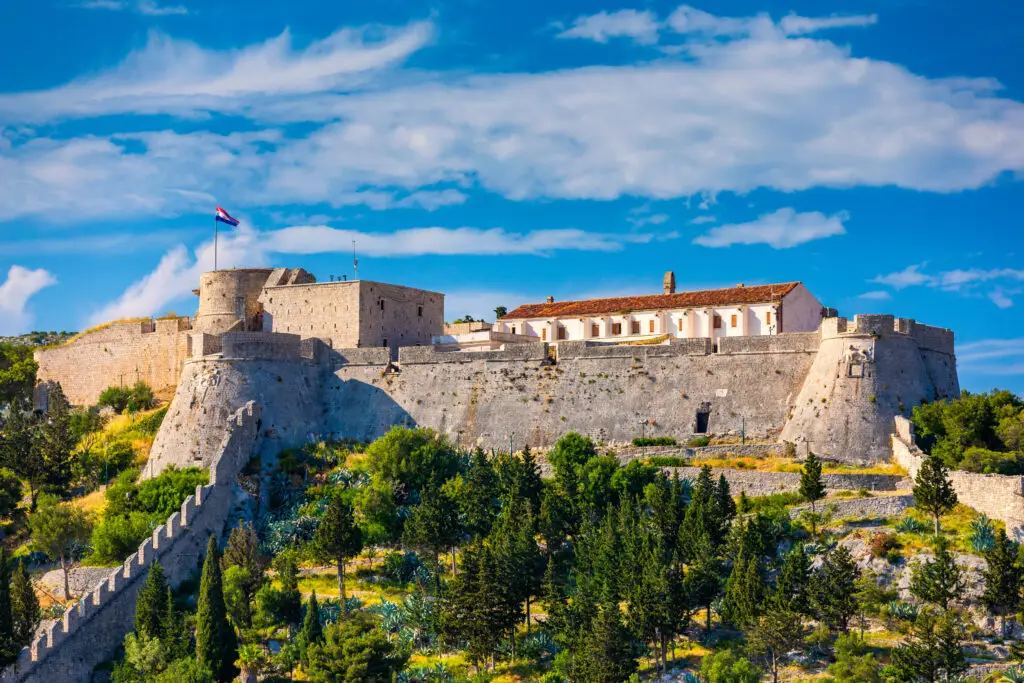
Fortress Viewpoint
Your guide leads you up to the fortress above town. The walk uphill is manageable, and from the top, you can look down over the harbor, the cluster of rooftops, and the islands offshore. Seeing it from this height makes the layout of Hvar clearer, especially how the town wraps around the protected port.
Afternoon at Leisure
The afternoon is intentionally open. You might swim from a nearby cove, take a short boat ride, or settle into a long lunch by the water. Hvar works best when you don’t overschedule it. Later in the day, you’ll be taken to your accommodation, where you can settle in, freshen up, and enjoy the island evening at your own pace.
Overnight on Hvar
Day 8 – Hvar to Dubrovnik
(Approx. 3–4 hours driving total, broken up – plus ferry crossing)
After breakfast, you’ll return to the mainland by ferry and continue south along the Adriatic coast. This stretch of road offers some of the most scenic views of the journey, with the sea on one side and hills rising sharply on the other. As you travel, your driver-guide may share stories of the former Republic of Ragusa, setting historical context before arrival in Dubrovnik.
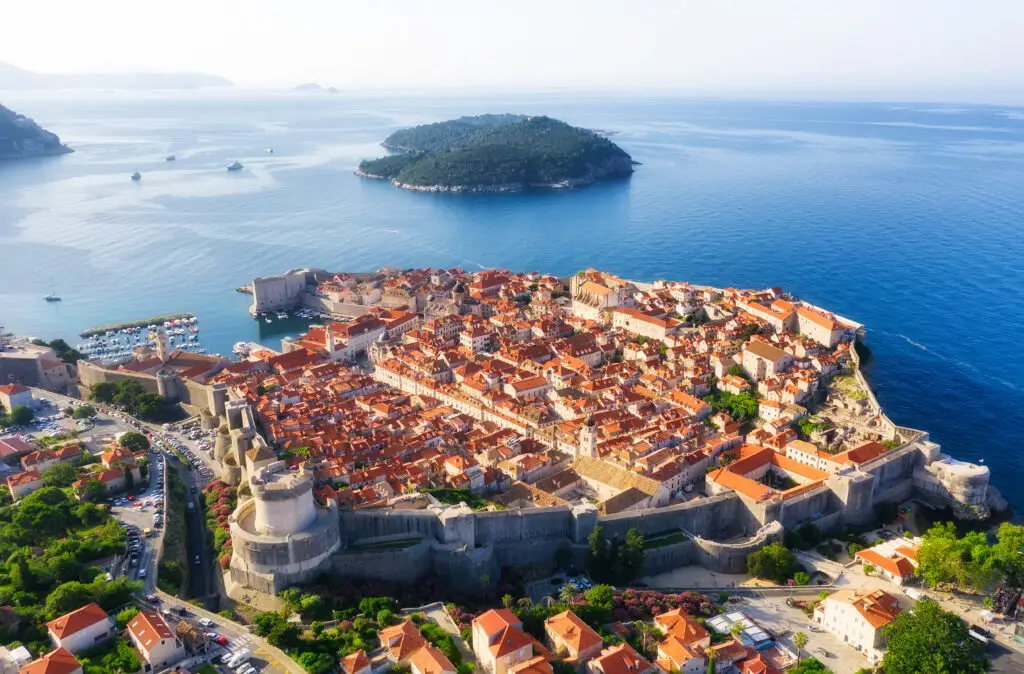
Dubrovnik City Walls
Begin with a walk along Dubrovnik’s city walls. The circuit provides elevated views over terracotta rooftops and the open sea beyond. You’ll move steadily between towers and bastions, stopping at key points where the scale of the fortifications becomes clear. The walk is not rushed; there’s time to absorb the perspective from above.
Stradun & Old Town
After descending from the walls, return to the Stradun and then step into the smaller streets that run off it. Along the way, you’ll pass monasteries, modest churches, and stairways that climb into more residential parts of town. As you walk, you’ll notice differences in the buildings, with older Gothic elements sitting alongside later Renaissance additions. It’s the kind of area where it’s worth slowing down rather than rushing between major landmarks.
Harbor & Evening Atmosphere
Finish near the old harbor where fishing boats sit beneath the walls. As the day softens, the light shifts across the stone façades. In the evening, you’ll be driven to your accommodation, where you can relax and enjoy Dubrovnik after the day’s visitors depart.
Overnight in Dubrovnik
Day 9 – Dubrovnik
(Approx. 0.5–1 hours driving total, broken up)
Today stays based in Dubrovnik, so you can go deeper without feeling rushed.
Fort Lovrijenac
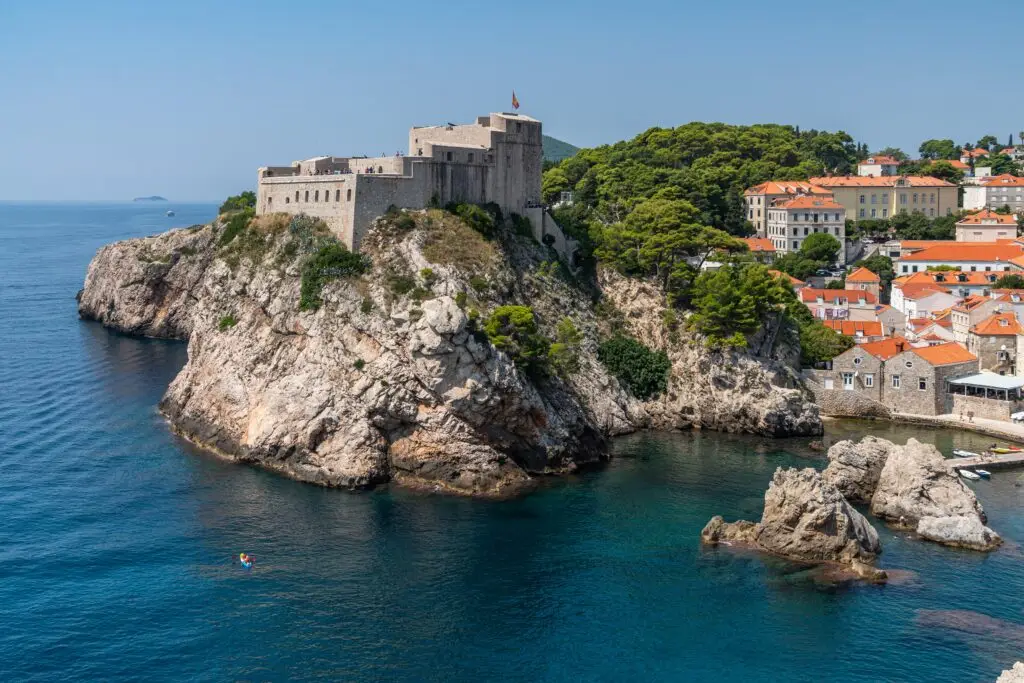
Fort Lovrijenac sits on a rocky outcrop just outside the city walls, with the sea crashing below and Dubrovnik’s fortifications stretching behind you. You’ll explore the terraces and interior spaces, moving between open viewpoints and stone chambers that once formed part of the city’s defense system. From up here, you get an excellent angle back toward the walls and the old town, which helps you understand Dubrovnik’s strategic position. It’s a strong stop because it feels dramatic and practical at the same time, built for protection, but also designed to dominate the approach to the city.
Mount Srđ Viewpoint
Next, head up to Mount Srđ for a panoramic view that pulls everything together. From the top, Dubrovnik becomes a clear layout: the old town’s block shape, the full line of city walls, the harbor curve, and the islands offshore. You’ll have time for photos, but also time to just stand and take in the scale, how compact the old town really is, and how exposed it would have been without its fortifications. If you’d like, you can pause at the viewpoint café area for a simple drink before heading back down.
Old Town Free Time
Finish your 9th day with free time to explore the old town. You might take your time over lunch in a quieter corner, revisit a favorite stretch of the main street, or look through local craft shops. There’s also the option of visiting a museum or church if you’d like some time indoors. This part of the day works well without structure, just exploring side streets and smaller squares at your own pace.
Overnight in Dubrovnik
Day 10 – Dubrovnik to Kotor
(Approx. 2–3 hours driving total, broken up)
After breakfast, you’ll be collected from your accommodation and travel south into Montenegro. Border timing varies, but the day is built to feel calm and realistic rather than tightly scheduled. As you approach the bay, your driver-guide will share how Montenegro’s coastal history differs from Dubrovnik’s, shaped by a mix of Venetian influence, Orthodox traditions, and mountain geography, so you arrive with a clearer sense of what you’re stepping into.
Bay of Kotor Arrival Drive
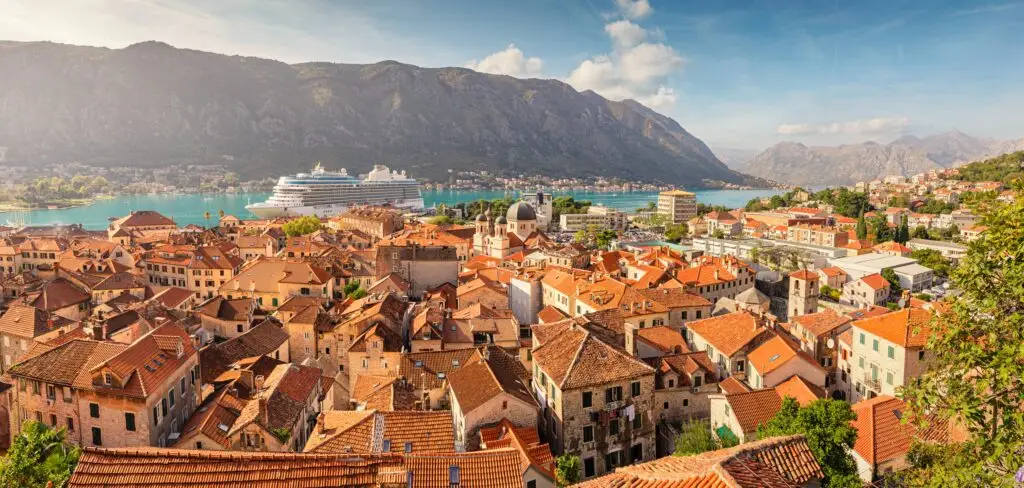
The approach to the Bay of Kotor is one of the standout road moments of the tour. The landscape tightens: mountains rise steeply from the water, and the shoreline bends continuously, so the views keep changing. You’ll follow the bay road with opportunities for short scenic pull-ins where safe, perfect for photos, and for simply taking in the scale of the setting. The bay feels enclosed and dramatic compared to the open Adriatic coastline, and that contrast is part of what makes arrival memorable. You’ll feel the atmosphere shift before you even reach the town.
Kotor Old Town
Kotor’s old town is small and enclosed by thick stone walls that extend up the mountainside behind it. Once you enter, it’s more about walking than ticking off sights. The lanes are tight and occasionally open into small squares, with churches and older buildings scattered throughout. It’s easy to drift into a quieter stretch, sit down for a drink, and just see where the streets take you.
Bayfront Evening
Later, spend some time walking along the waterfront promenade. The bay is usually calm, and as the day winds down, the atmosphere becomes quieter. It’s an easy place to choose a dinner spot, with restaurants facing the water and the mountains rising behind. Afterward, you’ll be driven to your accommodation, where you can unwind, settle in, and enjoy your first Montenegro evening at a relaxed pace.
Overnight in Kotor
Day 11 – Montenegro Coast
(Approx. 1.5–2.5 hours driving total, broken up)
After breakfast, you’ll be collected from your accommodation for a day exploring more of the bay and coastline. Distances are short, but the scenery is the feature, with repeated water-and-mountain views and small towns that feel very different from Croatia. Early in the day, your driver-guide will share local stories tied to the bay’s seafaring past and explain why so many settlements here developed as trading and naval outposts.
Perast Waterfront
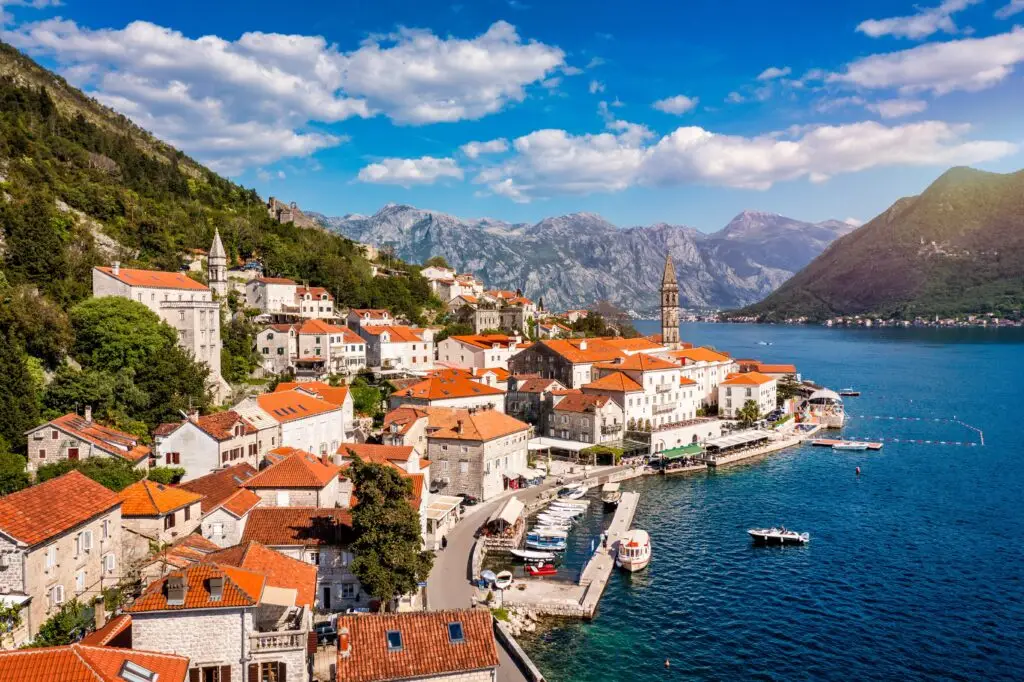
Perast is small, elegant, and built for a slow walk. You’ll spend time along the waterfront promenade, passing baroque palaces and old stone façades that hint at the town’s maritime wealth. The bay views here are particularly good because the water feels close and the mountains rise sharply behind the buildings. You’ll have time to sit for a coffee by the water, take photos across to the islets, and enjoy how calm the atmosphere is compared to larger coastal towns.
Our Lady of the Rocks
From Perast, take a short boat ride out to Our Lady of the Rocks, a tiny islet with a church and museum space. The ride is brief but scenic, giving you a wide view back toward the shoreline towns. On the island, you’ll visit the church interior and see the small displays that explain how the islet was built and why it matters locally. The experience is simple and atmospheric, with water all around, mountains framing the horizon, and a setting that feels uniquely “Bay of Kotor.” Afterward, return by boat to Perast and continue along the coast.
Budva Old Town
Later, head to Budva, where the vibe gets livelier. The old town is still compact and historic, enclosed by walls and surrounded by sea views, but the energy is different, with more promenade life, more cafés, more movement. You’ll wander the lanes inside the walls, walk the sea-facing edges for photos, and have time for a relaxed lunch or early dinner near the water. In the late afternoon, you’ll be driven back to your accommodation, where you can rest and enjoy your final full evening in Montenegro.
Overnight in Kotor (or Budva)
Day 12 – Departure
(Approx. 0.5 hours driving total, broken up)
After breakfast, you’ll be collected from your accommodation and transferred to Tivat Airport (or Podgorica if preferred). Your driver-guide ensures departure timing allows for a calm and organized check-in process. If flight timing permits, a short final stop along the bay can be arranged before heading to the terminal.