
Day 1 – Arrival in Dubrovnik
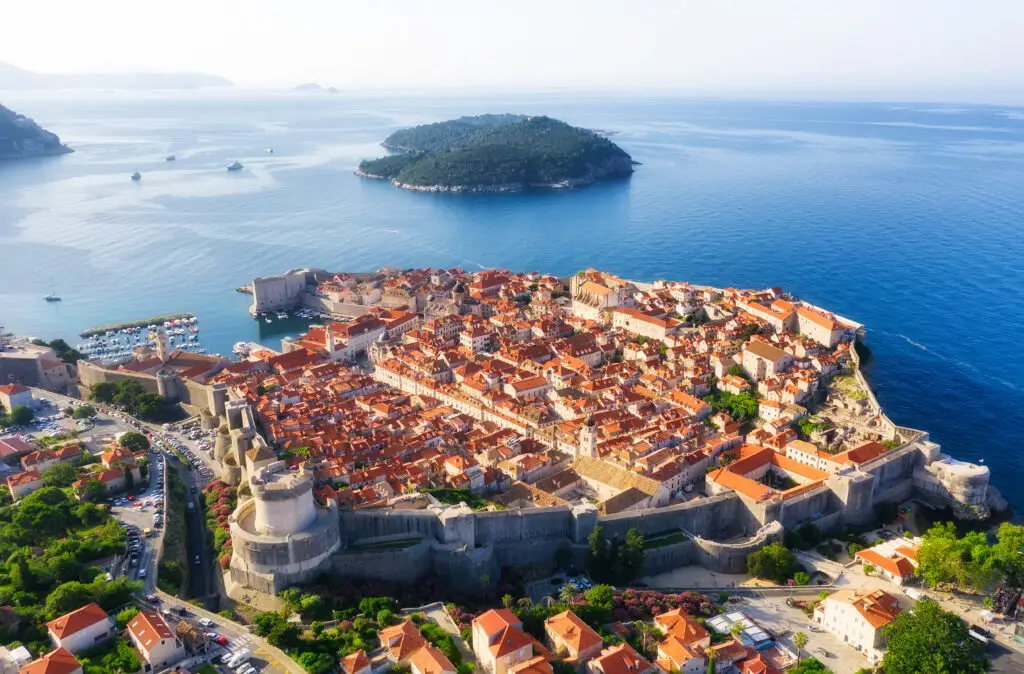
Your driver-guide meets you at Dubrovnik Airport and takes you on the short drive into the city. The road follows the coastline before climbing slightly above the Adriatic, where views open across the sea and the terracotta roofs of Dubrovnik’s old town. After checking into your hotel, spend the afternoon exploring one of the best-preserved historic cities on the Mediterranean.
Dubrovnik Old Town
Entering through the old city gates, you step inside Dubrovnik’s historic center, where narrow stone streets wind between medieval buildings. Walking through the old town, you pass churches, small squares, and shaded alleyways that open unexpectedly onto lively cafés and shops. The polished limestone streets reflect centuries of history, while the surrounding walls remind you that this city once stood as an independent maritime republic.
Stradun
The main street of Dubrovnik, known as the Stradun, runs straight through the center of the old town. Walking along the wide stone avenue, you pass historic buildings, fountains, and small shops tucked beneath the arches of the old houses. The street is always lively, with locals and visitors gathering in cafés or strolling along the polished stone pavement.
Dubrovnik City Walls
A walk along Dubrovnik’s famous city walls offers one of the best ways to understand the city. Following the stone ramparts, you move above the red rooftops while looking down into quiet courtyards and narrow streets below. On the seaward side, the Adriatic stretches out toward distant islands, while on the other side, the old town spreads out beneath the towers and fortifications.
Overnight in Dubrovnik
Day 2 – Exploring Dubrovnik
A full day allows you to see more of the coastline surrounding Dubrovnik, as well as some of the historic landmarks just outside the old town.
Lokrum Island
A short boat ride from Dubrovnik harbor brings you to Lokrum Island, a quiet natural retreat just offshore. Walking along shaded paths through pine trees and gardens, you pass small coves where the clear Adriatic water meets rocky shorelines. The island also contains the remains of a Benedictine monastery and several viewpoints overlooking the sea toward the city walls of Dubrovnik.
Fort Lovrijenac
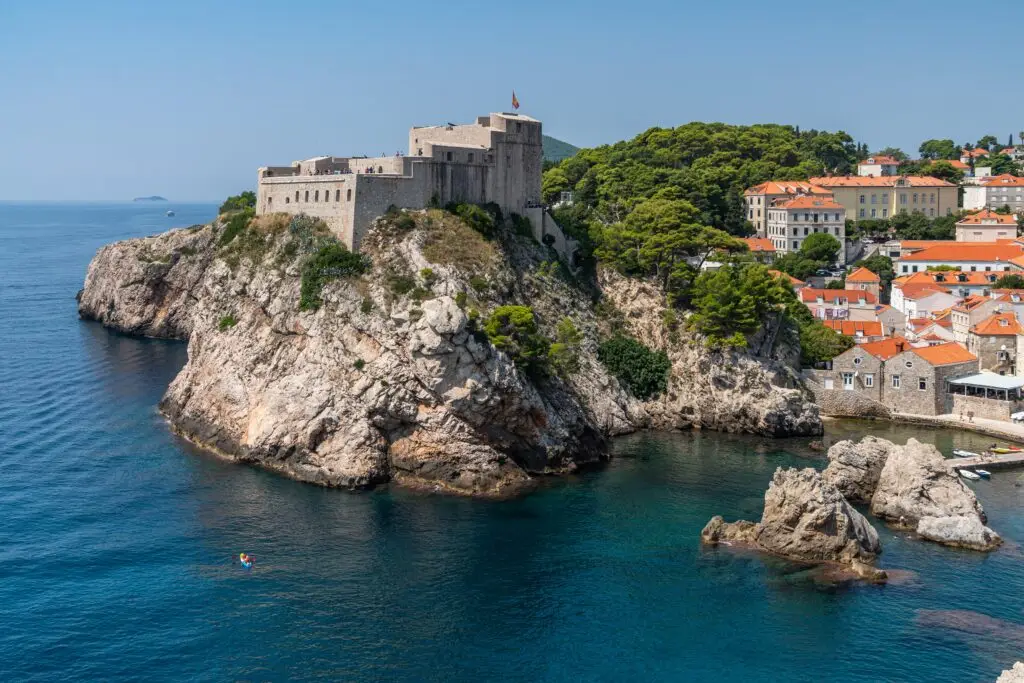
Standing on a rocky cliff just outside the old town, Fort Lovrijenac was built to defend Dubrovnik from sea attacks. Walking up the stone steps to the fortress entrance, you reach high terraces that look directly across to the city walls. From here, you can see the old town from a completely different angle while the waves of the Adriatic break against the cliffs below.
Dubrovnik Harbour
Returning to the old town harbor, you can walk along the waterfront where small boats sit beside the stone quay. The harbor has served as Dubrovnik’s maritime gateway for centuries, and today it remains a lively place where cafés and restaurants line the water’s edge. It’s an easy place to slow the pace and enjoy the atmosphere of the Adriatic coast.
Overnight in Dubrovnik
Day 3 – Dubrovnik to Split
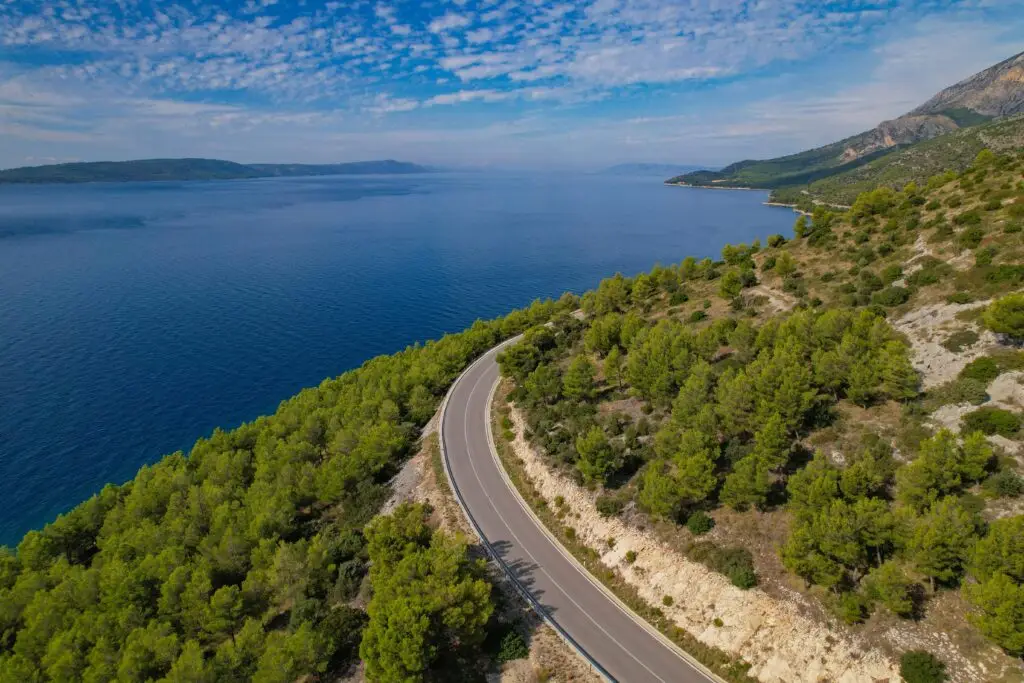
Leaving Dubrovnik behind, the journey continues north along the Dalmatian Coast. This scenic drive follows the Adriatic shoreline, passing small seaside towns, quiet bays, and views across the water toward Croatia’s many islands.
Dalmatian Coast Drive
The road north from Dubrovnik traces one of the most scenic sections of the Croatian coastline. As you travel along the Adriatic, the sea appears and disappears between rocky hills while small villages and fishing harbors sit beside the shoreline. There are several viewpoints along the route where you can pause briefly to take in the views across the islands scattered along the coast.
Arrival in Split
By afternoon, the road reaches Split, Croatia’s second-largest city and one of the most historic places along the Adriatic coast. The harbor is filled with ferries and sailing boats while the old town sits just behind the waterfront promenade. After checking into your hotel, the evening is free to explore the lively streets near the harbor
Overnight in Split
Day 4 – Exploring Split
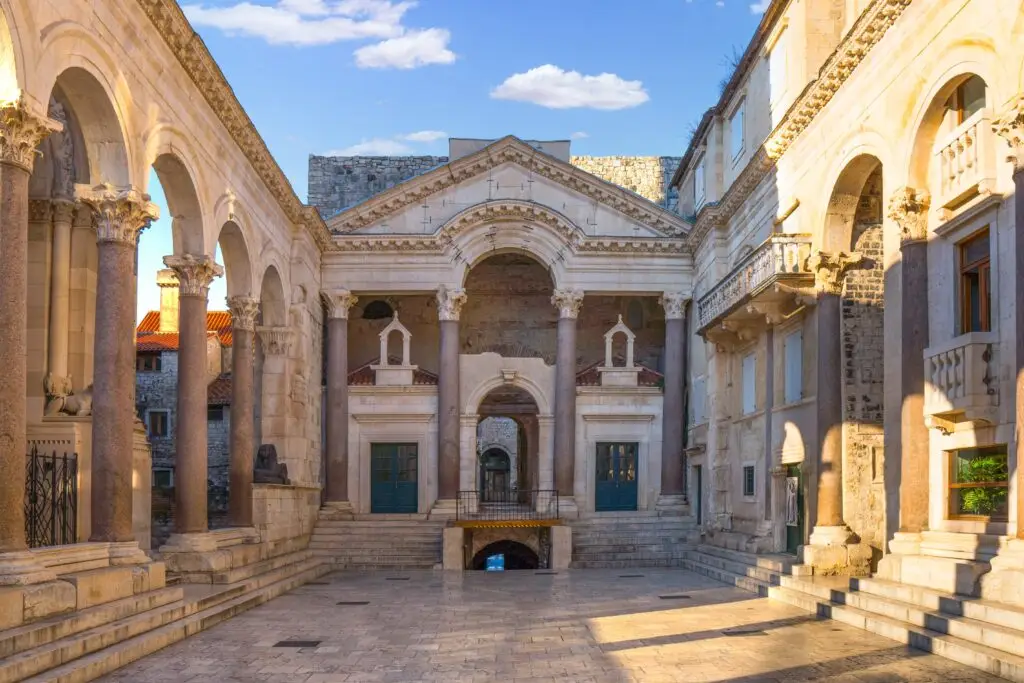
Split grew around the remains of Diocletian’s Palace, a vast Roman complex built along the Adriatic nearly two thousand years ago. Today, the palace forms the heart of the old town and remains one of the most unusual historic centers in Europe.
Diocletian’s Palace
Walking through the gates of Diocletian’s Palace, you enter a maze of stone streets built within the walls of the ancient Roman complex. Shops, homes, and cafés now occupy spaces that once formed the emperor’s residence. As you explore the palace corridors and courtyards, you pass Roman arches, hidden stairways, and small squares that show how the ancient structure has become part of everyday life in Split.
Split Waterfront
Just outside the palace walls lies Split’s lively waterfront promenade. Palm trees line the harbor while cafés and restaurants stretch along the edge of the sea. Walking along the promenade, you can watch ferries arriving from nearby islands while locals gather along the waterfront in the evening as the sun sets over the Adriatic.
Cathedral of Saint Domnius
Located within the palace complex, the Cathedral of Saint Domnius was originally built as the mausoleum of Emperor Diocletian. Inside the circular stone building, you’ll find carved columns, historic artwork, and a quiet interior that contrasts with the busy streets outside. Climbing the bell tower also offers wide views across the rooftops of Split and the harbor beyond.
Overnight in Split
Day 5 – Hvar Island Day Trip
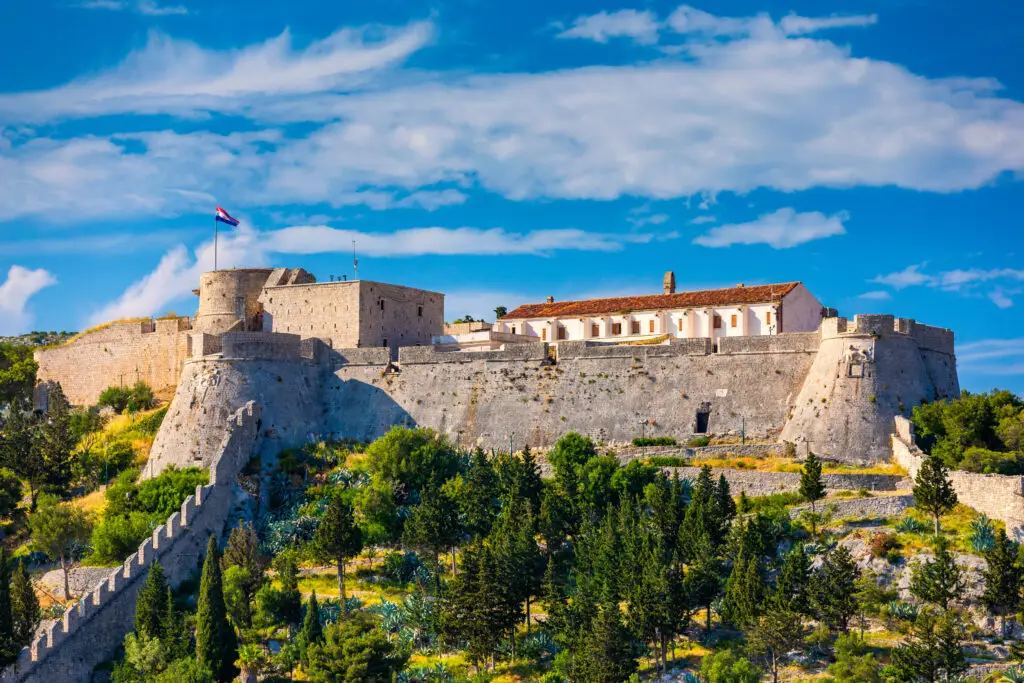
The islands off the Dalmatian coast are one of Croatia’s highlights, and today you visit one of the most famous. Ferries depart regularly from Split harbor, making it easy to reach Hvar Island for a day exploring its historic town and scenic coastline.
Ferry to Hvar
The morning begins with a short ferry journey across the Adriatic Sea. As the boat leaves Split harbor behind, the coastline slowly opens into views of Croatia’s island landscape. Small islands appear along the horizon while sailing boats move between quiet coves. The journey itself is part of the experience, offering time to enjoy the sea views as you approach the harbor town of Hvar.
Hvar Old Town
Arriving in Hvar Town, you step into a harbor surrounded by stone buildings and palm trees. The streets climb gently uphill from the waterfront, passing small squares, cafés, and historic houses built from pale Dalmatian stone. Walking through the old town reveals narrow lanes and shaded courtyards while the lively harbor remains visible between the buildings.
Fortica Fortress
Above the town sits Fortica Fortress, reached by a short walk uphill from the main square. From the fortress walls, the views stretch across Hvar Town and the nearby Pakleni Islands scattered across the Adriatic. Looking down toward the harbor gives a clear sense of how the town developed around its sheltered bay, while the surrounding islands create one of the most recognizable landscapes along the Croatian coast.
Overnight in Split
Day 6 – Krka National Park
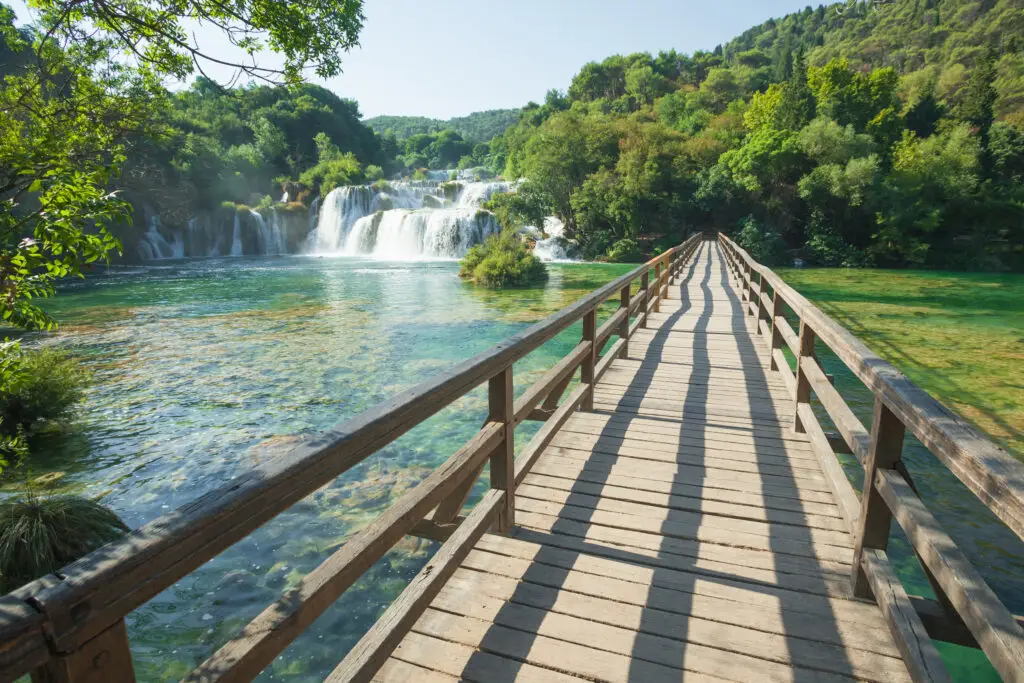
Today’s excursion takes you inland from the coast to one of Croatia’s most beautiful national parks. The journey leads through the countryside and small villages before reaching the rivers and waterfalls that define Krka National Park.
Krka Waterfalls
The main attraction in Krka National Park is the series of waterfalls created by the Krka River as it flows through limestone canyons. Wooden walkways lead through the park, allowing you to walk beside the water and see the cascades from different viewpoints. As you follow the paths, the sound of flowing water fills the air while pools of clear river water gather beneath the falls.
Krka River Trails
Beyond the main waterfalls, the park contains a network of quiet walking trails that pass through forests and along the riverbanks. Walking these paths reveals calmer sections of the river where the water moves slowly between trees and rocky cliffs. The peaceful setting makes it easy to explore at a relaxed pace while enjoying the natural landscape away from the coast.
Overnight in Split
Day 7 – Split to Athens
Your journey now continues south toward Greece. The morning begins with a transfer to the airport, where you board a short flight across the Adriatic and Aegean Seas toward Athens.
Flight to Athens
After arriving at Split Airport, you check in and board your flight to Athens. As the plane crosses the Adriatic coastline, the islands of the Aegean gradually come into view before the aircraft descends toward the Greek mainland. On arrival at Athens Airport, you are met by your private guide and transferred to the city center.
First Walk in Athens
After settling into your hotel, the afternoon offers time for a relaxed walk through central Athens. The streets around the historic center are filled with cafés, shops, and lively squares where everyday life unfolds. It’s a gentle introduction to the city and a chance to begin experiencing the atmosphere of Greece’s capital.
Overnight in Athens
Day 8 – Exploring Athens
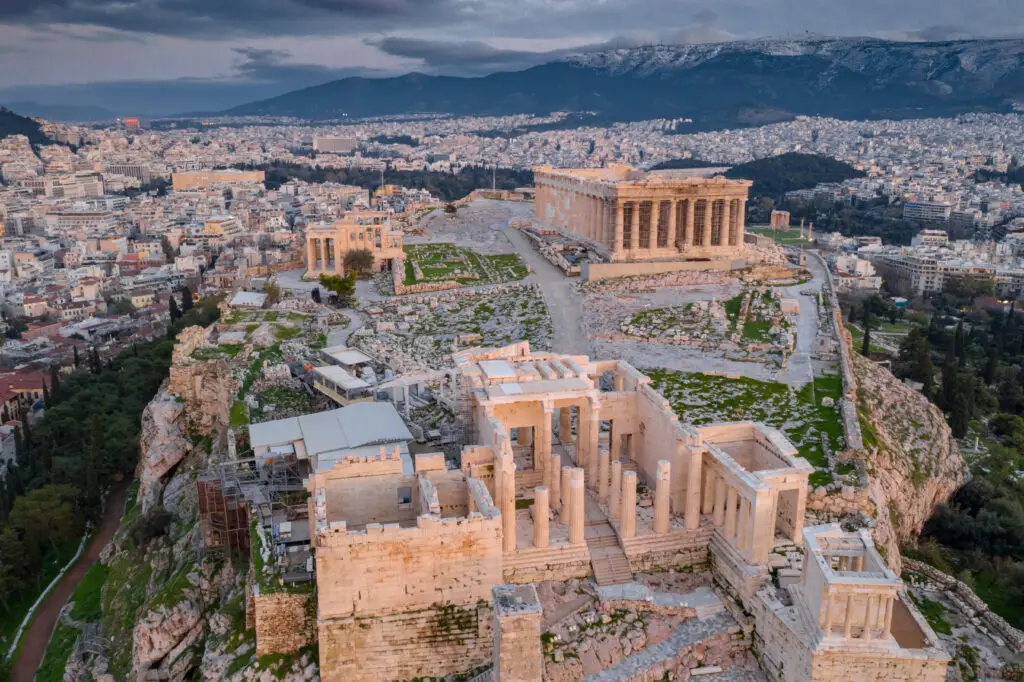
Athens is one of the world’s oldest cities, with layers of history visible throughout the center. Today, we focus on the landmarks of ancient Greece that still dominate the skyline.
Acropolis
The Acropolis rises above Athens on a rocky hill that has overlooked the city for thousands of years. Walking up the stone paths toward the summit, you pass ancient gates and ruins before reaching the Parthenon, the temple dedicated to the goddess Athena. From the top, the views stretch across Athens in every direction while the marble columns of the temples stand against the skyline.
Plaka District
At the base of the Acropolis lies Plaka, one of the oldest neighborhoods in Athens. Walking through its narrow streets reveals colorful houses, small shops, and cafés shaded by vines and balconies. The district feels almost village-like despite being in the center of the city, making it an enjoyable place to explore slowly on foot.
Acropolis Museum
Nearby stands the Acropolis Museum, a modern building designed to display artifacts discovered on the Acropolis itself. Inside, the galleries present sculptures, carvings, and architectural pieces that once formed part of the ancient temples. Large glass windows also allow views back toward the Acropolis hill, connecting the museum with the historic site above.
Overnight in Athens
Day 9 – Ancient Athens
Another day in Athens allows time to explore additional sites that played an important role in ancient Greek life.
Ancient Agora
The Ancient Agora once served as the central gathering place of Athens, where citizens met, traded goods, and discussed politics. Walking through the archaeological site today reveals the remains of temples, public buildings, and open squares where daily life unfolded in classical Athens. The restored Temple of Hephaestus stands above the ruins and offers one of the best preserved examples of ancient Greek architecture.
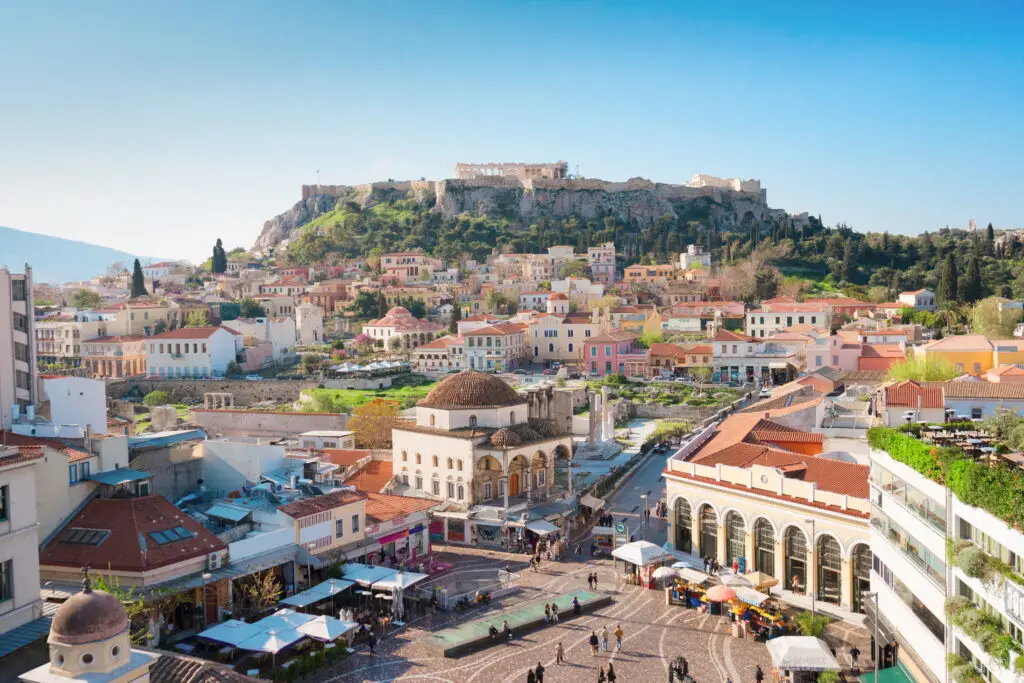
Monastiraki Square
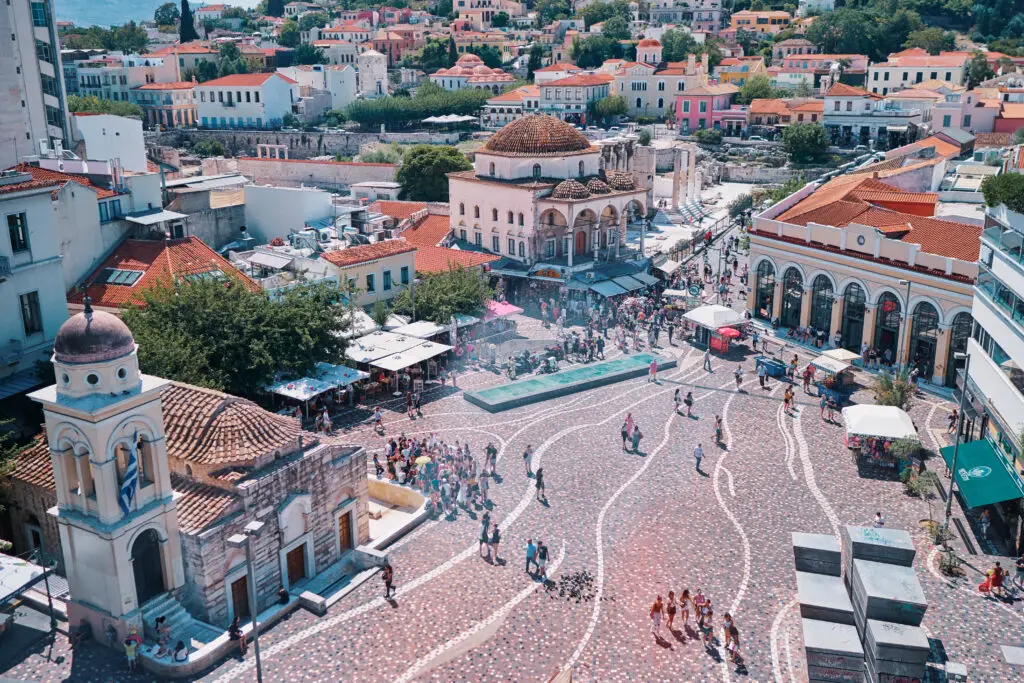
Monastiraki Square sits at the meeting point between ancient ruins and modern Athens. The lively square is surrounded by markets, shops, and cafés where locals and visitors gather throughout the day. Walking through the surrounding streets, you’ll find market stalls selling everything from antiques to handmade crafts, giving the area a lively and colorful atmosphere.
Overnight in Athens
Day 10 – Athens to Santorini
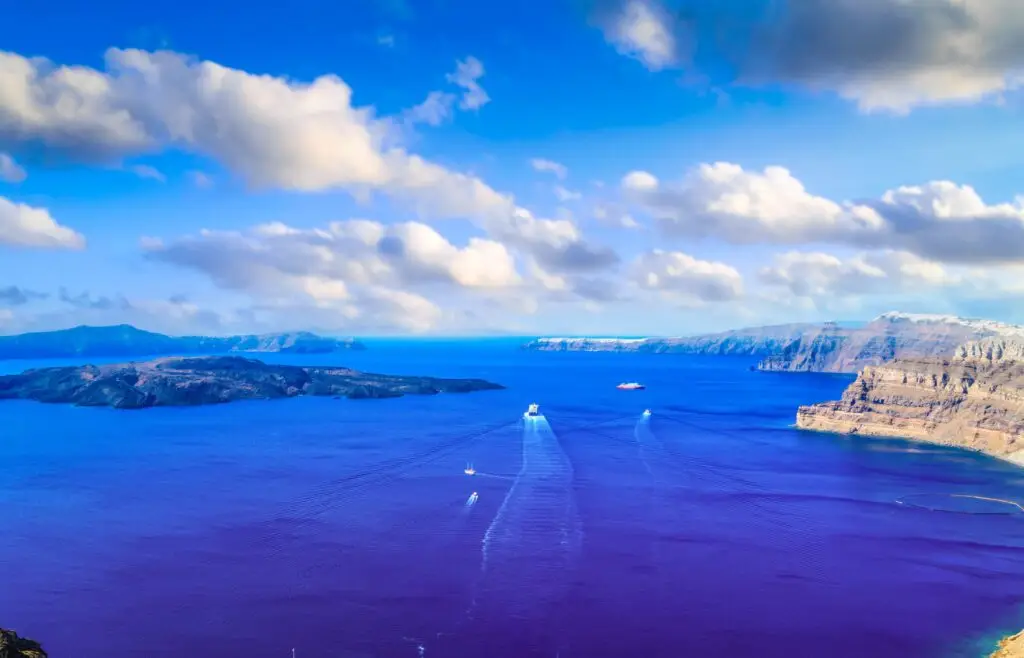
Today, the journey continues south into the Aegean Sea as you travel from the Greek mainland to one of the country’s most famous islands.
Flight to Santorini
Your guide accompanies you to Athens Airport for the short flight to Santorini. As the aircraft approaches the island, the volcanic cliffs of the caldera appear rising from the deep blue water. After landing, you are met at Santorini Airport and transferred across the island to your hotel overlooking the sea.
Santorini Caldera Views
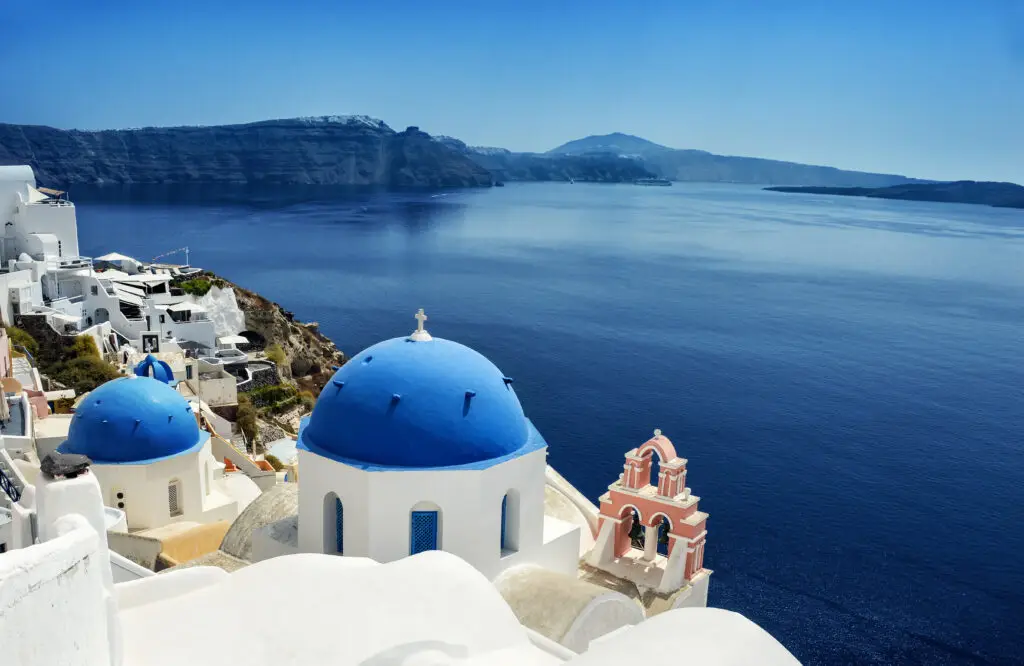
Santorini’s villages sit along the rim of the island’s volcanic caldera. Walking along the cliffside paths reveals views across the deep blue water toward the volcanic islands in the center of the bay. Whitewashed houses and blue-domed churches line the edges of the cliffs, creating the dramatic scenery that has made Santorini famous.
Overnight in Santorini
Day 11 – Oia Village

One of the most beautiful villages on Santorini sits at the northern tip of the island.
Oia Village
Oia is known for its white houses built into the cliffs above the caldera. Walking through the village reveals narrow pathways, terraces, and small churches overlooking the sea. The streets wind between homes, galleries, and cafés while viewpoints open across the cliffs toward the volcanic islands in the distance. It’s an easy place to explore slowly while enjoying the views across the Aegean.
Sunset in Oia
As evening approaches, Oia becomes one of the most popular places on the island to watch the sunset. Visitors gather along the cliffside paths and terraces as the sun slowly lowers toward the horizon. The white buildings take on a warm glow while the sky changes color above the caldera, creating one of the most memorable moments of the island.
Overnight in Santorini
Day 12 – Santorini Volcano & Caldera Cruise
The volcanic landscape that created Santorini can be explored more closely on the water.
Caldera Boat Cruise
A boat cruise across the caldera gives you a different view of Santorini’s dramatic cliffs. As the boat moves through the deep blue water, the villages above appear high on the volcanic slopes while the island’s geology becomes easier to understand. The cruise passes smaller volcanic islands in the center of the caldera before returning toward the main island.
Nea Kameni Volcano
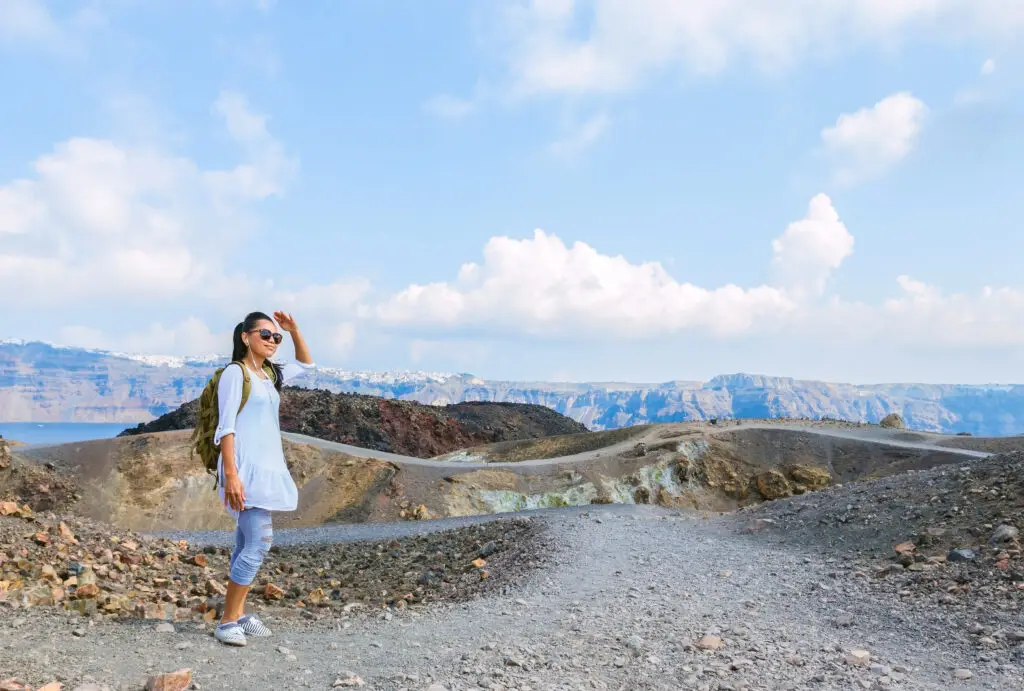
One of the stops on the cruise is Nea Kameni, the volcanic island that formed in the center of the caldera. Walking across the dark volcanic terrain, you can see steam vents and rocky formations created by past eruptions. The landscape feels stark and otherworldly, showing the powerful forces that shaped Santorini’s dramatic scenery.
Overnight in Santorini
Day 13 – Akrotiri & Red Beach
On your penultimate day, you explore the southern side of Santorini, where archaeological sites and unusual coastal landscapes reveal more of the island’s history.
Akrotiri Archaeological Site
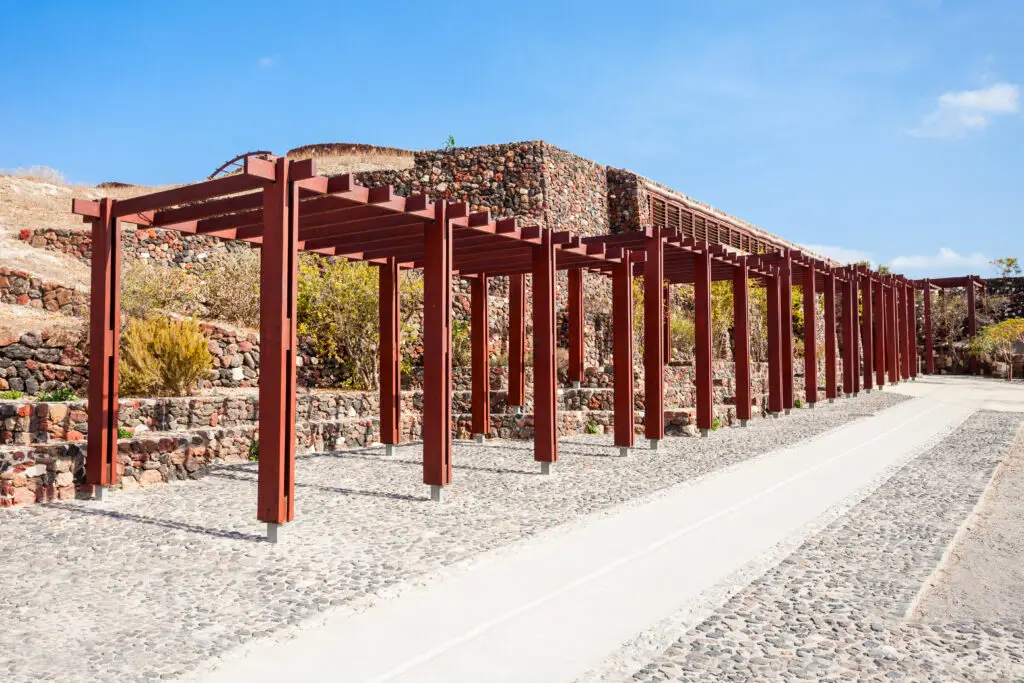
Akrotiri is an ancient settlement that was buried beneath volcanic ash during a major eruption thousands of years ago. Walking through the excavated streets and buildings reveals a remarkably preserved Bronze Age town. The remains of houses, staircases, and frescoes offer a fascinating glimpse into life on Santorini long before the modern villages appeared.
Red Beach
Nearby lies Red Beach, one of Santorini’s most striking coastal landscapes. The beach sits beneath cliffs coloured deep red by volcanic rock. Walking along the shoreline, you can see the contrast between the red cliffs, dark sand, and bright blue sea while boats anchor just offshore.
Overnight in Santorini
Day 14 – Santorini
Your final morning offers time to enjoy the island’s scenery before the Mediterranean journey comes to an end.
Santorini Cliff Walk
A walk along the caldera paths offers one last chance to take in Santorini’s views. The route follows the edge of the cliffs where villages appear along the ridge, and the sea stretches out far below. Along the way, you pass small churches, terraces, and viewpoints that highlight the island’s unique setting above the volcanic bay.
Later in the day, you are transferred to Santorini Airport as the tour concludes, bringing your two-week journey through Croatia and Greece to an end.