Call Our Team of European Travel Designers

14 Day Private Tour of Denmark

2 Week Guided Itinerary

Denmark is a country that rewards slow travel. Small historic towns sit beside sweeping coastlines, Viking monuments appear beside modern design icons, and lively cities quickly give way to quiet islands and countryside. On this 14-day private tour, you’ll travel across the country with your own driver-guide, exploring royal castles, maritime cities, Viking heritage sites, and the distinctive landscapes that shape Danish life. From Copenhagen and North Zealand to Jutland’s west coast and the islands of Funen and Møn, the journey reveals the many sides of Denmark while moving at an easy, comfortable pace.

What’s Included?

Private Driver-Guide

Luxury Mercedes V-Class Transport

Tour Tickets & Attractions

Custom Itinerary Planning

Day 1 – Arrival in Copenhagen
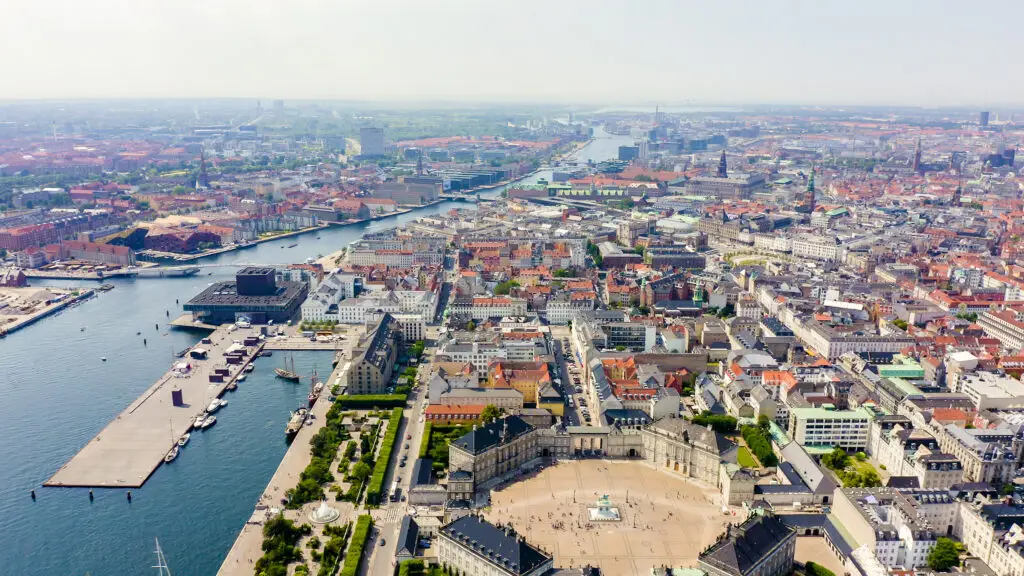
Amalienborg Palace Christian VII's Palace in Copenhagen Denmark, historic royal residence and popular tourist attraction
Amalienborg Palace, Denmark

After arriving in Denmark’s capital, your driver-guide will meet you and transfer you into the city. The journey from the airport into central Copenhagen is short, giving a first glimpse of the clean streets, bicycles, and waterways that define the Danish capital.

Once settled, the afternoon is spent exploring the historic center. Copenhagen is compact and easy to navigate, and the old districts reveal centuries of royal and maritime history.

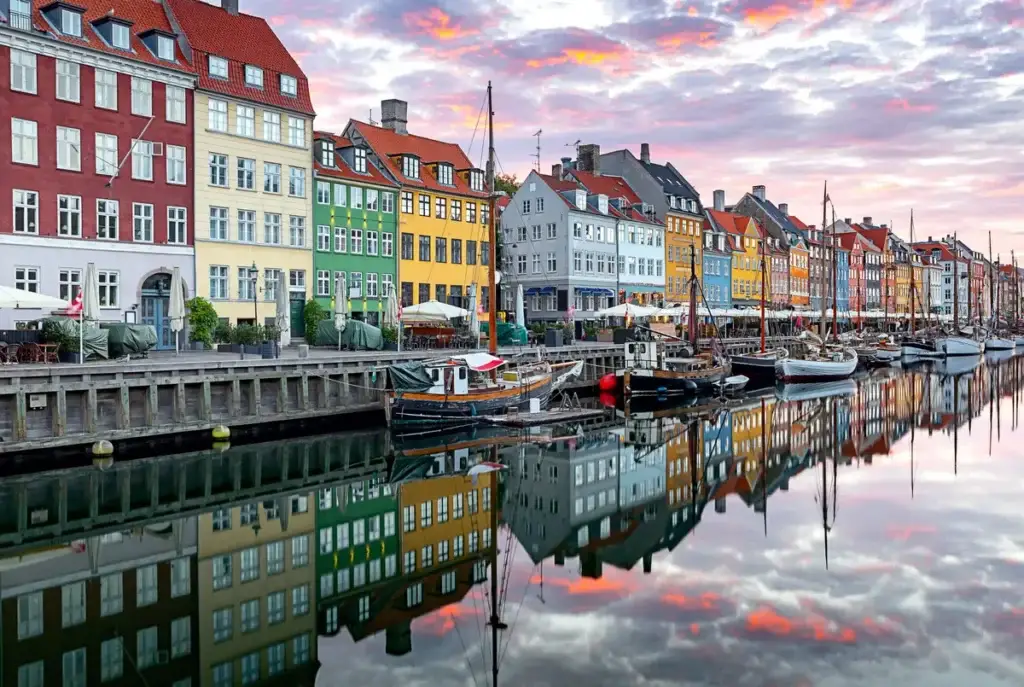
Nyhavn Harbour

Nyhavn is one of the most recognizable places in Denmark. Rows of colorful 17th-century houses line the canal, while historic wooden ships sit moored along the quay. The harbor was once a busy trading port filled with sailors and merchants, but today it’s a relaxed place to wander along the waterfront, watch boats pass through the canal, and enjoy the atmosphere of cafés and restaurants spilling out onto the streets.

Amalienborg Palace

This is followed by a guided tour of Amelienborg Palace, the official residence of the Danish royal family. The central statue of King Frederik V anchors the space, while guards from the Royal Life Guard stand watch outside the palace entrances. You can witness the iconic Changing of the Guard, see interactive exhibits, and explore the museum showcasing original furniture and personal items of the royal family. 

Christiansborg Palace

Christiansborg stands on the small island of Slotsholmen at the heart of Copenhagen. It is one of the few buildings in the world that houses all three branches of government: the Danish Parliament, the Prime Minister’s office, and the Supreme Court. Parts of the palace are open to visitors, and the surrounding canals and bridges give the area a distinctly maritime character.

Overnight in Copenhagen.

Day 2 – Exploring Copenhagen

Rosenborg Castle in Copenhagen Denmark with bronze lion statues guarding the entrance on a sunny day
Rosenborg Castle, Denmark

Today is dedicated to seeing more of Copenhagen’s cultural landmarks, historic neighborhoods, and museums. With your driver-guide coordinating the day’s movements, it’s easy to explore several parts of the city without rushing.

Rosenborg Castle & The King’s Garden

Rosenborg Castle sits inside the King’s Garden, one of the most popular green spaces in Copenhagen. Built by King Christian IV in the early 1600s, the castle contains the Danish crown jewels and royal regalia. Inside, richly decorated rooms display centuries of royal history, while outside, the gardens provide a peaceful place to walk among tree-lined paths and open lawns.

The Little Mermaid & Langelinie

Next, you travel to one of Copenhagen’s most famous symbols along the waterfront at Langelinie. The Little Mermaid statue, inspired by the Hans Christian Andersen story, looks out across the harbor toward the Baltic Sea. Although modest in size, the statue has become one of Denmark’s most photographed landmarks and sits along a pleasant harbor promenade.

Christianshavn & Canal District

Christianshavn is one of Copenhagen’s most distinctive neighborhoods. Built on artificial islands with canals running between colorful houses, the district has a maritime character similar to Amsterdam. Walking along the canals reveals houseboats, narrow bridges, and lively cafés, offering a glimpse into everyday life in the city.

Overnight in Copenhagen.

Day 3 – Castles of North Zealand

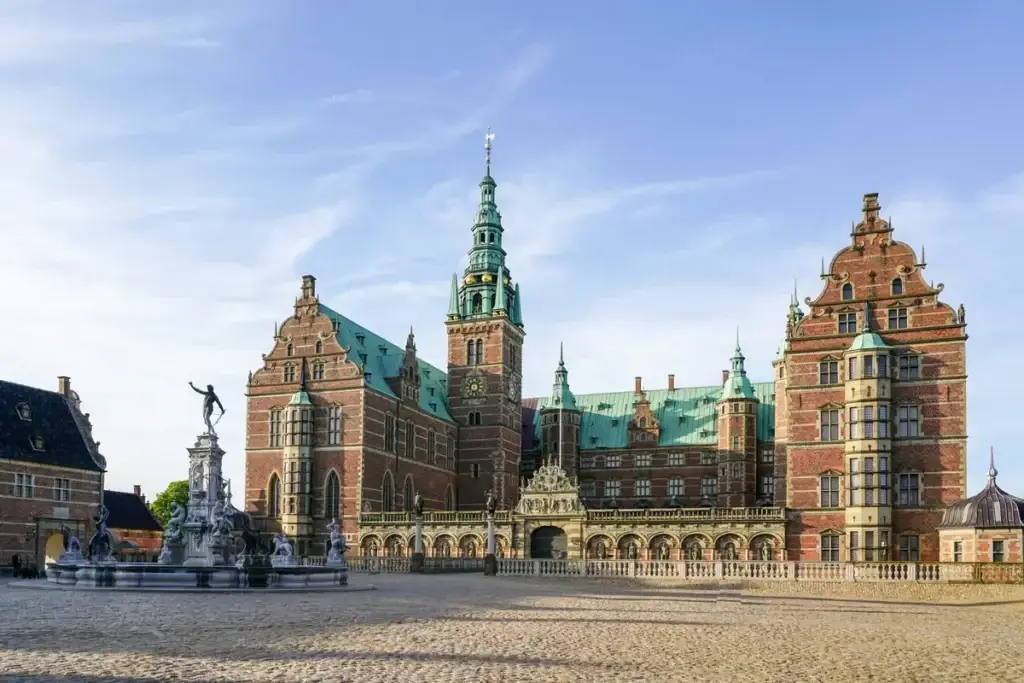
View of Frederiksborg Slot palace and gardens in Hillerod, Denmark, showcasing the ornate architecture and landscaped formal gardens on a sunny day.
Frederiksborg Slot, Hillerod, Denmark

Leaving the capital behind, your driver-guide takes you north into the region often called the Danish Riviera. This coastal area is filled with royal castles, seaside towns, and forests.

Kronborg Castle

Standing at the narrow entrance to the Øresund Strait, Kronborg Castle once controlled the main shipping route into the Baltic Sea. Ships passing through had to pay a toll here, making the castle one of the wealthiest fortresses in Europe. It later became famous as the setting of Shakespeare’s Hamlet. Walking through the courtyards and towers reveals both royal halls and underground casemates.

Frederiksborg Castle

Frederiksborg Castle sits on small islands in the middle of a lake in the town of Hillerød. Built in the Dutch Renaissance style, it is one of the most impressive castles in Scandinavia. The castle now houses the Museum of Danish National History, with grand halls filled with portraits and historical paintings.

Coastal Towns of the Danish Riviera

Before returning south, there is time to stop in one of the region’s small coastal towns, such as Hornbæk or Gilleleje. These quiet fishing communities have sandy beaches, small harbors, and relaxed seaside cafés.

Return to Copenhagen for the evening.

Overnight in Copenhagen.

Day 4 – Roskilde and the Vikings

Roskilde Cathedral in Denmark with its twin spires and historic architecture surrounded by colorful traditional houses on a sunny day
Roskilde Cathedral, Denmark

Today, the journey leaves Copenhagen behind as your driver-guide heads west toward Roskilde before continuing across Zealand toward the island of Funen.

Roskilde Cathedral

Roskilde Cathedral is one of Denmark’s most important historic sites. Built in red brick during the 12th and 13th centuries, it became the burial place of Danish kings and queens for more than 500 years. Inside the cathedral are royal tombs, chapels, and memorials that tell the story of Denmark’s monarchy.

Viking Ship Museum

Just beside Roskilde Fjord stands the Viking Ship Museum, home to several original Viking vessels recovered from the seabed nearby. These ships were deliberately sunk in the fjord to block enemy fleets nearly 1,000 years ago. The museum explains Viking shipbuilding, trade routes, and exploration across northern Europe.

After exploring Roskilde, the journey continues west across the Great Belt Bridge toward Funen.

Overnight in Odense.

Day 5 – Odense and Hans Christian Andersen

Colorful medieval street in the old town of Odense, Denmark, showcasing traditional Scandinavian architecture and cobblestone pathway.
Odense, Denmark

Odense is the main city on the island of Funen and the birthplace of Denmark’s most famous storyteller, Hans Christian Andersen.

Hans Christian Andersen Museum

The Hans Christian Andersen Museum tells the story of the writer’s life and imagination. Exhibits explore the creation of stories such as The Little Mermaid, The Ugly Duckling, and The Emperor’s New Clothes. The museum blends literature, art, and design to recreate the atmosphere that inspired Andersen’s storytelling.

Odense Old Town

Odense’s historic center is filled with cobbled streets and colorful houses dating back several centuries. Small courtyards, churches, and cafés appear around quiet corners, making the area easy to explore on foot.

Odense Cathedral

Odense Cathedral is dedicated to Saint Canute, Denmark’s patron saint. The Gothic church dominates the town center, and the crypt beneath the cathedral contains relics connected to the king.

Overnight in Odense.

Day 6 – Castles and Countryside of Funen

Aerial view of Egeskov Castle and Renaissance Garden in Kværndrup, Denmark, showcasing the intricate garden designs and surrounding lush landscape.
Egeskov Castle, Denmark

Today, your driver-guide takes you into the countryside of southern Funen, an area known for farmland, small villages, and historic estates.

Egeskov Castle

Egeskov Castle is one of the best-preserved Renaissance castles in Europe. Built in the 1500s and surrounded by a moat, the castle appears almost to rise directly from the water. The estate also includes beautiful gardens, walking paths, and several museums displaying vintage cars and historic vehicles.

Funen Countryside

The island of Funen is often described as the garden of Denmark. Rolling farmland, orchards, and small villages fill the landscape, while narrow roads connect quiet coastal towns. Driving through the countryside reveals the slower pace of life that has shaped Danish rural communities.

Later in the day, the journey continues north toward Jutland.

Overnight in Aarhus.

Day 7 – Aarhus

Visitors explore the colorful, circular rooftop walkway of the Aros Art Museum in Aarhus, Denmark, showcasing modern architecture and urban design.
Aros Contemporary Art Museum, Aarhus, Denmark

Aarhus is Denmark’s second-largest city and one of Scandinavia’s most interesting cultural centers.

ARoS Art Museum

The ARoS Art Museum is famous for its circular rainbow walkway that sits on the roof of the building. Walking through the coloured glass corridor offers views across the city while bathing everything below in changing colors. Inside the museum, contemporary art exhibitions explore modern Scandinavian culture.

Den Gamle By

Den Gamle By is an open-air museum recreating Danish life through different historical periods. Entire streets have been rebuilt using original houses from around the country, allowing visitors to walk through towns from the 18th, 19th, and 20th centuries.

Aarhus Waterfront

The city’s harbourfront has been transformed in recent years into a modern cultural district with cafés, architecture, and public spaces along the water.

Overnight in Aarhus.

Day 8 – Aarhus to Aalborg

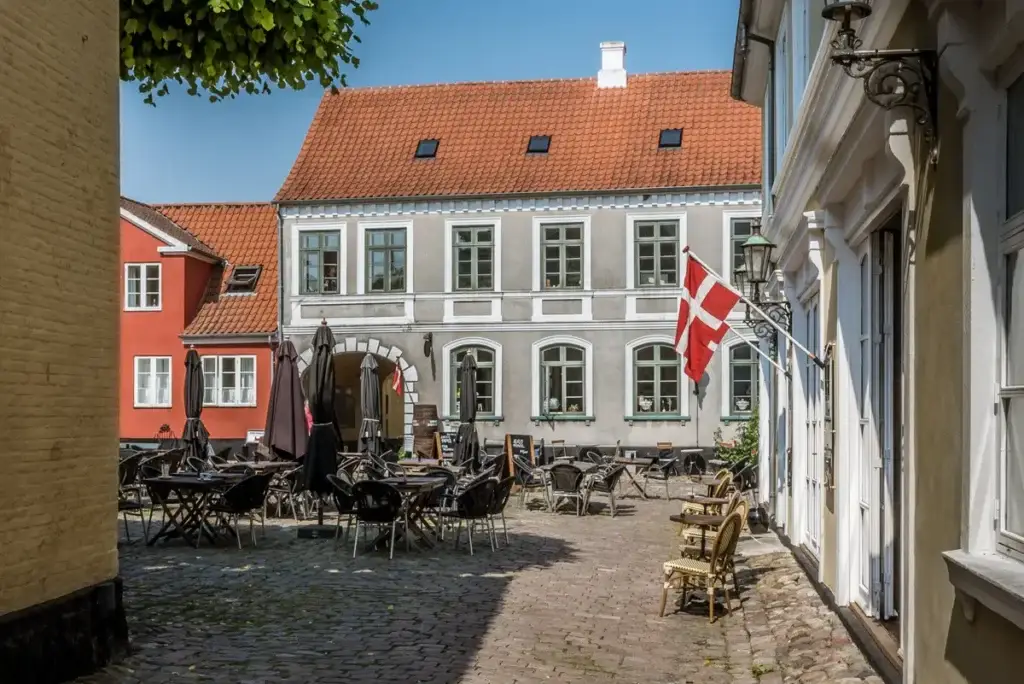
Historic street view in Aalborg, Denmark featuring traditional Danish architecture with colorful houses and a cobblestone square under a cloudy sky
Aalborg, Denmark

Leaving Aarhus in the morning, your driver-guide heads north through the Jutland countryside toward the Limfjord region. The drive reveals a quieter side of Denmark where farmland stretches across gentle landscapes and small towns appear between forests and open fields. Your driver-guide manages the route and timing of the day, allowing stops along the way before reaching Aalborg in the afternoon.

Randers & The Gudenå River Valley

The first stop of the day is Randers, a historic town located beside the Gudenå River, Denmark’s longest river. The town center still reflects its medieval layout with narrow streets and traditional houses surrounding the main square. Walking here offers a glimpse into everyday Danish town life, where bakeries, cafés, and small shops sit among centuries-old buildings that have quietly watched the town develop.

Mariager Fjord

Continuing north, your driver-guide follows the edge of Mariager Fjord, often called Denmark’s most beautiful fjord. The landscape here becomes more varied, with wooded hills rolling gently down toward the water. Small villages and marinas appear along the shoreline, while quiet viewpoints offer wide views across the calm fjord waters. It’s a peaceful stretch of the journey that shows how strongly Denmark’s landscapes are connected to the sea.

Aalborg Waterfront & Historic Center

You’ll arrive in Aalborg in the afternoon and spend time exploring the city’s old streets and harbor area. Walking through the historic center, you’ll pass colorful houses, small squares, and lively pedestrian streets filled with cafés and local shops. From there, the route continues down toward the waterfront, where it’s pleasant to stroll along the harbor promenade beside the Limfjord. Boats move slowly through the water while modern buildings, cafés, and open public spaces create a relaxed atmosphere along the quay.

Overnight in Aalborg.

Day 9 – Aalborg to Skagen

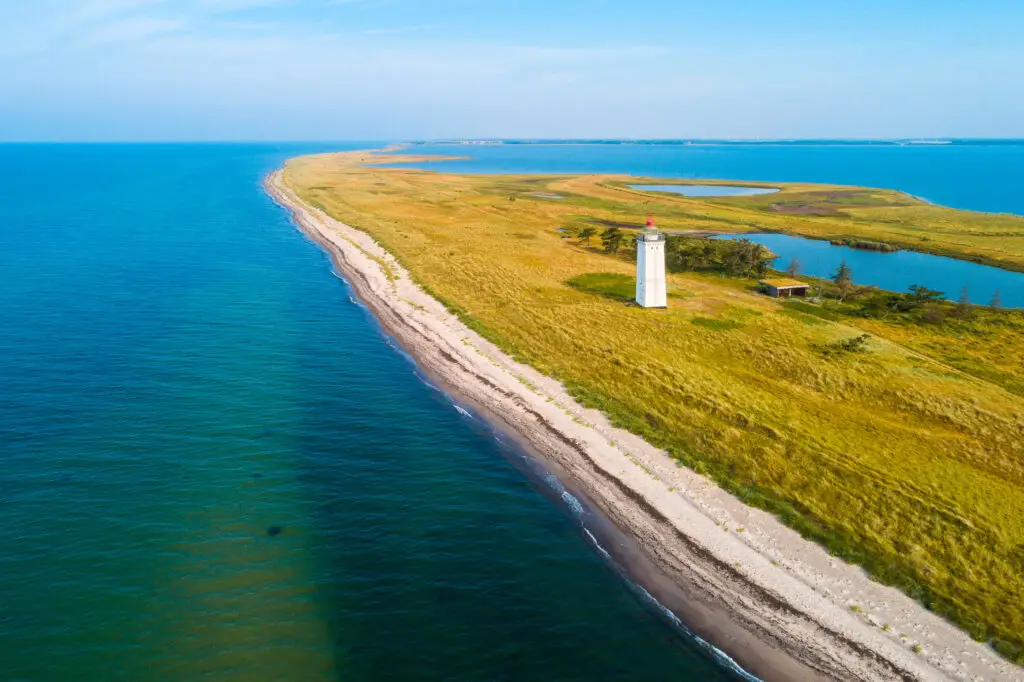
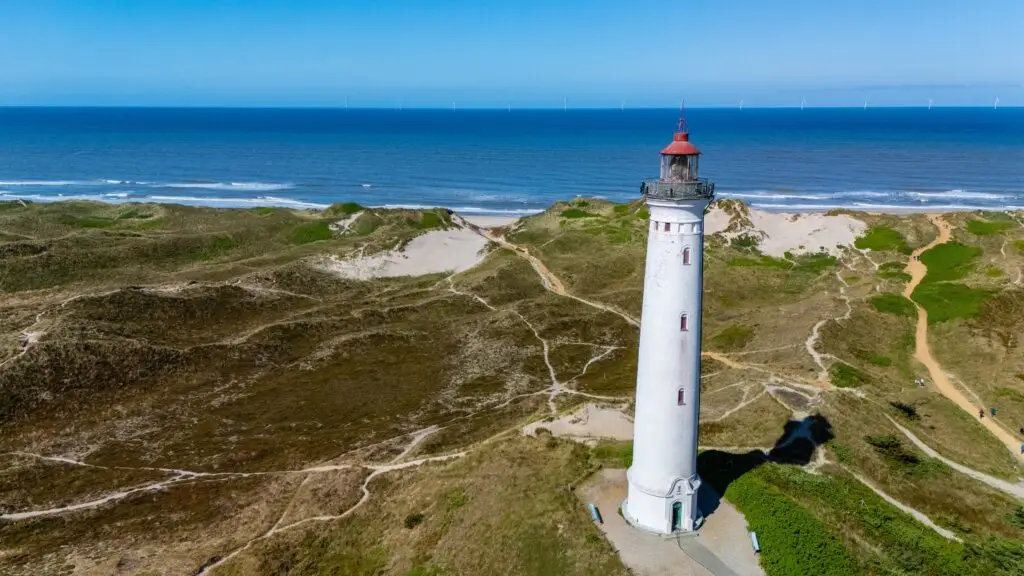
Couple walking toward iconic white lighthouse on sandy shores of Denmark under clear blue sky
Rubjerg Knude Lighthouse, Denmark

Today, the route continues north toward Denmark’s northernmost point. As your driver-guide leads the journey further up the Jutland peninsula, the landscape gradually changes. Farmland gives way to windswept dunes, heathland, and long sandy beaches shaped by the North Sea winds.

Rubjerg Knude Lighthouse

The first stop is Rubjerg Knude Lighthouse, one of Denmark’s most dramatic coastal landmarks. Built at the edge of towering dunes, the lighthouse once stood safely inland but has slowly been surrounded by shifting sand. The area feels wild and exposed, with wind-blown dunes stretching toward the sea. Walking here reveals the raw power of Denmark’s western coastline and the forces constantly reshaping it.

Skagen Town & Harbor

Continuing north, your driver-guide reaches Skagen, a town long known for its fishing traditions and distinctive yellow houses with red roofs. The harbor remains busy with fishing boats and small vessels moving in and out of the port. Walking through the town reveals art galleries, cafés, and streets that reflect the relaxed coastal atmosphere that has drawn visitors here for generations.

Grenen – Denmark’s Northern Tip

At the very tip of Denmark lies Grenen, a long sandbar where the North Sea and Baltic Sea meet. Standing here, it is possible to watch waves from the two seas collide in visible lines across the water. Your driver-guide arranges the timing of the visit so you can walk out along the beach and experience this unique meeting point of northern Europe’s seas.

Overnight in Skagen.

Day 10 – Skagen to the West Coast

Leaving Skagen behind, your driver-guide begins the journey south along Denmark’s rugged west coast. This region feels very different from the eastern parts of the country, with wide beaches, fishing villages, and large dune systems dominating the landscape.

Hirtshals Harbor & North Sea Views

The town of Hirtshals sits high above the North Sea, its harbor acting as a gateway between Denmark and Norway. Standing along the cliffs near the harbor reveals powerful sea views, where ferries and fishing boats move across the horizon. The winds here are strong and constant, shaping the coastline and giving the town its rugged maritime character.

Thy National Park

Further south lies Thy National Park, Denmark’s first national park. This protected landscape stretches across dunes, heathland, and lakes formed behind the coastal sand barriers. Walking paths wind through quiet nature areas where grasses and shrubs have adapted to the windy coastal environment. Your driver-guide allows time to explore the park while explaining how these fragile ecosystems survive along the exposed shoreline.

West Coast Fishing Villages

As the journey continues, small fishing communities appear along the coast. In places like Vorupør or Klitmøller, fishing boats are still pulled directly onto the beach rather than using traditional harbors. This unique method reflects centuries of coastal life along the North Sea, where strong waves and shifting sand made harbor construction difficult.

Overnight on the West Coast.

Day 11 – West Coast to Ribe

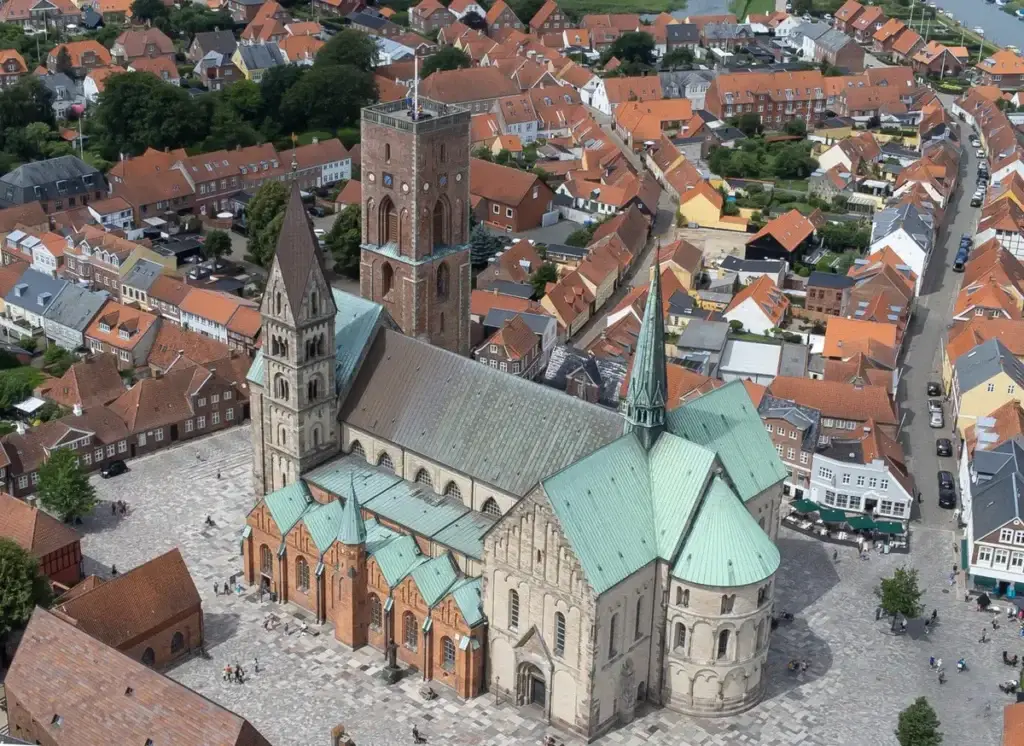
Aerial view of the Cathedral of Our Lady in Ribe, Denmark showcasing the historic architecture and surrounding quaint town streets.
Cathedral of Our Lady, Ribe, Denmark.

Today, your driver-guide continues south through western Jutland toward Ribe, Denmark’s oldest town. The landscape remains open and coastal for much of the journey before gradually transitioning to marshland and historic settlements.

Wadden Sea National Park

The Wadden Sea forms one of northern Europe’s most important coastal ecosystems. At low tide, vast mudflats appear along the shoreline, creating feeding grounds for migratory birds traveling between Africa and the Arctic. Standing along the coast reveals just how far the sea retreats when the tide drops. Your driver-guide helps choose a viewpoint where the changing landscape of water, sand, and sky can be appreciated.

Ribe Old Town

Arriving in Ribe feels like stepping into another era. Founded during the Viking Age, the town’s streets remain lined with crooked half-timbered houses that lean gently toward one another across narrow lanes. Walking through the historic center reveals small squares, quiet courtyards, and traditional buildings that have survived for centuries.

Ribe Cathedral

Ribe Cathedral rises above the town with its distinctive twin towers. Inside, the church combines Romanesque and Gothic architecture, developed over several hundred years. From the cathedral tower, views stretch across the rooftops of Ribe and the surrounding marshland landscape that has shaped the town’s history.

Overnight in Ribe.

Day 12 – Ribe to Sønderborg

Sailboat entering the harbor near a historic brick fortress and coastal town in Denmark, scenic European seaside view for private tours
Sønderborg, Denmark

Today, the journey continues through South Jutland, a region where Danish and German influences have long shaped the culture and history of the area. Your driver-guide manages the route across rolling farmland and historic towns before reaching the coastal city of Sønderborg.

Dybbøl Battlefield

Dybbøl became one of the most significant battlefields in Danish history during the 1864 war between Denmark and Prussia. The windmill standing on the hill above the battlefield has become a national symbol. Walking the site today reveals peaceful farmland, but interpretive displays explain the events that changed Denmark’s borders and national identity.

Sønderborg Castle

Sønderborg Castle stands beside the harbor, its white walls reflecting in the water. The castle dates back to the 12th century and has served as both a royal residence and a military fortress. Today, it houses exhibitions exploring the complicated history of the Danish-German border region and the shifting political landscape of southern Jutland.

Sønderborg Waterfront

The harbor area offers a pleasant place to walk along the water. Sailing boats and small ferries move through the strait while colorful houses line the waterfront streets. Your driver-guide points out landmarks around the harbor before allowing time to explore the relaxed coastal atmosphere.

Overnight in Sønderborg.

Day 13 – South Jutland to Møn

View of the Great Belt Bridge from Sprogø beach in Denmark, featuring a lighthouse and lush greenery, emphasizing Scandinavian tourism attractions.
Great Belt Bridge, Denmark

Today is one of the longer travel days as your driver-guide leads the journey back toward Zealand. Bridges connect Denmark’s islands, turning the drive into a scenic crossing of waterways and countryside before reaching the island of Møn.

The Great Belt Bridge Crossing

One of the most impressive engineering landmarks in Denmark is the Great Belt Bridge. Spanning the strait between Funen and Zealand, the bridge carries the road high above the water for several kilometers. Crossing it offers sweeping views across the Baltic Sea and surrounding islands. Your driver-guide times the crossing to allow you to appreciate the wide maritime landscape surrounding the bridge.

Zealand Countryside

Once back on Zealand, the road winds through quiet farmland, forests, and small villages. This part of Denmark feels calm and rural, far removed from the busier cities visited earlier in the journey. The route passes traditional farms, church towers, and gently rolling fields that define much of the Danish countryside.

Møns Klint

The highlight of the day is Møns Klint, a dramatic stretch of white chalk cliffs rising high above the Baltic Sea. Walking paths run along the cliff tops, offering wide views across the water and the forested slopes below. Long staircases lead down to the beach, where fallen chalk pieces lie scattered along the shoreline.

Overnight on Møn or nearby Zealand.

Day 14 – Departure from Copenhagen

Colorful boats docked in the historic harbor of Copenhagen, Denmark with traditional buildings and a Danish flag fluttering in the breeze
Copenhagen, Denmark.

Your final morning in Copenhagen is free to enjoy the city at your own pace before your driver-guide transfers you to the airport.

Depending on your departure time, you might revisit a favorite neighborhood, take a final walk along the harbor, or stop for coffee in one of the city’s historic squares.

Your private driver-guide will ensure a smooth transfer to the airport, marking the end of your 14-day journey across Denmark.

SideBar Tour Request

Plan Your Denmark Private Tour

Interested in exploring Denmark on a private journey?

This 14-day itinerary can be followed as outlined above or customized to suit your interests. Whether you want to focus more on Viking history, coastal landscapes, or Danish design and culture, we can tailor the experience for you.

Fill in our booking form to begin planning your private tour of Denmark.

Tour Request

Email us

hello@europeprivatetours.com

Call our team

US: +1 (619) 340-1617

Frequently Asked Questions About This Tour Itinerary

Is Denmark easy to travel around by road?

Yes. Denmark has excellent roads and bridges connecting its islands, making it ideal for a private driving tour. Your driver-guide manages all navigation and logistics so the journey between destinations is smooth and relaxed.

Yes. This tour is designed to balance Denmark’s major cities with smaller historic towns and coastal communities. Alongside places like Copenhagen and Aarhus, you’ll explore villages, fishing harbors, countryside landscapes, and historic settlements.

Absolutely. One of the advantages of traveling with a private driver-guide is flexibility. If you’d like to stay longer somewhere, take a scenic detour, or stop for photos along the way, the itinerary can easily adapt during the journey.

The route includes a wide variety of scenery, from sandy coastlines and dramatic sea cliffs to farmland, forests, and small islands. Denmark’s landscape changes gradually as you travel across the country, revealing different coastal regions and countryside along the way.

Other Example Itineraries You Might Like

Message our team

Chat
Privacy Overview

This website uses cookies so that we can provide you with the best user experience possible. Cookie information is stored in your browser and performs functions such as recognising you when you return to our website and helping our team to understand which sections of the website you find most interesting and useful.

Strictly Necessary Cookies

Strictly Necessary Cookie should be enabled at all times so that we can save your preferences for cookie settings.

3rd Party Cookies

This website uses Google Analytics to collect anonymous information such as the number of visitors to the site, and the most popular pages.

Keeping this cookie enabled helps us to improve our website.