
Day 1 – Amsterdam: A City Built on Water
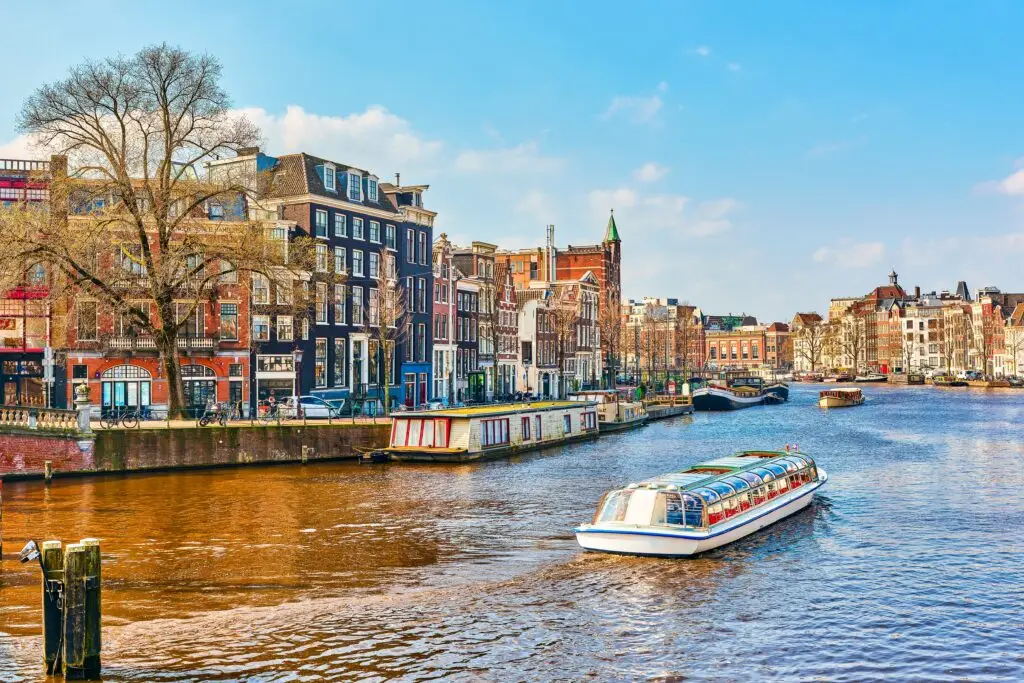
Canal Belt (UNESCO World Heritage Site)
Your private guide will meet you at Amsterdam Airport and bring you to the center of the city to begin your time in the Netherlands.
Your first stop is Amsterdam’s Canal Belt, a UNESCO World Heritage Site. Built in the 17th century as Amsterdam expanded, these broad, curving canals, Herengracht, Keizersgracht, and Prinsengracht, were lined with the homes and warehouses of wealthy merchants.
As you walk along the water, notice how the tall, narrow houses lean slightly forward. This design allowed goods to be hoisted into upper floors using beams that still project from the rooftops. The façades tell stories of merchant wealth, global trade routes, and a time when Amsterdam rivaled London and Paris in influence.
Dam Square & The Royal Palace
At Dam Square, the city’s historical core, you’ll stand on what was once a literal dam across the Amstel River. Here you’ll see the Royal Palace, originally built as a town hall in the 17th century and designed to reflect civic pride and prosperity. The scale of the building reveals the ambition of a small republic that once dominated global shipping and finance.
Jordaan District
From grand squares to narrow lanes, you’ll continue into the Jordaan. Once a working-class neighborhood, it is now one of Amsterdam’s most atmospheric quarters. Independent galleries, brown cafés, hidden courtyards, and local bakeries line the streets. It’s a place to slow down, observe daily life, and get your first sense of how relaxed and liveable the city feels.
Settle into your hotel this evening and enjoy dinner beside the canals as the bridges begin to glow under soft evening light.
Overnight in Amsterdam
Day 2 – Art, Industry & Traditional Villages
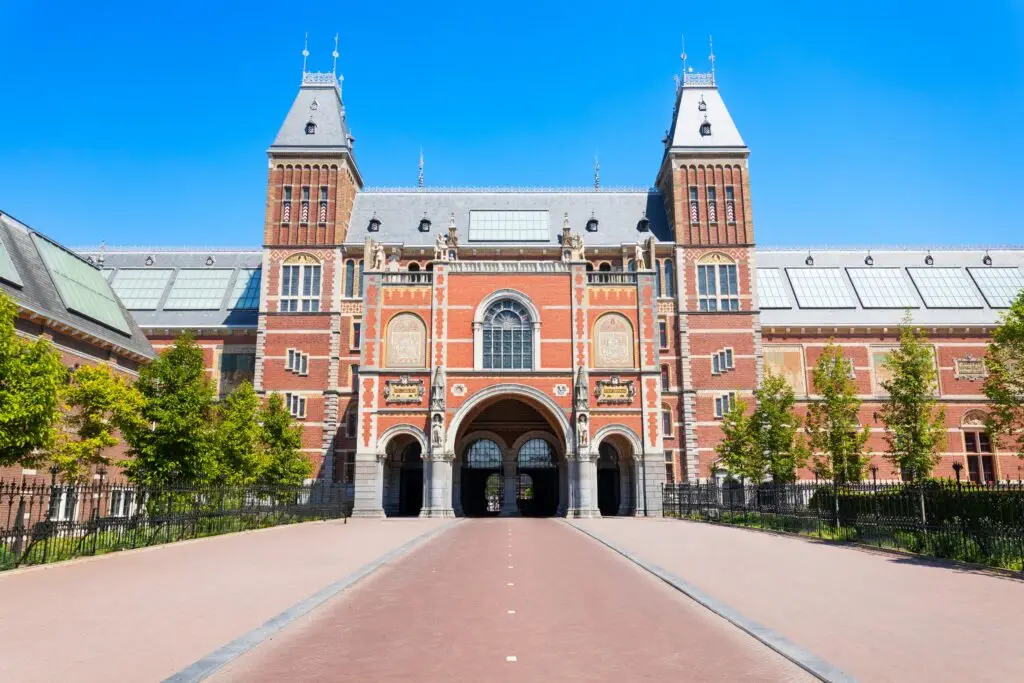
Rijksmuseum
This morning begins at the Rijksmuseum, the Netherlands’ national museum. Your guide will lead you through the key galleries, focusing on the works that really define the Dutch Golden Age. You’ll spend time with Rembrandt’s The Night Watch, breaking down the details and story behind it, and see key works by Vermeer. Along the way, your guide will explain how the wealth of the period shaped what artists painted and why these works still matter today.
Van Gogh Museum
From the Rijksmuseum, your guide will walk you through Museumplein to the nearby Van Gogh Museum, pointing out the surrounding cultural quarter along the way.
Inside, the museum gives you a clear sense of Van Gogh’s life and work in one place. You’ll see his paintings laid out in chronological order, from the darker early pieces to the brighter, more recognizable works he created later in France. With your guide explaining the shifts in style and mood, you’ll understand not only what he painted but also how quickly his technique evolved.
Zaanse Schans Windmills
Leaving the city behind, you’ll journey north into open countryside. At Zaanse Schans, traditional wooden windmills stand along the riverbank, some still functioning. These mills powered early industry, sawing timber for shipbuilding, grinding spices brought from distant colonies, and pressing oils.
Walking here feels like stepping into a working landscape rather than an open-air museum. The wind, the smell of timber, and the slow-turning blades make clear how vital wind power once was.
Volendam Fishing Village
Continue to Volendam, a former fishing village on the IJsselmeer. You’ll have free time to walk along its scenic harbor, lined with colorful wooden houses and seafood stalls. The wide water views give a sense of the Netherlands before large-scale land reclamation projects transformed much of the coastline.
Overnight in Amsterdam
Day 3 – The Hague & Delft
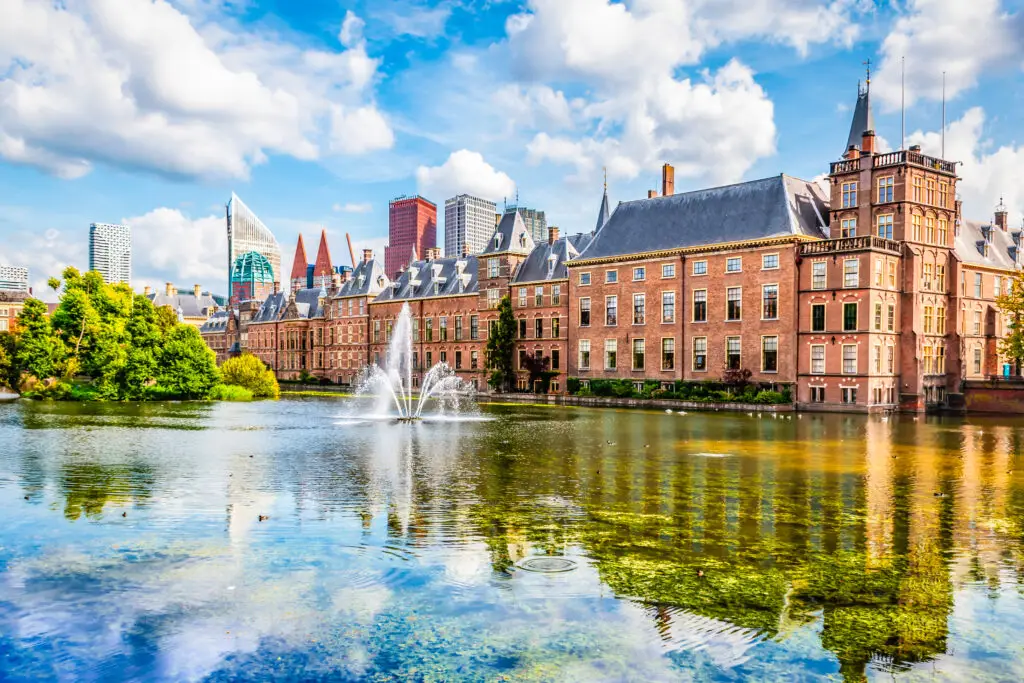
Binnenhof, The Hague
This morning, you leave Amsterdam behind and head south toward The Hague. Your first stop is the Binnenhof, the political heart of the Netherlands.
You’ll walk through the complex with your guide, who will explain how this has been the center of Dutch government for centuries. This is where parliament meets and where the Prime Minister works. It’s active, not just historic, which gives the visit a different energy compared to the royal palaces you might see elsewhere in Europe.
Mauritshuis Museum
A short walk away is the Mauritshuis.
You’ll see Vermeer’s Girl with a Pearl Earring up close and spend time understanding why such a small painting carries so much presence. There are also several Rembrandts here, and your guide will help you spot the details that give his portraits so much depth and realism.
Delft Old Town
In the afternoon, you continue to Delft. With your guide, you’ll walk through the old town, passing brick houses, quiet squares, and local shops, before stopping at the Nieuwe Kerk in the main square. If you’d like, you can climb the tower for views across the rooftops and surrounding countryside. Inside, you’ll see the royal burial vaults, as Delft is the traditional resting place of the Dutch royal family.
Before leaving, you’ll visit a Delftware workshop to see how the city’s famous blue-and-white ceramics are still painted by hand, a craft that dates back to the height of Dutch global trade.
You’ll then depart Delft for Rotterdam, where you’ll unwind in your accommodation after a busy day.
Overnight in Rotterdam.
Day 4 – Rotterdam & Kinderdijk
Rotterdam City Center
Start your fourth day by exploring Rotterdam, a modern city rebuilt after WW2. You’ll walk along the River Maas and see the Erasmus Bridge up close, with views across the working port that still drives much of the Dutch economy. From there, you’ll visit the Cube Houses, one of the city’s most recognizable landmarks, and step inside a show home to see how the unusual design actually works. A stop at the Markthal gives you time for coffee or an early lunch while taking in the scale of the building and its busy food stalls.
Kinderdijk Windmills
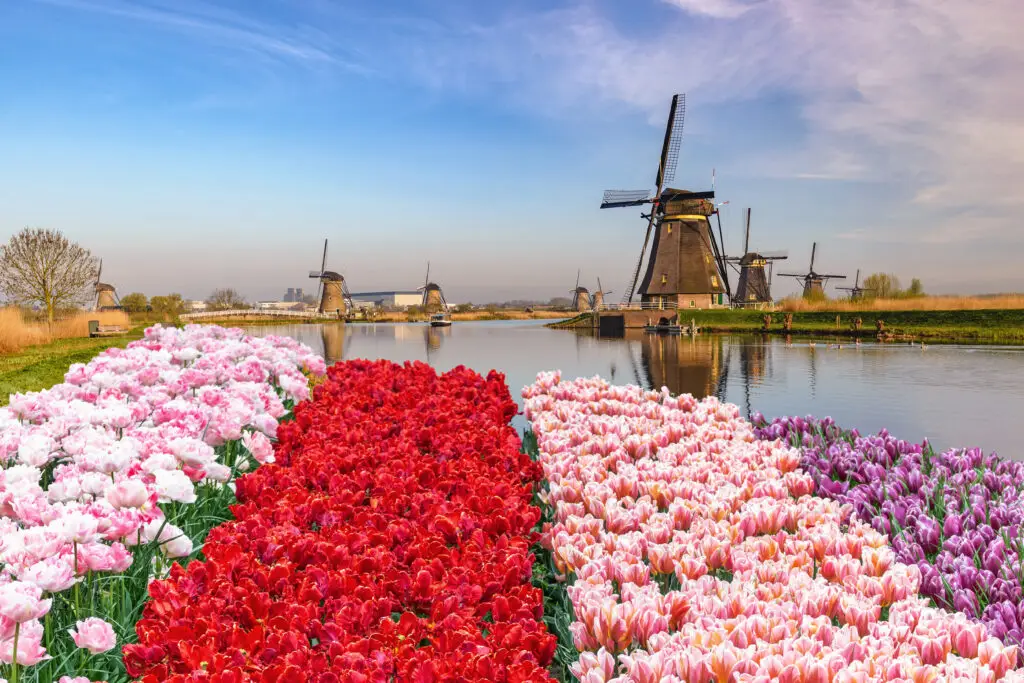
Late morning, you leave Rotterdam and drive about 30 minutes into the countryside. At Kinderdijk, 19 historic windmills stand along the canals, built to pump water out of the surrounding low-lying land. Walking along the dikes with your guide, you’ll learn how this system worked and why managing water has always been central to life here.
In the afternoon, you return to Rotterdam for your final evening in the city.
Overnight in Rotterdam
Day 5 – Utrecht & De Haar Castle
Utrecht Historic Center
Utrecht’s canals differ from Amsterdam’s. Here, wharf-level terraces sit directly at water height, once used for unloading goods. Today, they house cafés and restaurants, giving the city a layered look.
Dom Tower
The Dom Tower dominates the skyline. Climbing its 465 steps rewards you with views stretching across the flat Dutch landscape. The separation between the tower and cathedral, caused by a 17th-century storm, adds a distinctive architectural detail.
De Haar Castle
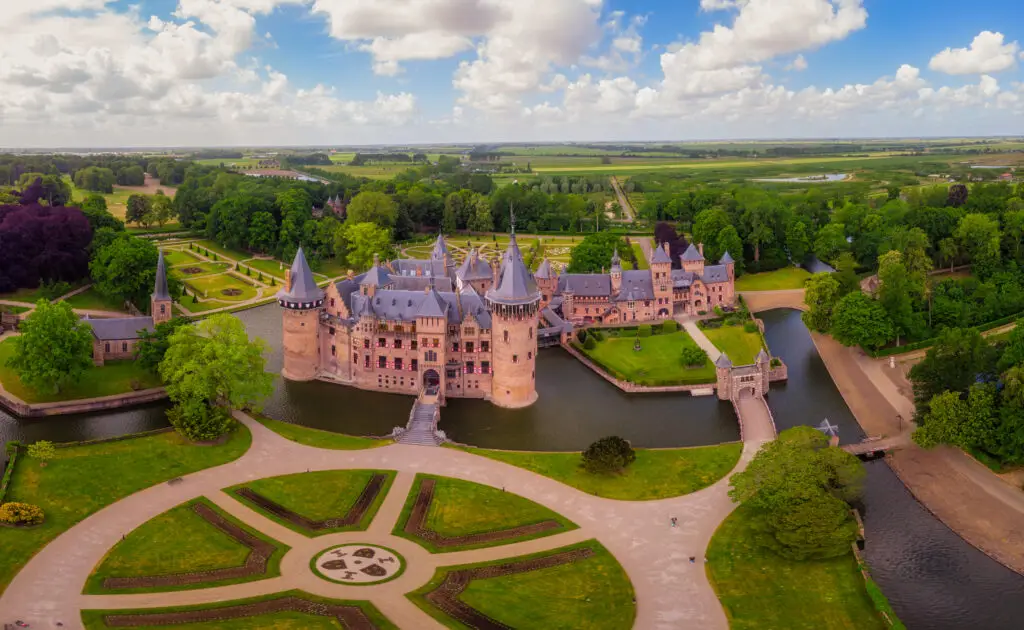
In the afternoon, drive into the green countryside to De Haar Castle. Surrounded by landscaped gardens, towers, and moats, it feels almost theatrical. Restored in the 19th century by the wealthy Rothschild family, its interiors are richly decorated with tapestries, stained glass, and carved wood.
Walking through its halls offers insight into aristocratic life in the Netherlands, often understated but deeply connected to European nobility.
Your guide then drops you off at your Amsterdam accommodation, where you’ll be based for the remainder of your private tour.
Overnight in Amsterdam
Day 6 – Giethoorn & The Northern Waters
Giethoorn Village – Canal Ride
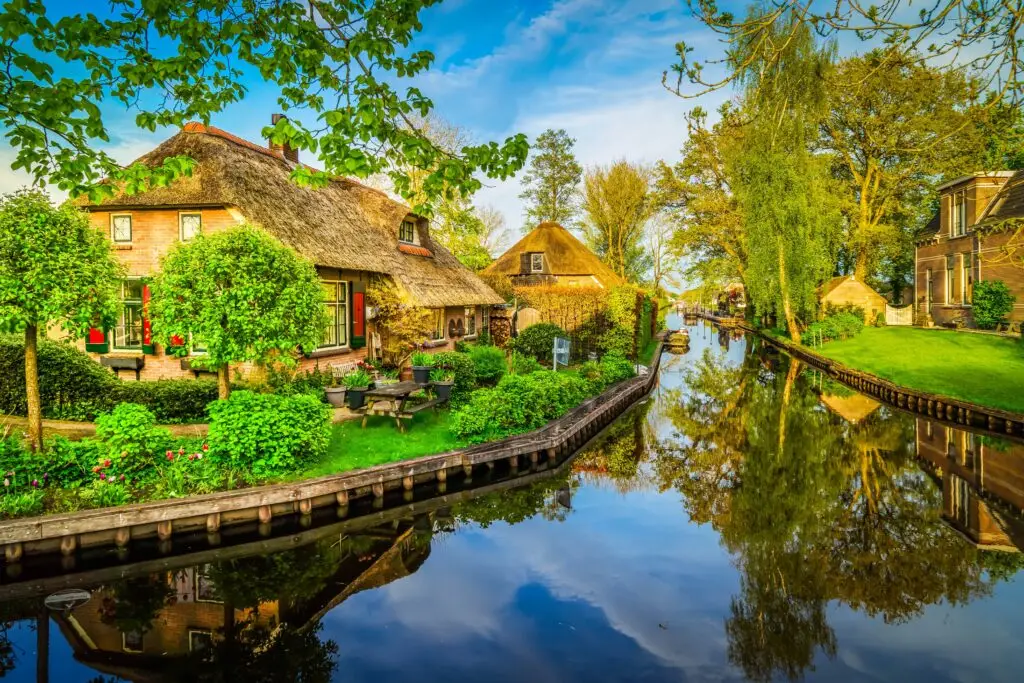
On day six, you head on a scenic day tour into the rural side of the Netherlands, starting in the beautiful Giethoorn village. Giethoorn is often called the “Dutch Venice,” but it feels more like a working waterside settlement than a showpiece. The old center has no main roads, just narrow canals, wooden footbridges, and thatched-roof cottages sitting on small grassy islands.
To properly experience Giethoorn, you’ll take a private electric boat through the narrow channels and out into the surrounding lakes. Moving quietly through the water gives you a clear sense of the village layout and the wider wetland landscape beyond.
The Afsluitdijk
In the afternoon, you travel north to the Afsluitdijk, the 32-kilometer dam completed in 1932 that sealed off the Zuiderzee from the North Sea. Standing here, you see water on both sides, a freshwater lake to one side, an open sea to the other.
This project reshaped the country’s geography and remains one of the most significant achievements in Dutch water engineering. It helps explain how so much of the Netherlands exists below sea level.
Northern Countryside Drive
Before returning to Amsterdam, you’ll drive through parts of Friesland and the northern polders. The landscape feels wide and open, with long straight canals, grazing cattle, distant church towers, and expansive skies.
It’s a different rhythm of life here, and a final reminder that beyond the major cities, much of the Netherlands is agricultural and quietly engineered.
Overnight in Amsterdam
Day 7 – Haarlem & The North Sea Coast
Haarlem
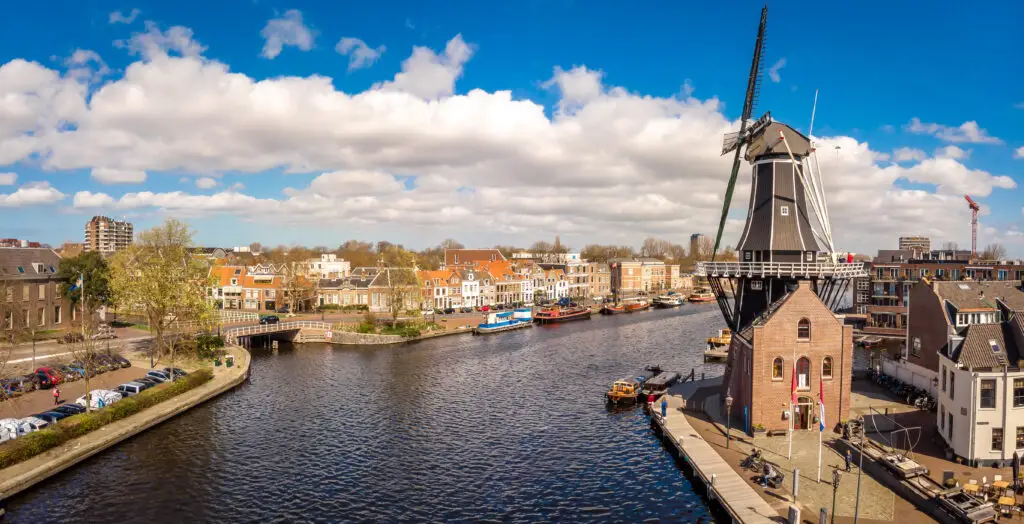
A short drive west brings you to Haarlem for your final morning. You’ll begin in the Grote Markt, the city’s main square, lined with gabled houses, cafés, and the old town hall. It’s smaller and easier to take in than Amsterdam, but just as historic.
From the square, you’ll step inside St. Bavo’s Church, which dominates the skyline. The interior is simple and spacious, and you’ll see the famous Müller organ, one of the largest in Europe and once played by Mozart. Afterward, you’ll wander through Haarlem’s old streets with your guide, passing small shops and quiet courtyards, before leaving the city behind.
North Sea Coast
In the afternoon, you drive through the dune landscape of South Kennemerland National Park. The scenery shifts to rolling sand hills and open grassland, the natural barrier that protects this stretch of coastline.
At the North Sea, the view opens up completely. Wide beaches stretch along the horizon, and depending on the weather, it can feel calm or windswept. You’ll have time for a walk along the shore before returning to Amsterdam for your departure transfer.