
Day 1 – Arrival in Amsterdam
Airport Collection & First Introduction
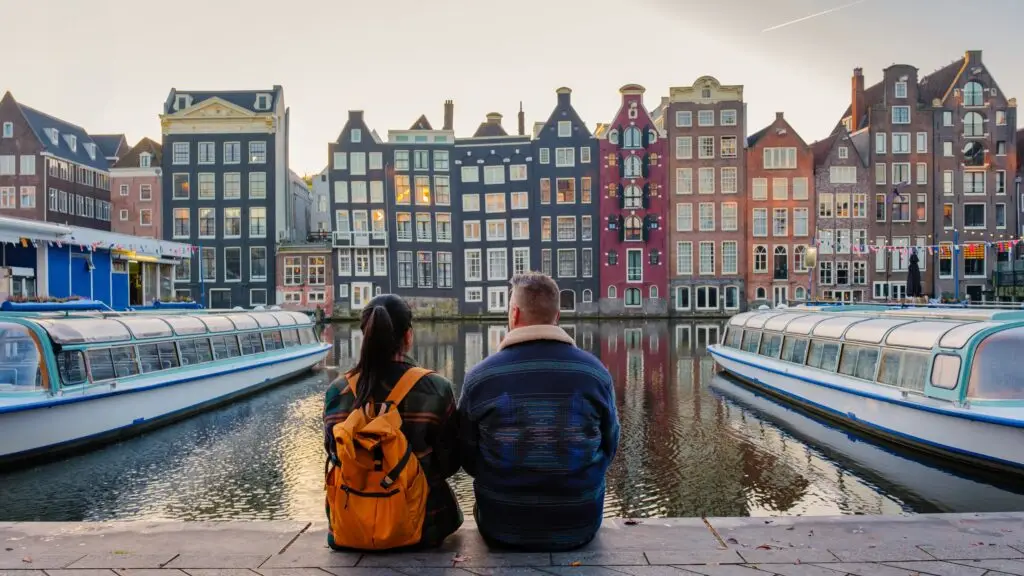
Upon arrival in Amsterdam, your private driver-guide meets you at the airport and transfers you to the historic center. During the drive, you begin to see how the country is laid out, canals slicing through neighborhoods, compact housing, bicycles everywhere, and water never far from view.
After settling into your hotel, you head out for an orientation walk.
Amsterdam Canal Belt (UNESCO World Heritage Site)
You begin in the Canal Belt, the 17th-century expansion that defines the city. The semi-circular canals were engineered at the height of Amsterdam’s trading power, when ships returned from Asia, Africa, and the Americas loaded with goods.
Walking along Herengracht and Keizersgracht, your guide explains how these tall, narrow houses functioned, warehouse below, living quarters above, and why the façades tilt slightly forward.
Dam Square & Historic Core
From the canals, you move toward Dam Square. The Royal Palace stands where the original dam across the Amstel River once controlled water and trade. Your guide explains how a small republic built an empire through commerce rather than monarchy.
Your first day is kept relatively relaxed. Your guide will then drop you back to your accommodation, where you’re free to relax in your hotel or explore the city at your own leisure.
Overnight in Amsterdam.
Day 2 – Anne Frank House & Golden Age Amsterdam
Anne Frank House
Today centers on one of the most important visits in the Netherlands.
You’re collected from your Amsterdam accommodation to head to the Anne Frank House in the Jordaan district. The visit moves you through the front rooms and into the concealed annex where Anne, her family, and others hid for over two years during the Nazi occupation.
The rooms are sparse. The narrow staircases and hidden doorway make the scale real. Seeing Anne’s original diary pages and photographs turns a global story into something intimate.
Afterward, your guide walks you through the surrounding streets, explaining how this neighborhood once held a thriving Jewish community and how daily life changed during the occupation.
This is not just a museum visit; it’s a grounding moment in European history.
Rijksmuseum
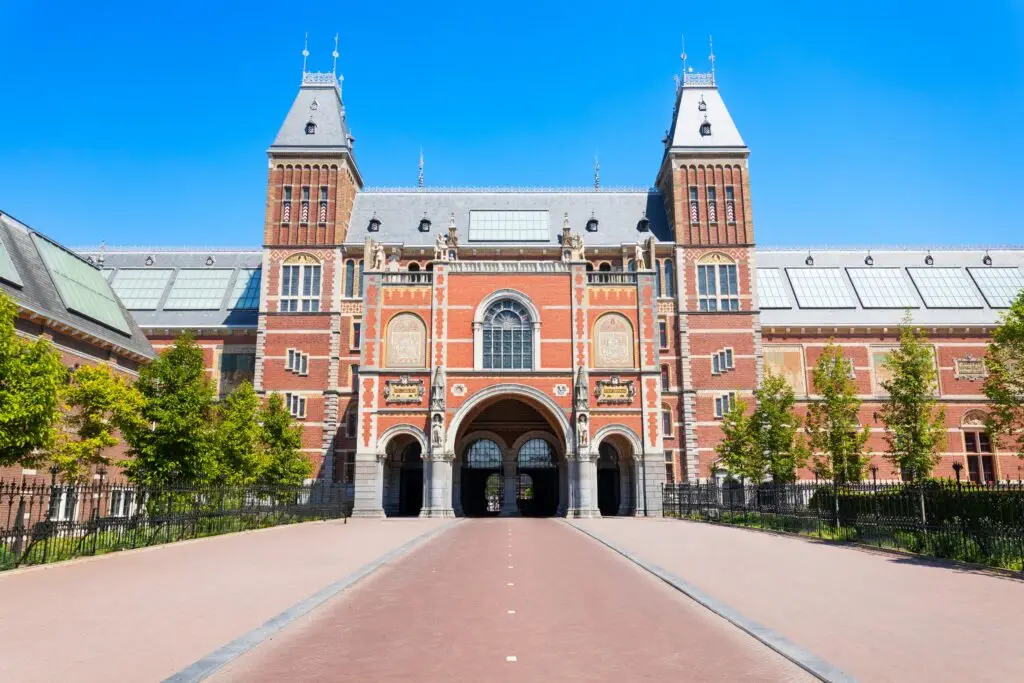
In the afternoon, you visit the Rijksmuseum. Rather than attempting the entire collection, your guide takes you directly to the defining works of the Dutch Golden Age.
Standing before Rembrandt’s The Night Watch, you break down the details, why it was revolutionary, who commissioned it, and how civic pride was painted into the canvas. Nearby, Vermeer’s quieter interiors show another side of the same era, domestic calm funded by global trade.
The visit gives structure to what you saw yesterday in the Canal Belt.
Overnight in Amsterdam.
Day 3 – Amsterdam to Utrecht & De Haar Castle
Leaving Amsterdam
This morning, your driver-guide collects you from your hotel, and you depart Amsterdam. The dense canal network gives way quickly to open farmland and straight drainage canals, a reminder that much of this country exists below sea level.
Utrecht Old Town
In Utrecht, you explore a city that feels lived-in rather than touristic. The canals sit at two levels, with wharf cellars directly on the water. Walking along Oudegracht, you see how goods once moved from river barges into storage vaults.
The Dom Tower rises above the center. If you choose to climb, the view reveals the flat landscape stretching outward in every direction.
De Haar Castle
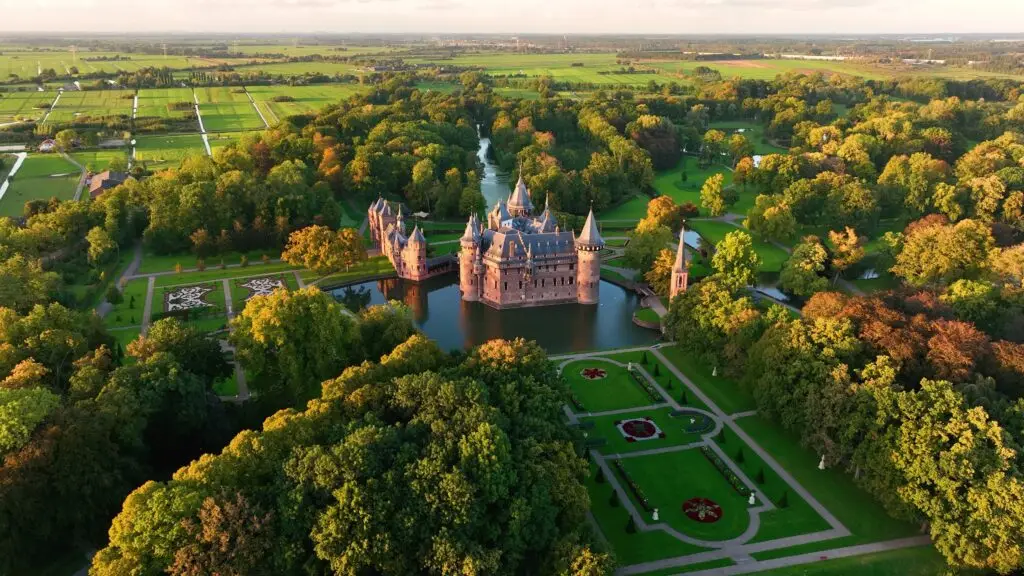
A short drive outside Utrecht brings you to De Haar Castle. With turrets, drawbridges, and landscaped gardens, it feels almost theatrical. Inside, richly decorated rooms reflect the lifestyle of Dutch aristocracy in the late 19th century, restored with support from the Rothschild family.
The scale and formality provide a striking contrast to Amsterdam’s merchant houses.
In the late afternoon, you continue east toward Arnhem, where you’ll check into your hotel and enjoy dinner locally.
Overnight in Arnhem.
Day 4 – Hoge Veluwe National Park
Hoge Veluwe Landscape
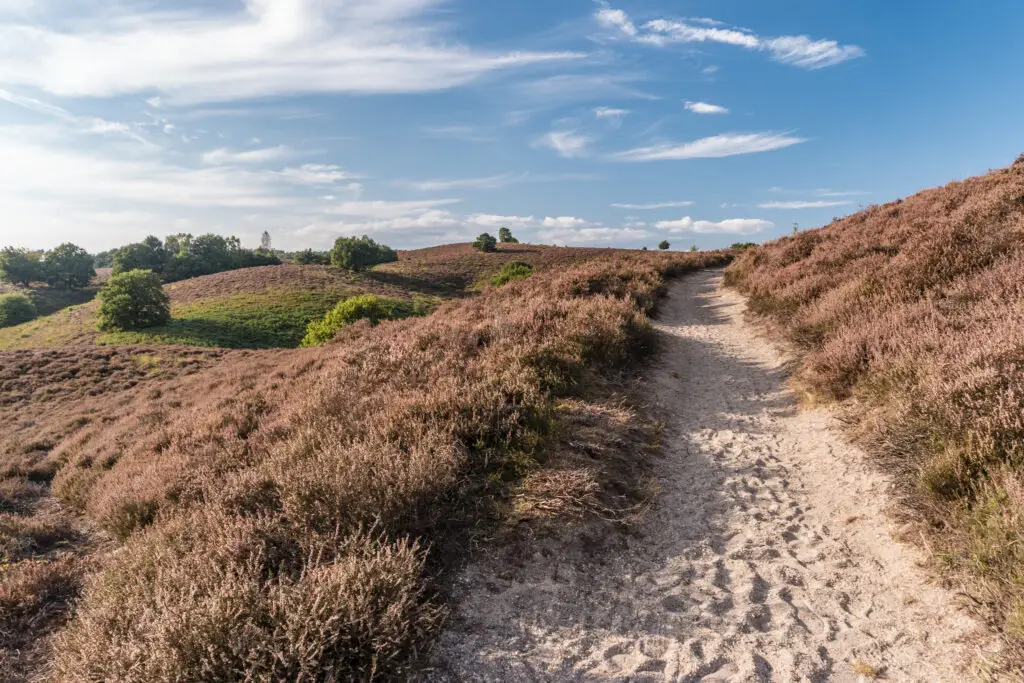
Today shifts fully into nature. After breakfast, you drive into Hoge Veluwe National Park, one of the largest protected areas in the country.
The Netherlands is often imagined as flat farmland, but here the terrain changes. Heathlands, forests, and sandy patches create a varied landscape. You can explore on foot or use the park’s free white bicycles, cycling quiet paths through woodland.
Kröller-Müller Museum
Within the park stands the Kröller-Müller Museum, home to one of the world’s largest Van Gogh collections. Unlike the busy Amsterdam museum, this one feels spacious and calm.
You move through the galleries at an easy pace before stepping into the sculpture garden, where modern works sit among trees and open grass.
Return to Arnhem in the late afternoon for a relaxed evening.
Overnight in Arnhem.
Day 5 – Arnhem WWII Story & Hanseatic Towns
Airborne Museum & Battle of Arnhem
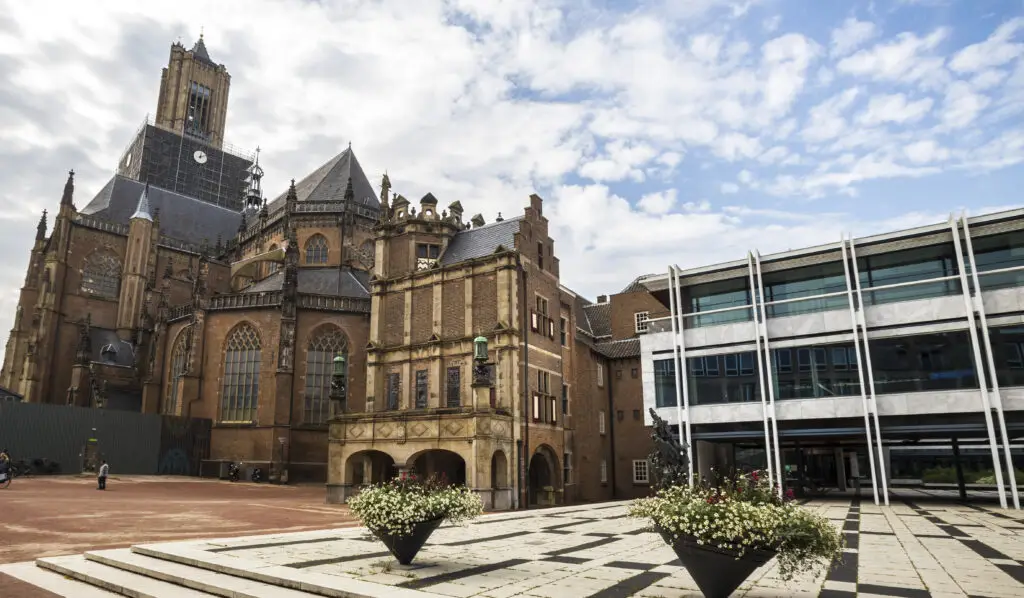
This morning, you visit the Airborne Museum in Oosterbeek, located near the actual battle sites of Operation Market Garden.
Inside, immersive exhibits explain the failed Allied attempt to secure bridges across the Rhine in 1944. Your guide connects the exhibits to the surrounding landscape, making it easier to understand how events unfolded here.
Hanseatic River Towns
Afterward, you begin traveling north along the IJssel River. Stops in towns such as Zutphen or Deventer reveal brick merchant houses and compact medieval streets once tied to the Hanseatic League.
These towns feel different from Amsterdam, quieter, more provincial, but historically wealthy through river trade.
By late afternoon, you arrive in Zwolle.
Check into your hotel and enjoy the evening at your own pace.
Overnight in Zwolle.
Day 6 – Zwolle to Giethoorn, Then Onward to Leeuwarden
Leaving Zwolle & Heading into Water Country
This morning, your driver-guide collects you from your Zwolle accommodation, and you head northeast. The scenery becomes more rural almost immediately, flat farmland, straight drainage channels, and small villages that feel far removed from the bigger cities. It’s a gentle travel day, paced around one of the Netherlands’ most unusual settings.
Giethoorn: Canals, Bridges & a Private Boat Ride
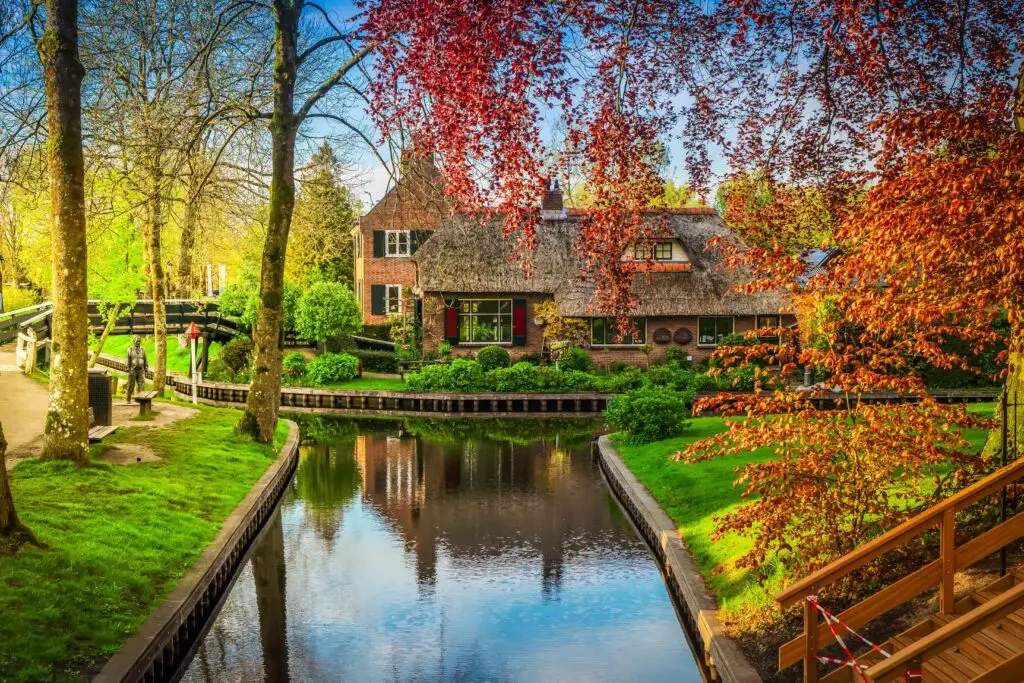
You stop in Giethoorn, one of the most unique and memorable locations on this tour. In the old village center, canals take the place of roads, and small wooden bridges connect footpaths to clusters of thatched-roof houses.
You’ll begin with a short walk so you can take in the layout at ground level, the cottages, gardens edging right up to the water, and the quiet pace of daily life here. Then you switch to the best part: a private electric boat ride, which lets you glide through narrow waterways and out into wider sections beyond the village.
Into Friesland: Arriving in Leeuwarden
In the afternoon, you continue north into Friesland. The landscape opens up: fewer towns, wider skies, more space between farms, and long straight waterways cutting through fields. By early evening, you arrive in Leeuwarden, check into your hotel, and have time to settle in before heading out for dinner.
Overnight in Leeuwarden.
Day 7 – Friesland & The Wadden Coast
Leeuwarden Old Town
Today starts gently. You’ll spend a little time in Leeuwarden itself, a compact, walkable city with canals, small squares, and a strong local identity that feels distinct from the west of the country. It’s a good place to slow down, grab a coffee, and ease into the northern part of the tour without feeling like you’re constantly “on the move.”
The Wadden Sea Coast (UNESCO World Heritage Site)
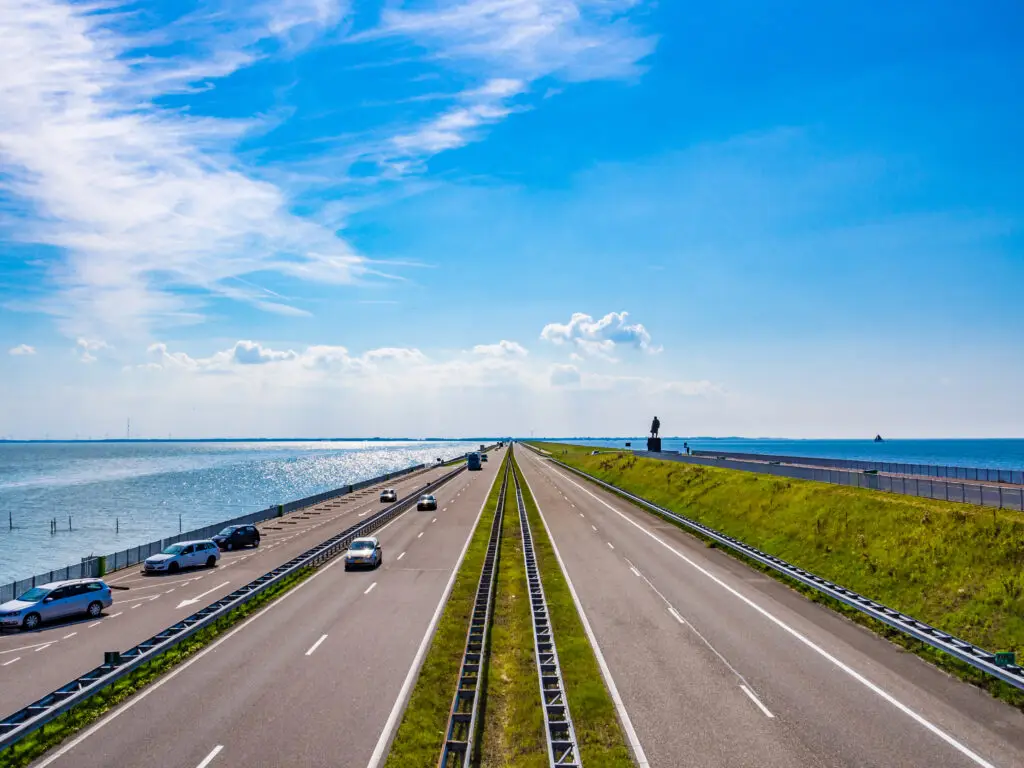
From Leeuwarden, your guide drives you out toward the Wadden coast. This is one of the most unique landscapes in Europe, a tidal world of mudflats, salt marshes, and wide skies that changes throughout the day as the sea pulls in and out. It doesn’t look dramatic in a “mountain” way. The drama is in the scale and openness, and the fact that the ground itself feels alive and shifting.
You’ll walk along the dikes and viewpoints where you can properly take in the setting. Your guide will explain what you’re looking at (and why it matters): the Wadden Sea is one of the world’s most important ecosystems for migratory birds, and it’s a huge part of the north’s identity.
Harbor Town Stop (Harlingen or Similar)
You’ll also stop in a working harbor town such as Harlingen. Fishing boats, brick warehouses, and a salt-in-the-air feel, it’s not polished, it’s real, and it shows the maritime side of the Netherlands away from Amsterdam’s canals.
Return to Leeuwarden in the late afternoon for a relaxed evening and a good meal.
Overnight in Leeuwarden.
Day 8 – Leeuwarden to Texel Island, Overnight in Alkmaar
Across the North to Den Helder
This morning, you leave Leeuwarden and travel west toward Den Helder. The drive is part of the story today. The north feels open and agricultural, with long horizons and small villages that don’t try to impress. Your guide keeps the day moving smoothly so the transfer doesn’t feel like “dead time.”
Ferry to Texel: A Proper Change of Scene
From Den Helder, you take the ferry across to Texel. It’s a short crossing, but it changes the feel immediately. You’re out in the wind, surrounded by water, and the mainland starts to feel far away surprisingly quickly.
Texel: Dunes, Beaches & Island Villages
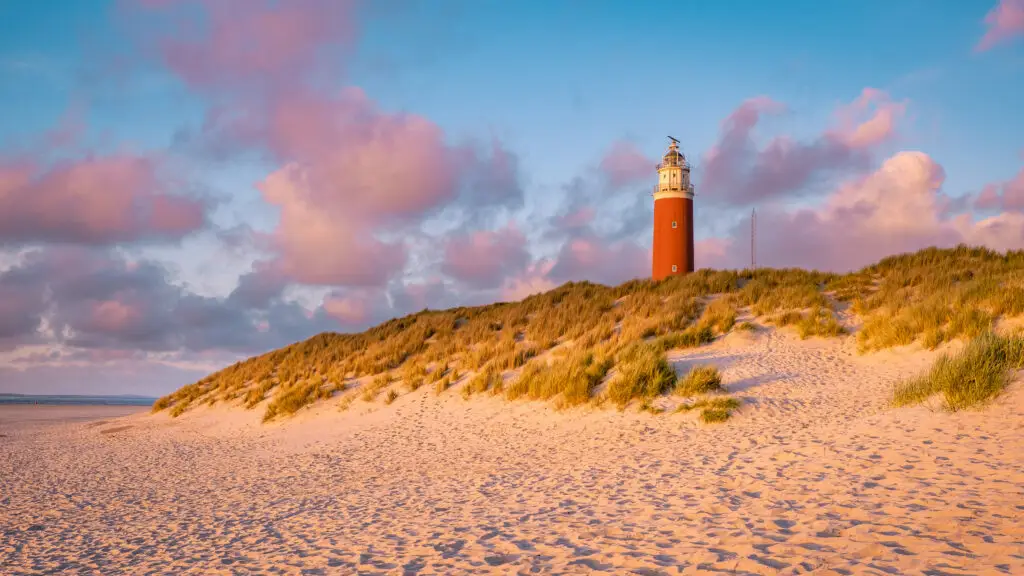
Texel feels different from the mainland almost immediately. The landscape opens up into dunes, long stretches of beach, and wide skies, and the pace slows without trying to.
Your guide will tailor the day to your preferences. You might spend time walking through the dune trails with the sea visible beyond the grass, or head into one of the small island villages for lunch and a wander through quiet streets. There’s also space to stop at coastal viewpoints or simply walk along the beach, where it feels far less developed than the rest of the country.
In the late afternoon, you return by ferry to the mainland and drive south to Alkmaar. You’ll be dropped at your hotel with time to rest before dinner.
Overnight in Alkmaar.
Day 9 – Alkmaar, Zaanse Schans & Return to Amsterdam
Alkmaar Old Town (Canals & Calm Streets)
This morning you’ll take a short walk through Alkmaar’s old center. It’s a good final “small city” moment, canals, tidy streets, and a slower pace than Amsterdam. It’s also a chance to enjoy a Dutch town that feels authentic without needing major landmarks to be worthwhile.
Zaanse Schans: Windmills & Traditional Wooden Houses
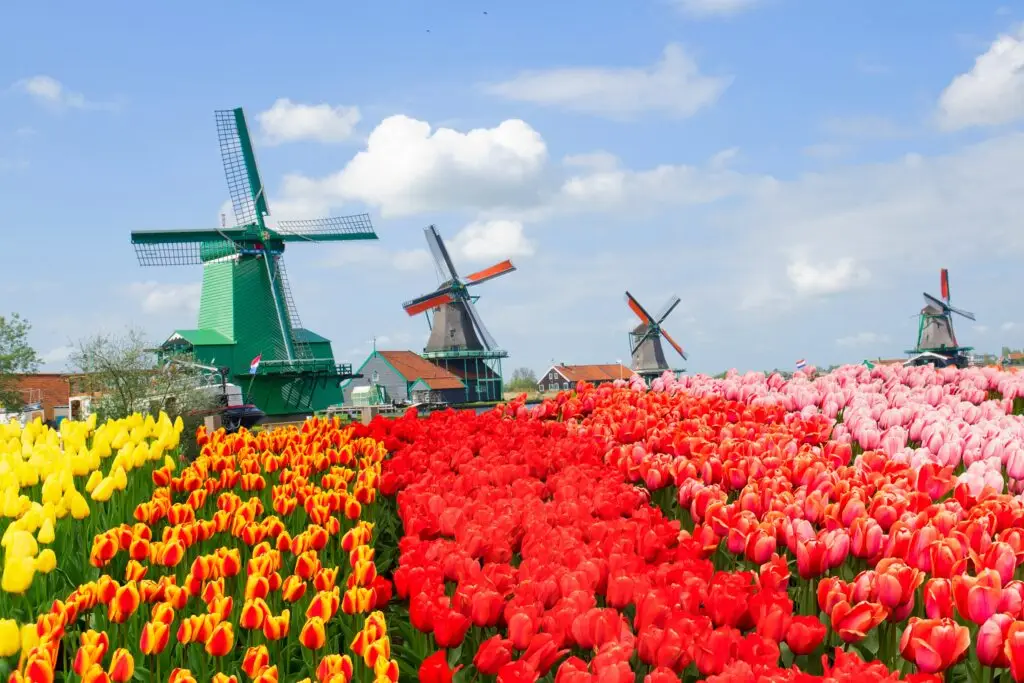
On the way back toward Amsterdam, you stop at Zaanse Schans, one of the best places to see the classic windmill landscape in a way that’s easy and well set up for visitors.
The windmills here aren’t just scenery. Your guide will explain what they were used for, such as sawing timber, grinding spices, pressing oil, and how wind power shaped early Dutch industry. Walking along the river with windmills turning above you, you get that unmistakable Netherlands feeling: water, wind, and the sense that the landscape has been engineered and managed for centuries.
Back to Amsterdam for a Final Evening
By late afternoon, you return to Amsterdam and check into your hotel for the final night. The evening is free, a canal-side dinner, a last walk through the Jordaan, or simply a quiet night in after a full route across the country.
Overnight in Amsterdam.
Day 10 – Departure
Amsterdam Airport Transfer
After breakfast, your driver-guide collects you from your hotel and transfers you to Amsterdam Airport. It’s an easy finish, no stress, no figuring out logistics, just a smooth exit after a well-paced 10 days.